
OEM / ODM & Private Label
Pilot SKU Strategy for Lab Consumables Distributors: How to Test Demand Before Full Catalog Expansion
Learn how lab consumables distributors can use pilot SKUs to test demand, evaluate samples, confirm packaging and documentation, and expand catalogs with less risk.
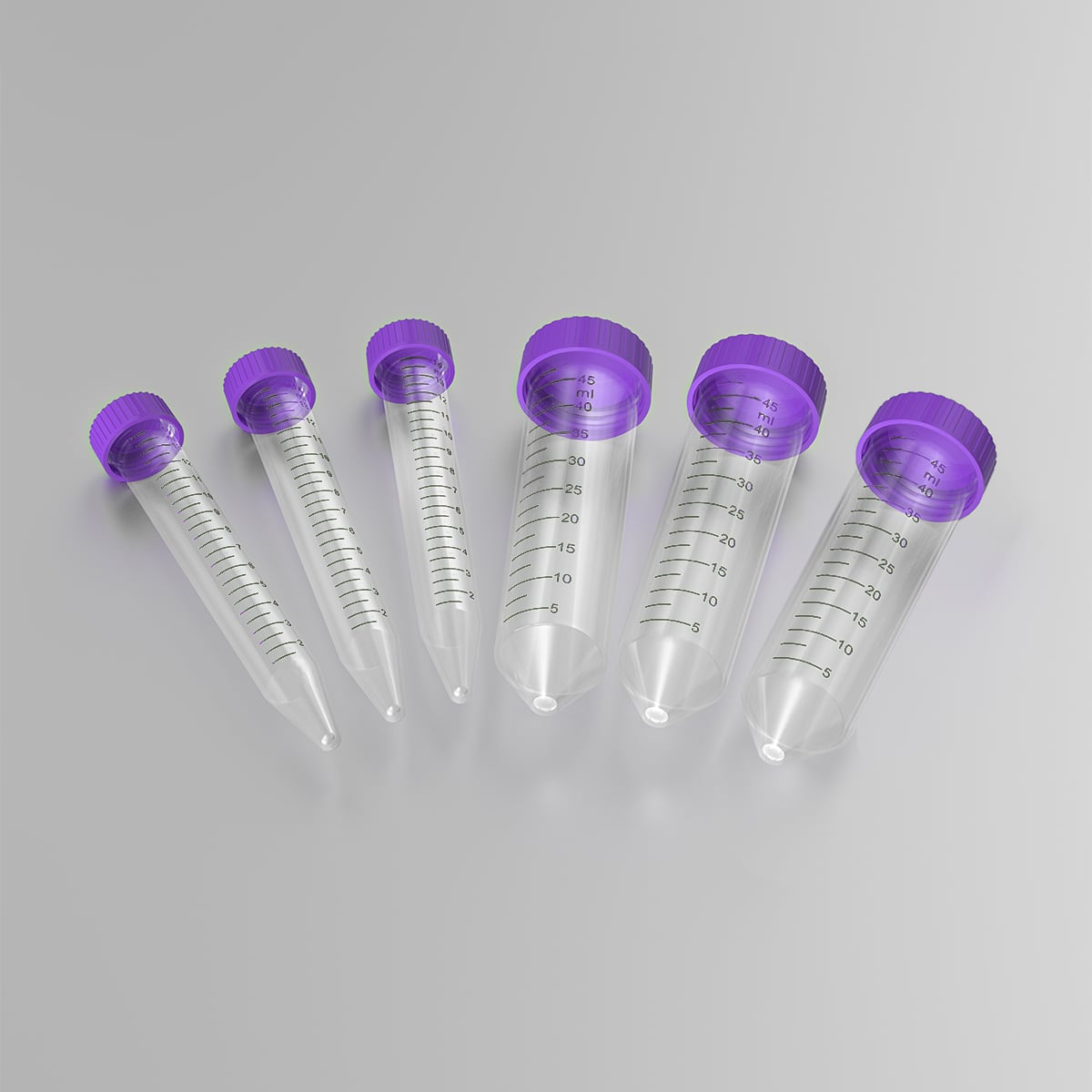
For laboratory consumables distributors, launching a full product catalog too early can create inventory pressure, documentation risk, and slow-moving SKUs.
A better strategy is to start with pilot SKUs.
Pilot SKUs help distributors test local market demand, evaluate product quality, check documentation, confirm packaging, and build repeat supply before committing to a larger OEM, ODM, or private-label program.
This approach is especially useful for buyers in Europe, Latin America, and Southeast Asia who are sourcing laboratory consumables from China and need to balance product range, cost, logistics, documentation, and local customer expectations.
Yuanzan is based in Kunshan, Jiangsu, near Shanghai, one of China’s important manufacturing and export regions. For distributors, this location can support product sampling, supplier communication, and scalable supply planning for laboratory plastic consumables, PCR consumables, liquid handling products, and selected workflow-related products.
1. Why Start with Pilot SKUs?
A pilot SKU strategy reduces sourcing risk before full catalog expansion.
Instead of launching hundreds of products immediately, distributors can begin with a controlled selection of high-demand consumables, test buyer response, and scale based on real feedback.
Pilot SKUs help distributors:
- Test local demand before committing to large inventory
- Compare product samples with existing catalog references
- Validate packaging and labeling
- Check documentation requirements
- Understand customer feedback
- Estimate repeat order potential
- Build a more accurate annual forecast
- Prepare for private-label or OEM expansion
For a distributor, the first order should not only answer:
Can we buy this product?
It should answer:
Can we sell this product repeatedly in our local market?
2. Which Lab Consumables Are Suitable for Pilot SKUs?
The best pilot SKUs are usually products with repeat demand, broad workflow use, and clear buyer recognition.
| Workflow Area | Pilot SKU Examples |
|---|---|
| Liquid handling | Pipette tips, filter tips, low-retention tips |
| Sample processing | Centrifuge tubes, microcentrifuge tubes, high-speed centrifuge tubes |
| PCR workflow | PCR tubes, 8-strip PCR tubes, PCR plates, sealing films |
| Molecular diagnostics | Filter tips, PCR plates, deep-well plates, sample tubes |
| Cell culture support | Selected cell culture plates, dishes, flasks, serological pipettes |
| Protein assay workflow | Low-retention tips, microcentrifuge tubes, 96-well plates |
| OEM / private label | Branded cartons, labels, barcodes, packaging language |
For distributors, the strongest pilot program is not a random product list.
It should be built around workflow families, such as:
- PCR workflow bundle
- Cell culture support bundle
- Liquid handling bundle
- Sample processing bundle
- Molecular diagnostics consumables bundle
- Private-label starter bundle
This helps distributors sell products as practical laboratory solutions rather than isolated plastic SKUs.
3. Recommended Pilot SKU Size
Pilot SKU size depends on distributor maturity, product category, budget, and local buyer base.
| Buyer Type | Suggested Pilot Size |
|---|---|
| Small regional distributor | 10–20 SKUs |
| Established lab supply distributor | 20–50 SKUs |
| Private-label launch | 30–80 SKUs |
| PCR workflow catalog expansion | 15–40 SKUs |
| Multi-country distributor | 50–100 SKUs |
These ranges are planning references, not fixed requirements.
A small distributor may begin with a focused PCR or centrifuge tube pilot. A larger distributor may test multiple workflow families at the same time.
The key is to avoid overexpansion before market validation.
A practical pilot path may look like this:
sample request → internal evaluation → customer feedback → pilot order → documentation review → packaging confirmation → repeat supply planning
4. Regional Buyer Advice: Europe, Latin America, and Southeast Asia
Different regions should use different pilot SKU priorities.
The product list may be similar, but the sourcing strategy should not be identical.
Europe: Documentation-First Pilot
For European distributors, documentation and traceability should be part of the pilot stage from the beginning.
European importers and distributors are expected to understand applicable product requirements and ensure products placed on the market meet relevant EU rules, including documentation where required. EU guidance also states that importers of goods from outside the EU must generally handle customs procedures and import VAT considerations.
European pilot SKU priorities:
- Product specifications
- ISO certificates
- Cleanroom information where applicable
- Sterilization-related documents where applicable
- Packaging language
- Batch traceability
- Claim control
- Import VAT and duty planning
- Clear Incoterms responsibility
Recommended path:
documentation review → sample evaluation → limited pilot SKU launch → private-label packaging → repeat supply
For Europe, avoid launching too many SKUs before documentation is reviewed.
Latin America: Cost and Replenishment Planning
For Latin American distributors, pilot planning should focus on landed cost, quote validity, shipment consolidation, and inventory buffer.
Many LATAM buyers work with USD-based quotations but sell into local-currency markets. In 2026, the IMF described Latin America and the Caribbean as starting the year in relatively solid shape but still exposed to external cost pressures in some markets, which makes quote validity and replenishment planning important for importers.
Latin America pilot SKU priorities:
- USD quote validity
- Annual forecast planning
- Mixed SKU shipment
- Flexible MOQ
- Local distributor margin
- Private-label packaging
- Replacement planning for slow freight cycles
- Core consumables with repeat demand
Recommended path:
cost review → sample testing → mixed-product pilot shipment → local customer feedback → annual reorder plan
For LATAM, the pilot program should be practical and margin-aware.
Southeast Asia: Faster Sampling and Flexible Expansion
For Southeast Asian distributors, proximity to China can support faster sample evaluation and more flexible pilot cycles.
Southeast Asian buyers may be suitable for smaller but more frequent pilot launches, especially in PCR, molecular diagnostics, veterinary testing, agricultural testing, and general laboratory consumables.
Southeast Asia pilot SKU priorities:
- Fast sample review
- Smaller pilot batches
- Frequent replenishment
- PCR and molecular diagnostics product bundles
- Veterinary and agricultural testing consumables
- Flexible shipment configuration
- Local distributor catalog testing
Recommended path:
sample request → small pilot order → fast customer feedback → SKU expansion → OEM/private-label planning
For Southeast Asia, the pilot stage can be faster and more iterative.
5. Trade Terms and Cost Responsibility
Before placing a pilot order, distributors should confirm trade terms clearly.
Incoterms are the globally used commercial rules that define buyer and seller responsibilities for transport, cost, risk, and customs-related obligations. ICC’s Incoterms 2020 include trade terms such as FOB, CIF, DAP, and DDP, each assigning responsibilities differently.
Common sourcing questions include:
| Question | Why It Matters |
|---|---|
| Is the quote FOB, CIF, DAP, or DDP? | Defines cost and responsibility boundaries |
| Who handles import customs? | Affects buyer workload and landed cost |
| Who pays import VAT or duty? | Important for EU and LATAM landed cost planning |
| Is freight included? | Impacts pilot order economics |
| How long is the quote valid? | Important when currency or freight cost changes |
| Can multiple SKUs ship together? | Helps reduce fragmented logistics cost |
| Can samples be sent before bulk order? | Reduces sourcing risk |
For pilot SKU programs, many distributors prefer to start with a sample shipment first, then confirm pilot order terms after product evaluation.
6. Documentation and Claim Control
Pilot SKU programs should include documentation review before full catalog launch.
Buyers should ask:
- What is the product specification?
- Is the product sterile or non-sterile?
- Is sterilization documentation available where applicable?
- Are ISO certificates available?
- Is cleanroom information available where applicable?
- Are product claims supported by documents?
- Are packaging and labeling files confirmed?
- Is private-label packaging possible?
- Can batch or lot traceability be supported?
Special claims should not be assumed.
Claims such as sterile, RNase-free, DNase-free, endotoxin-free, pyrogen-free, PCR inhibitor-free, human DNA-free, low-retention, or low-binding should be confirmed with product-specific documentation or batch-level evidence where applicable.
This is especially important for European importers, OEM reagent companies, and private-label brands.
7. How to Build a Pilot SKU Product List
A distributor can build a pilot SKU list in three ways.
Option 1: Workflow-Based Pilot
Choose SKUs around a specific workflow.
Example:
| Workflow | Pilot Product List |
|---|---|
| PCR workflow | PCR tubes, 8-strip PCR tubes, PCR plates, optical sealing films, filter tips |
| Cell culture support | Cell culture plates, serological pipettes, centrifuge tubes, pipette tips |
| Protein assay workflow | Low-retention tips, microcentrifuge tubes, 96-well plates, centrifuge tubes |
| Sample processing | Centrifuge tubes, microcentrifuge tubes, deep-well plates, sealing films |
Option 2: Replacement-Based Pilot
Upload current catalog-brand reference SKUs and request comparable samples for internal evaluation.
Buyers may upload reference SKUs, catalog pages, product photos, or technical datasheets from existing brands such as Thermo Fisher, Fisher Scientific, VWR, Corning, Eppendorf, Greiner Bio-One, Sarstedt, BRAND, Rainin, Qiagen, Bio-Rad, or Promega.
Brand names are used only as market reference examples. Yuanzan is not affiliated with these brands.
Option 3: Private-Label Starter Pilot
Start with products that are easier to package and sell under a distributor brand.
Examples:
- Pipette tips
- Filter tips
- Centrifuge tubes
- PCR tubes
- PCR plates
- Sealing films
- Deep-well plates
- Selected cell culture consumables
Private-label pilots should confirm carton design, label format, barcode, packaging language, MOQ, and documentation before production.
8. How Yuanzan Supports Pilot SKU Programs
Yuanzan supports global distributors, importers, OEM/ODM buyers, reagent companies, IVD companies, and private-label brands with selected laboratory plastic consumables, liquid handling products, PCR-related products, reagents, lyophilized reagent options, and workflow-based supply planning.
| Capability Area | Yuanzan Support |
|---|---|
| Location | Kunshan, Jiangsu, near Shanghai, China |
| Manufacturing | 23 injection molding machines |
| Injection molding range | 50–400T |
| Mold capability | 400+ mold sets |
| Cleanroom environment | 3,062 m² 100,000-class cleanroom environment |
| Quality system | ISO 9001:2015 and ISO 13485:2016 certified quality management systems |
| Product scope | Pipette tips, centrifuge tubes, PCR tubes, PCR plates, deep-well plates, sealing films, selected cell culture consumables, manual pipettes, related workflow products |
| Sterilization options | Gamma and E-beam sterilization options based on project requirements |
| Sample support | Free samples available for selected products |
| Private-label support | Logo, label, carton, barcode, packaging language, SKU family packaging |
| Documentation support | Certificates, specifications, cleanroom information, sterilization-related documents, FDA-related information where applicable |
A pilot SKU program with Yuanzan can begin with:
- Product list review
- Reference SKU matching
- Sample availability confirmation
- Documentation review
- Packaging discussion
- Pilot order planning
- Repeat supply forecast
Conclusion
A pilot SKU strategy helps laboratory consumables distributors reduce risk before full catalog expansion.
Instead of launching too many products too early, distributors can start with selected workflow-based SKUs, evaluate samples, check documentation, test local buyer demand, and scale based on real market feedback.
For European buyers, the pilot stage should emphasize documentation and import planning.
For Latin American buyers, cost, quote validity, mixed shipment, and replenishment planning are critical.
For Southeast Asian buyers, faster sample cycles and flexible SKU testing can support quicker catalog expansion.
The strongest pilot SKU strategy is not about buying the cheapest products.
It is about building a repeatable supply model.
FAQ
What is a pilot SKU strategy for lab consumables distributors?
A pilot SKU strategy means launching a controlled set of laboratory consumables before full catalog expansion. It helps distributors test demand, evaluate samples, confirm documentation, review packaging, and plan repeat supply.
How many SKUs should a distributor test first?
Small distributors may start with 10–20 SKUs. Established distributors may test 20–50 SKUs. Private-label or multi-country distributors may test 30–100 SKUs depending on category, market, and budget.
Which products are suitable for pilot SKUs?
Common pilot products include pipette tips, filter tips, low-retention tips, centrifuge tubes, microcentrifuge tubes, PCR tubes, 8-strip PCR tubes, PCR plates, sealing films, deep-well plates, and selected cell culture consumables.
Should European distributors prioritize documentation?
Yes. European distributors should review product specifications, ISO certificates, packaging, batch traceability, claim support, import requirements, and applicable documentation before large-scale catalog launch.
What should Latin American distributors consider?
Latin American distributors should consider landed cost, quote validity, USD pricing, mixed-product shipment, annual forecast planning, local distributor margin, and inventory buffer.
What should Southeast Asian distributors consider?
Southeast Asian distributors may benefit from faster sample evaluation, smaller pilot orders, frequent replenishment, and flexible PCR or molecular diagnostics product bundles from China-based supply.
Can buyers upload reference SKUs from existing catalog brands?
Yes. Buyers may upload catalog pages, reference SKUs, product photos, drawings, or technical datasheets from existing catalog brands for internal sample matching and project evaluation.
Brand names are used only as market reference examples. Yuanzan is not affiliated with these brands.
Can Yuanzan support private-label pilot SKUs?
Yes. Private-label support can include logo, labels, cartons, barcodes, packaging language, and SKU family packaging based on product category, MOQ, documentation needs, and project scope.
Can sterile and non-sterile samples be requested?
Yes. Sterile and non-sterile sample options can be discussed based on product category and evaluation needs.
What should I send before requesting a pilot SKU quote?
Send your product list, target market, reference SKUs, estimated annual volume, packaging requirements, documentation needs, and whether you need sterile, non-sterile, or private-label options.
Ready to Build a Pilot SKU Program?
Yuanzan supports pilot SKU programs for laboratory consumables distributors, OEM/ODM buyers, reagent companies, IVD companies, and private-label brands.
Send your product list, reference SKU, target market, annual volume, packaging requirements, and documentation needs. Our team can help evaluate sample availability, sterile or non-sterile options, regional shipment planning, and repeat supply feasibility.