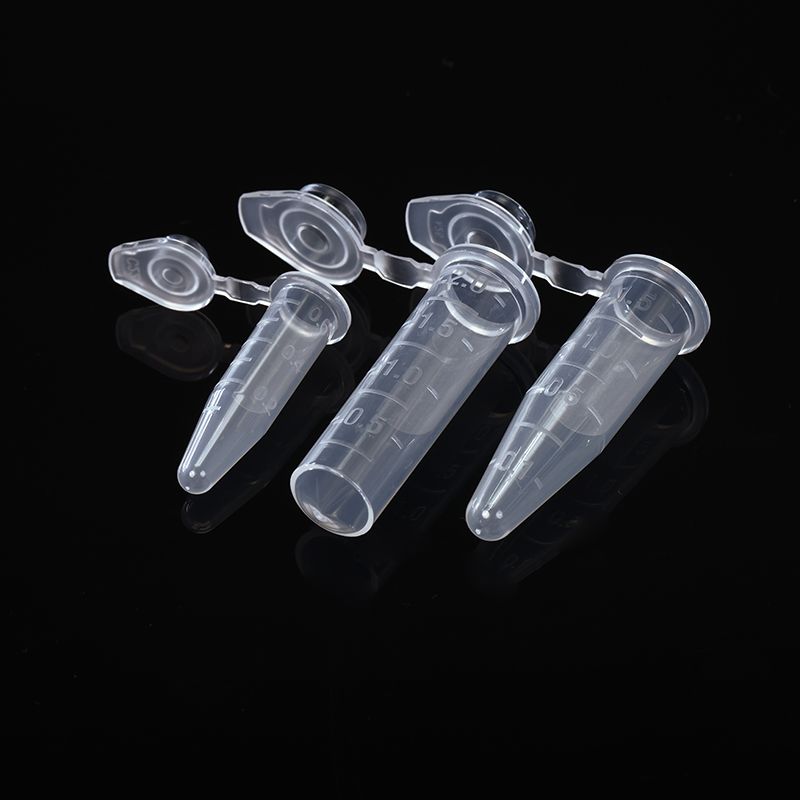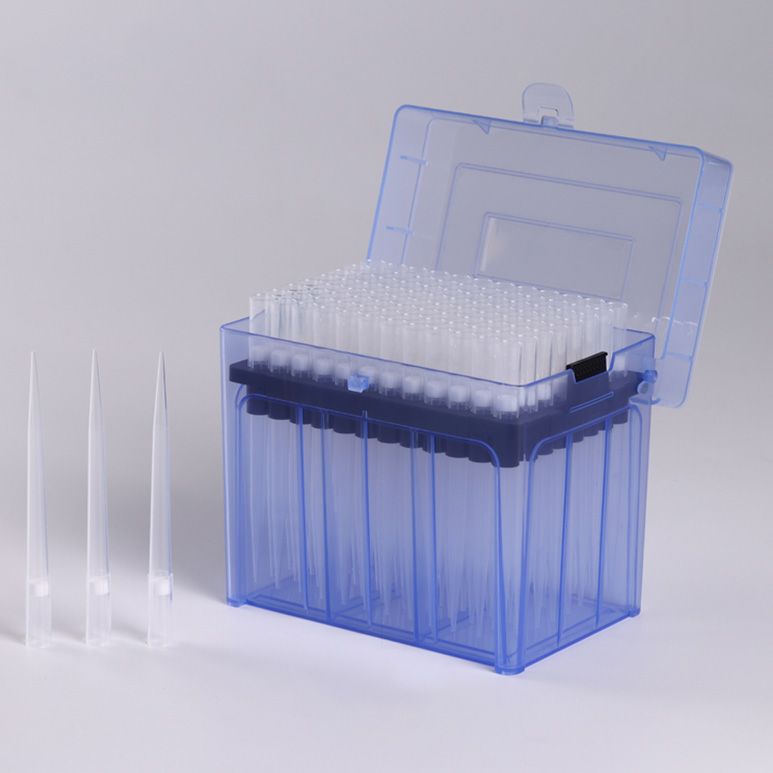
Selecting a laboratory consumables supplier involves more than reviewing prices, product images, and catalog specifications.
A pipette tip may have the correct nominal volume but fit poorly on a particular pipette. A centrifuge tube may require verification against the intended rotor and operating conditions. A PCR plate may have the appropriate well format but still require compatibility checks with the laboratory's instrument.
These differences can become costly when products are ordered in large quantities.
For laboratory distributors, procurement teams, and private-label brands, evaluating samples before bulk ordering is a practical way to reduce sourcing uncertainty.
A structured evaluation process helps buyers compare suppliers, establish acceptance criteria, review documentation, and make purchasing decisions based on evidence rather than assumptions.
This guide provides a laboratory consumables sample evaluation checklist that can be adapted to different product categories and procurement requirements.
Quick Answer: How Should You Evaluate Laboratory Consumable Samples?
Before placing a bulk order, define the intended application and establish measurable acceptance criteria.
A practical evaluation process includes six steps:
1. Define product requirements: Confirm specifications, critical dimensions, packaging, and intended use.
2. Evaluate physical and functional performance: Test samples with the actual laboratory equipment and procedures where appropriate.
3. Review product claims and documentation: Request evidence relevant to the specific product and application.
4. Assess manufacturing consistency: Review available quality records and evaluate additional production lots where feasible.
5. Record results: Document findings, deviations, and the final approval decision.
6. Confirm bulk order conditions: Agree on the approved specifications, packaging, documentation, lead time, and handling of nonconforming products.
The depth of evaluation should reflect product risk, application requirements, purchase volume, and the buyer's quality system.
Not every product requires the same tests or supporting documents.
1. Define Acceptance Criteria Before Requesting Samples
Sample evaluation should begin before the products arrive.
Without agreed requirements, it becomes difficult to determine whether a product has passed the evaluation or whether two suppliers can be compared fairly.
Buyers can divide their requirements into two categories.
Essential Requirements
These are characteristics that the product must meet for its intended use.
Examples include:
● Correct product dimensions and capacity
● Compatibility with the intended equipment
● Required material specifications
● Appropriate operating conditions
● Documented sterility or cleanliness requirements, where applicable
● Agreed critical tolerances
● Packaging or labeling requirements that affect product use
Preferred Requirements
These improve convenience, purchasing efficiency, or long-term supply management but may allow some flexibility.
Examples include:
● Preferred packaging configuration
● Clear graduations and identification areas
● Carton dimensions
● MOQ flexibility
● Private-label options
● Lead time preferences
The distinction is important.
A product that fails an essential safety or functional requirement should not be approved simply because it has a lower price.
However, a supplier may still be suitable when a noncritical packaging preference can be adjusted.
Different Buyers Have Different Priorities
For private-label or OEM projects, critical dimensions should be evaluated against an approved drawing or agreed specification.
A single numerical tolerance should not be treated as a universal standard for all laboratory consumables.
| Buyer Type | Typical Evaluation Priority |
|---|---|
| Research laboratory | Application suitability, equipment compatibility, functional performance |
| Laboratory distributor | Product range, consistency, documentation, packaging, repeat supply |
| Private-label brand | Reference SKU matching, product specifications, branding, quality control |
| OEM buyer | Critical dimensions, agreed drawings, process capability, project feasibility |
| Procurement team | Approved specifications, supply continuity, total purchasing cost |
2. Evaluate Product Quality and Functional Performance
Physical inspection is useful, but it is not sufficient on its own.
A product should also be evaluated for the specific application in which it will be used.
Pipette Tips
When evaluating pipette tips, buyers may check:
● Fit with the intended pipette model
● Attachment and removal characteristics
● Sealing performance
● Liquid aspiration and dispensing behavior
● Dimensional consistency
● Liquid residue after dispensing, where relevant
For low-retention products, compare the candidate and reference tips using the same liquid, volume, and test conditions.
Tip performance should be assessed as part of the pipette-tip combination. Nominal compatibility alone does not establish reliable performance on every pipette model.
Centrifuge Tubes
For centrifuge tubes, confirm:
● Nominal capacity and dimensions
● Tube and cap material
● Closure fit and sealing characteristics
● Compatible centrifuge rotor or adapter
● Specified relative centrifugal force (RCF)
● Intended operating conditions
Any centrifugation performance testing should follow the manufacturer's instructions, equipment limitations, and approved laboratory procedures.
A tube's stated maximum RCF should not be interpreted as an instruction to conduct unrestricted maximum-speed testing.
PCR Tubes and Plates
For PCR consumables, important considerations may include:
● Tube or plate dimensions
● Compatibility with the intended thermal cycler
● Cap or sealing film fit
● Reaction volume
● Appropriate thermal performance
● Optical requirements for the relevant detection instrument
Where necessary, buyers can evaluate products through an approved laboratory assay or instrument compatibility procedure.
The evaluation should reflect the actual equipment and workflow rather than relying solely on catalog descriptions.
Cryogenic Storage Tubes
For cryogenic tubes, buyers should check:
● Intended storage temperature and environment
● Tube capacity
● Closure and sealing specifications
● Compatibility with storage boxes and racks
● Labeling or barcode requirements
● Relevant product documentation
A low-temperature rating does not automatically establish suitability for every cryogenic storage method, including direct immersion in liquid nitrogen.
The exact storage conditions should be confirmed for the product being considered.
3. Verify Product Claims and Quality Documentation
Product claims should be evaluated independently.
For example, sterile, RNase-free, DNase-free, endotoxin-controlled, and low-retention describe different attributes.
They are not interchangeable, and none should be assumed to apply to an entire product category.
What Documents Should Buyers Request?
The availability of these documents varies by supplier, product category, manufacturing process, and purchase agreement.
A COA is not automatically required or available for every non-sterile laboratory plastic product.
Similarly, ISO 9001 or ISO 13485 certification should not be interpreted as proof that every individual SKU is sterile, nuclease-free, or validated for a particular application.
| Document | Purpose |
|---|---|
| Product specification sheet | Defines dimensions, materials, intended use, and applicable performance characteristics |
| Certificate of Analysis (COA) | Reports specified test results where provided for the product or lot |
| Certificate of Conformity (COC) | Confirms conformity to specified requirements according to the supplier's declaration |
| Quality management certificate | Identifies the certified management system and its applicable scope |
| Sterilization documentation | Supports relevant sterilization claims where applicable |
| Product test report | Provides evidence for a defined characteristic or test |
| Lot identification records | Supports product and batch traceability |
Sterility and Cleanliness Requirements
Before requesting documentation, buyers should identify the requirements that actually apply.
For example:
● Sterility: Confirm the product's documented sterile status and applicable sterilization evidence.
● RNase-free or DNase-free: Review the relevant product-specific testing or supporting information.
● Endotoxin or pyrogen requirements: Confirm the claimed attribute and applicable acceptance criteria.
● Low-retention performance: Review available product data or conduct comparative testing.
Not all research applications require every claim.
A non-sterile product should not automatically be considered unsuitable where sterility is not a required specification.
Selecting the appropriate product means matching documented attributes to the intended application.
4. Assess Lot-to-Lot Consistency and Supplier Quality Controls
One successful sample evaluation does not guarantee that every subsequent shipment will perform identically.
Laboratory plastic consumables are manufactured through controlled production processes, and variation may occur due to material batches, tooling, equipment settings, and other manufacturing factors.
For repeated purchasing, buyers should consider both sample performance and the supplier's approach to maintaining product consistency.
Should You Evaluate Multiple Production Lots?
Where feasible, evaluating samples from more than one production lot can provide additional information about consistency.
This may be especially valuable for:
● Recurring distributor orders
● High-volume products
● Critical equipment interfaces
● OEM products manufactured against an approved specification
● Applications requiring tighter process control
However, a fixed requirement for two or three production lots is not appropriate for every sourcing project.
During early product development or first-time supplier evaluation, multiple independent lots may not yet be available.
In these situations, buyers can review available historical inspection data, manufacturing controls, agreed specifications, and plans for incoming inspection.
What Should Be Compared?
Useful comparison areas include:
● Critical dimensions
● Material and visual characteristics
● Functional performance
● Packaging consistency
● Product identification
● Available inspection and traceability records
The required acceptance limits should be established according to the product and its intended application.
Questions to Ask the Supplier
Before approving repeat supply, procurement teams may ask:
● How are critical product dimensions controlled?
● What inspection activities are performed during production?
● How are nonconforming products identified and managed?
● How are batches or lots identified?
● What documentation can accompany repeat shipments?
● How are specification changes communicated?
These questions often reveal more about long-term supply suitability than a single product sample.
5. Laboratory Consumables Sample Evaluation Checklist
A standardized evaluation record helps buyers compare products and suppliers consistently.
The following template can be adapted for pipette tips, centrifuge tubes, PCR consumables, cryogenic tubes, and other laboratory plastic products.
Sample Evaluation Record
Project / Buyer: ____________________
Product / Reference SKU: ____________________
Supplier: ____________________
Sample Lot / Batch: ____________________
Sample Quantity: ____________________
Equipment / Test Method: ____________________
Evaluation Date: ____________________
| Evaluation Item | Acceptance Criteria | Actual Result | Decision |
|---|---|---|---|
| Product identification | Matches required SKU and specification | To be recorded | Pass / Fail |
| Material and appearance | Meets agreed material and visual requirements | To be recorded | Pass / Fail |
| Critical dimensions | Meets approved drawing or specification | To be recorded | Pass / Fail |
| Equipment compatibility | Suitable for intended equipment | To be recorded | Pass / Fail |
| Functional performance | Meets defined application requirements | To be recorded | Pass / Fail |
| Product claims | Required supporting evidence reviewed | To be recorded | Pass / Fail / N/A |
| Packaging | Meets approved packaging requirements | To be recorded | Pass / Fail |
| Traceability | Required lot identification available | To be recorded | Pass / Fail |
| Documentation | Required documents received and reviewed | To be recorded | Pass / Fail |
| Additional-lot review | Completed where applicable | To be recorded | Pass / Fail / N/A |
Final Evaluation Decision:
● Approved
● Conditionally Approved
● Not Approved
Outstanding Issues / Required Actions: ____________________
Evaluator / Approval Date: ____________________
This template is a starting point, not a universal validation procedure.
The evaluation plan, sample size, test methods, and acceptance limits should be defined according to the product's risk and intended use.
For higher-risk or regulated applications, additional qualification requirements may apply.
6. From Sample Approval to Bulk Purchasing
Once a product has passed the agreed evaluation, the next step is to ensure that the bulk order reflects the approved sample and specifications.
Confirm the Approved Product Configuration
Before issuing a purchase order, confirm:
● Product name and SKU
● Material and critical specifications
● Applicable sterile or non-sterile status
● Packaging and labeling
● Required documentation
● Order quantity and MOQ
● Delivery schedule
● Any agreed quality or inspection conditions
For OEM and private-label projects, an approved product drawing, packaging reference, and labeling specification can help reduce ambiguity.
Consider Total Purchasing Cost
Unit price remains important, but it is only one part of the procurement decision.
Other relevant costs may include:
● Freight and import-related costs
● Incoming inspection
● Packaging and handling
● Product rejection or replacement
● Inventory requirements
● Supplier communication and administration
A lower unit price may not represent a lower overall purchasing cost if the product fails the buyer's requirements or creates additional operational work.
However, potential cost reductions or defect rates should not be assumed without actual purchasing and performance data.
Maintain an Approved Reference
For recurring orders, buyers may retain a clearly identified reference sample, approved drawing, or other agreed comparison record.
This can help resolve questions if a future shipment differs from the approved product.
Where nonconformities arise, the buyer and supplier should document the issue, review the agreed acceptance criteria, and determine appropriate corrective action.
For ongoing OEM supply, these expectations may also be covered by an agreed quality or purchasing arrangement.
7. Yuanzan Laboratory Consumables and Sample Evaluation Support
Yuanzan supplies selected laboratory consumables across liquid handling, molecular biology, sample processing, and cell biology.
Its manufacturing operations support selected laboratory plastic products, including injection-molded consumables used in routine research and laboratory workflows.
Product Categories for Evaluation
Relevant product categories include:
Liquid Handling
● Universal-style pipette tips
● Filter pipette tips
● Low-retention tips
● Serological pipettes
Explore Liquid Handling Solutions
Molecular Biology
● PCR single tubes
● PCR 8-strip tubes
● PCR plates
● Deep-well plates
● Selected sealing products
Explore Molecular Biology Consumables
Sample Processing and Storage
● Centrifuge tubes
● Microcentrifuge tubes
● Selected cryogenic tubes
● Related laboratory plastic consumables
Explore Laboratory Consumables
Manufacturing and Quality Management
Yuanzan's manufacturing capabilities include:
● 23 injection molding machines
● 50–400T injection molding range
● More than 400 mold sets
● A 3,062 m² Class 100,000 cleanroom environment
● ISO 9001:2015 and ISO 13485:2016 certified quality management systems within their applicable certified scope
These capabilities support selected laboratory consumables manufacturing and supplier evaluation.
Product-specific performance, cleanliness, and sterility claims must still be reviewed according to the relevant SKU and documentation.
Explore Yuanzan Manufacturing Capabilities
Samples for Commercial Supplier Evaluation
Yuanzan's sample evaluation program is intended for distributors, private-label brands, OEM buyers, diagnostic companies, and procurement teams assessing product suitability before larger purchasing decisions.
Buyers can provide:
● Product category
● Reference SKU or existing supplier product
● Target market
● Estimated annual volume
● Required specifications
● Packaging or private-label requirements
● Relevant documentation needs
Selected product samples and supporting information may be available depending on the product category, sample stock, and project requirements.
Multi-lot evaluation, specialized test documentation, and customized sample arrangements can be discussed according to feasibility.
Conclusion
Evaluating laboratory consumable samples before bulk ordering is a practical part of supplier qualification and procurement risk management.
A reliable evaluation process begins with clearly defined specifications, continues through appropriate product testing and documentation review, and ends with an informed purchasing decision.
For laboratories, this helps establish suitability for actual workflows.
For distributors and private-label brands, it also supports product consistency, customer confidence, and long-term supply planning.
The purpose of sample evaluation is not to perform every possible test.
It is to identify the tests and evidence that matter for the intended product, document the findings, and establish an agreed basis for future purchasing.
Ready to Evaluate Laboratory Consumables Before Bulk Ordering?
Yuanzan supports selected laboratory consumable sample requests for commercial evaluation, supplier qualification, and OEM/private-label projects.
Share your product list, competitor reference SKU, target market, estimated annual demand, and required specifications.
Our team can help review available products, sample options, documentation, and suitable next steps.
● Request Samples for Supplier Evaluation
● Explore Laboratory Consumables
● Discuss OEM and Private-Label Supply
Sample availability and documentation support depend on the product and project scope.
FAQ
How many laboratory consumable samples should I request before bulk ordering?
There is no universal quantity suitable for every product. The sample size should reflect the application, product risk, test method, and procurement requirements. For critical or recurring orders, evaluation across multiple production lots may be useful where feasible.
What should I test when evaluating pipette tips?
Buyers should consider fit with the intended pipette, sealing performance, dimensional consistency, liquid transfer performance, and relevant product characteristics. Low-retention tips may also require comparative residue testing under consistent conditions.
How should centrifuge tubes be evaluated?
Confirm the specified RCF rating, tube and cap design, material, and compatibility with the intended centrifuge rotor and adapter. Any functional testing should follow approved laboratory procedures and applicable equipment instructions.
Are COAs required for every laboratory consumable?
Not necessarily. Documentation depends on the product, applicable requirements, and purchasing agreement. Buyers should clarify whether a product specification, COA, COC, test report, or other record is appropriate.
Are sterile, RNase-free, and DNase-free the same claim?
No. These describe different product attributes. Buyers should identify which claims are needed and confirm them through appropriate product-specific evidence.
Can one production sample represent all future shipments?
No single sample can guarantee future production performance. Buyers should consider manufacturing controls, available quality records, additional-lot evaluation where appropriate, and agreed incoming inspection requirements.
Can Yuanzan provide samples for distributor evaluation?
Yes. Yuanzan offers selected laboratory consumable samples for qualified commercial evaluation projects. Availability depends on the product category, sample stock, and project requirements.
Can OEM buyers provide competitor SKUs or drawings?
Yes. Reference SKUs, product drawings, packaging examples, and technical requirements can help initiate product matching or OEM feasibility discussions.
What should I confirm before approving a bulk order?
Confirm the approved product specifications, relevant documentation, packaging, order quantity, lead time, identification requirements, and any agreed quality conditions.
pics of lab consumables