Introduction
Private label lab consumables can help distributors, importers, regional laboratory brands, and OEM buyers build stronger catalog control, improve product differentiation, and support long-term customer relationships.
However, private label sourcing is not simply adding a logo to a box.
A successful private label consumables project requires product selection, sample evaluation, packaging control, documentation review, supplier capability, quality consistency, MOQ planning, and repeat supply management.
For laboratory consumables such as pipette tips, filter tips, PCR tubes, PCR plates, centrifuge tubes, deep-well plates, sealing films, serological pipettes, and selected cell culture consumables, buyers should evaluate both the product and the supplier’s ability to support long-term cooperation.
This guide explains how distributors and laboratory brands can source private label lab consumables more practically, from product selection and sample review to packaging, documentation, pilot SKUs, and repeat supply.
Quick Answer
Private label lab consumables are laboratory products manufactured by a supplier but sold under the buyer’s own brand, packaging, or product family.
For distributors and laboratory brands, private label sourcing should not start with a full catalog. A safer approach is to begin with high-frequency consumables, request samples, review documentation, confirm packaging requirements, launch pilot SKUs, and then expand based on reorder signals.
Common private-label categories may include:
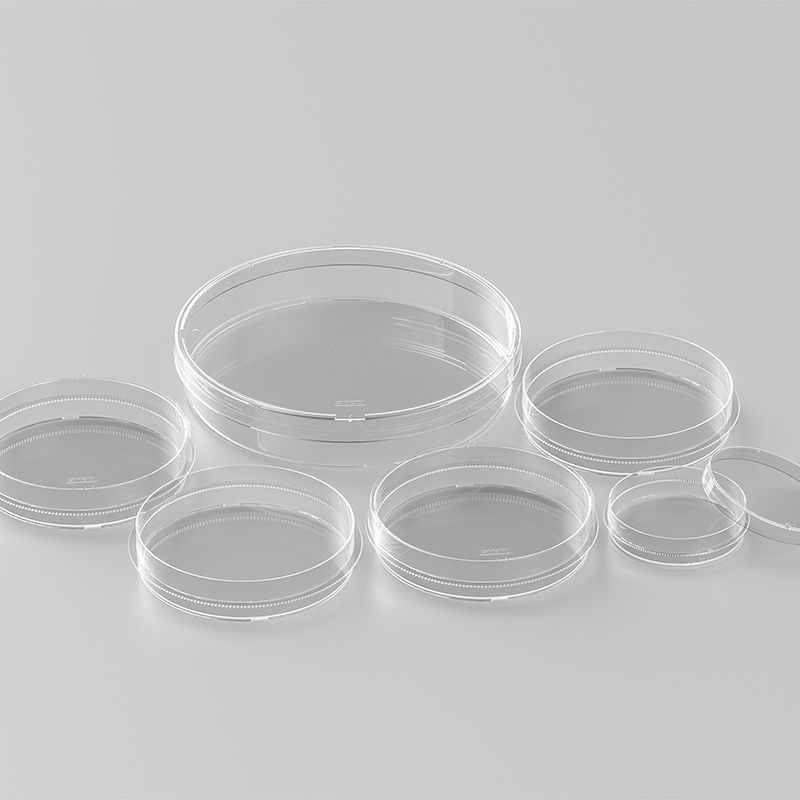
● Selected cell culture consumables
The key question is not only:
Can this supplier print my logo?
It is:
Can this supplier support product matching, samples, documentation, packaging, MOQ, pilot orders, and repeat supply?
China OEM Supply Note: Where Yuanzan Fits
Yuanzan is based in Kunshan, Jiangsu, near Shanghai, China.
Yuanzan supports selected laboratory consumables, PCR-related products, liquid handling products, sample processing consumables, reagents, lyophilized reagent options, OEM/ODM cooperation, and private-label packaging based on product category and project scope.
For distributors, importers, OEM buyers, molecular diagnostics suppliers, reagent companies, and private-label laboratory brands, Yuanzan can support:
● Sample requests
● Reference SKU review
● Product list evaluation
● Documentation discussion
● Packaging customization
● Sterile or non-sterile sample discussion
● Pilot SKU planning
● Repeat supply planning
Yuanzan does not provide clinical diagnostic services. Product scope, documentation, claims, and market requirements should be confirmed during the RFQ stage.
1. Why Private Label Matters for Laboratory Distributors
For many laboratory distributors, selling only third-party brands can limit margin control, catalog differentiation, and customer loyalty.
Private label lab consumables allow distributors and regional laboratory brands to build their own product family while working with manufacturing partners for supply, packaging, and documentation support.
Private label can help buyers:
● Build a more recognizable product line
● Improve margin structure
● Reduce dependence on large catalog brands
● Offer more flexible product bundles
● Support local-language packaging
● Create distributor-ready SKU families
● Serve specific regional laboratory needs
● Build long-term repeat supply around fast-moving consumables
This is especially relevant for products with recurring demand, such as pipette tips, filter tips, PCR consumables, centrifuge tubes, deep-well plates, sealing films, and serological pipettes.
Private label should not be treated as a one-time packaging project. It should be planned as a long-term catalog and supply strategy.
2. Which Product Categories to Start With
A private label project should start with products that have clear repeat demand and broad laboratory use.
Distributors do not need to launch every product category at once. A more practical approach is to begin with consumables that customers already purchase frequently.
Recommended starting categories include:
For most distributors, the best starting point is not the largest possible catalog.
It is a small group of high-frequency consumables that can be sampled, validated, packaged, and reordered consistently.
| Product Family | Common Private-Label Products |
|---|---|
| Liquid handling | Pipette tips, filter tips, low-retention tips, serological pipettes |
| Sample processing | Centrifuge tubes, microcentrifuge tubes, high-speed centrifuge tubes |
| PCR and molecular biology | PCR tubes, PCR 8-strip tubes, PCR plates, sealing films |
| High-throughput workflows | Deep-well plates and selected plate-based consumables |
| Cell culture support | Selected cell culture flasks, dishes, plates, and related consumables |
| Sample storage | Cryogenic tubes, storage tubes, cryoboxes where applicable |
3. Standard SKU Branding vs Custom Development
Private label lab consumables can be developed at different levels.
Not every project requires a new mold, new product design, or full custom development. In many cases, buyers can start with existing standard products and customize packaging.
Level 1: Existing SKU with Private Label Packaging
This is usually the fastest path.
The buyer selects an existing product and applies private-label packaging, such as:
● Customer logo
● Product label
● Carton design
● Barcode
● Packaging language
● SKU family packaging
This model is suitable for distributors that want faster launch, lower development complexity, and market testing before larger investment.
Level 2: Existing Mold with Selected Customization
In this model, the product is based on an existing mold, but selected customization may be discussed depending on the product and project scope.
This may involve packaging format, labeling, product family planning, or selected configuration adjustments where feasible.
This model is suitable for buyers who want more differentiation but do not need full new product development.
Level 3: New Mold or Custom Development
New mold development may be considered when the buyer needs a unique product design, special dimensions, or a product that cannot be matched with existing options.
This approach requires more time, clearer specifications, feasibility review, and stronger volume forecast.
For most distributors, new mold development should come after sample evaluation, customer feedback, and demand validation.
4. Packaging and Label Requirements
Packaging is part of the product.
For private label lab consumables, packaging affects customer perception, inventory management, distribution efficiency, and regulatory or documentation review.
Private-label packaging may include:
● Customer logo
● Product name
● Volume or size
● SKU number
● Lot number
● Barcode
● Carton label
● Packaging language
● Sterile or non-sterile status where applicable
● Product family design
● Distributor or importer information where required
Before starting a private-label project, buyers should prepare:
A consistent packaging system helps buyers build a recognizable catalog and reduce confusion during repeat ordering.
| Packaging Item | What Buyers Should Prepare |
|---|---|
| Logo | AI, PDF, SVG, or high-resolution artwork |
| Product label | Product name, volume, SKU, lot number, barcode |
| Carton | Shipping mark, carton size, brand design |
| Packaging language | English, Spanish, Portuguese, or target-market language |
| Product family | Tips, tubes, PCR consumables, storage products |
| Barcode system | SKU-level identification if needed |
| Market requirement | Distributor, importer, or local packaging expectations |
5. Documentation and Claim Control
Documentation should be clarified before private-label packaging, catalog listing, or bulk ordering.
Useful documents may include:
● ISO 9001 certificate
● ISO 13485 certificate
● Product specification sheets
● Material information
● Cleanroom information
● Sterilization-related documents
● FDA-related information where applicable
● Product-specific documents based on project requirements
Private label projects require extra caution because the buyer’s own brand appears on the packaging.
Special claims should not be assumed.
Claims such as sterile, RNase-free, DNase-free, endotoxin-free, pyrogen-free, PCR inhibitor-free, human DNA-free, low-retention, or low-binding should be confirmed with product-specific documentation or batch-level evidence where applicable.
This is especially important for:
● PCR consumables
● Molecular diagnostics consumables
● Filter tips
● Low-retention tips
● Sterile consumables
● Products used in sensitive biological workflows
● Distributor catalog listings
● OEM reagent or kit-related projects
The safest approach is to define claim and documentation requirements during the RFQ stage, before label design, carton artwork, catalog publication, or order confirmation.
6. Sample Evaluation and MOQ Planning
Before launching a private-label consumables line, buyers should request samples for evaluation.
Sample review helps buyers check:
● Product fit
● Dimensions
● Molding quality
● Packaging format
● Sterile or non-sterile options
● Reference SKU matching
● Workflow compatibility
● Documentation availability
● Customer feedback
● Private-label feasibility
● Repeat supply potential
MOQ should also be discussed early.
MOQ may depend on:
● Product category
● Packaging format
● Sterile or non-sterile requirement
● Private-label artwork
● Label design
● Carton design
● Barcode requirements
● Annual forecast
● Shipment plan
● Documentation requirements
A standard non-sterile product, a sterile packed product, a private-label carton, and a customized SKU family may have different MOQ requirements.
Buyers should not ask only:
What is your MOQ?
A better question is:
What is the MOQ by product category, packaging type, and private-label requirement?
A practical private-label sourcing process may look like this:
reference SKU review → sample request → documentation check → packaging discussion → pilot order → repeat supply planning
This process reduces risk and helps buyers confirm product fit before investing in a broader private-label catalog.
7. Pilot SKU Strategy
Distributors and laboratory brands should avoid launching a full private-label consumables catalog before validating product demand.
A pilot SKU strategy allows buyers to test selected products first, gather customer feedback, and then expand based on repeat order signals.
A pilot SKU program may include:
● 3–5 liquid handling SKUs
● 3–5 PCR consumables SKUs
● 2–4 centrifuge tube or sample processing SKUs
● 1–3 deep-well plate or storage product SKUs
● Selected packaging options
● Sample review before listing
The goal is to test demand without overloading inventory.
A practical pilot may focus on one workflow first:
PCR Workflow Pilot
● Filter tips
● PCR tubes
● PCR 8-strip tubes
● PCR plates
● Sealing films
● Deep-well plates where applicable
Liquid Handling Pilot
● Standard pipette tips
● Filter tips
● Low-retention tips
● Serological pipettes
Sample Processing Pilot
● Centrifuge tubes
● Microcentrifuge tubes
● High-speed centrifuge tubes
● Sample storage products
After a pilot launch, buyers can evaluate:
● Customer interest
● Reorder frequency
● Packaging feedback
● Documentation requests
● Price acceptance
● Inventory pressure
● SKU expansion potential
This approach is usually safer than launching a wide private-label catalog without market validation.
8. Repeat Supply Planning
Private label sourcing should not stop at the first order.
For distributors and laboratory brands, repeat supply is often more important than initial product selection.
Before scaling private-label lab consumables, buyers should discuss:
● Lead time
● Reorder cycle
● Forecasting
● Safety stock
● Packaging material planning
● Batch consistency
● Product change control
● Documentation updates
● Shipment planning
● Mixed SKU shipment options
A product that sells well but cannot be reordered consistently creates catalog risk.
For private-label products, repeat supply planning is especially important because customers may associate product availability and consistency with the buyer’s own brand.
A strong private-label strategy should therefore include:
sample validation → pilot launch → reorder review → forecast planning → SKU expansion → repeat supply management
9. How Yuanzan Supports Private-Label Lab Consumables Buyers
Yuanzan supports distributors, importers, OEM/ODM buyers, reagent companies, molecular diagnostics suppliers, laboratory brands, and private-label projects with selected laboratory consumables and workflow-based supply planning.
Yuanzan can help buyers move from product idea to practical sourcing steps:
1. Submit product category or product list
2. Upload reference SKU or current supplier catalog page
3. Request free samples
4. Review documentation requirements
5. Discuss MOQ and packaging format
6. Confirm sterile or non-sterile sample needs
7. Evaluate private-label packaging options
8. Plan pilot order and repeat supply
For private-label buyers, Yuanzan can support product list review, sample evaluation, documentation discussion, packaging customization, pilot SKU planning, and repeat supply feasibility based on product category and project scope.
| Capability Area | Yuanzan Support |
|---|---|
| Location | Kunshan, Jiangsu, near Shanghai, China |
| Manufacturing | 23 injection molding machines |
| Injection molding range | 50–400T |
| Mold capability | 400+ mold sets |
| Cleanroom environment | 3,062 m² 100,000-class cleanroom environment |
| Quality system | ISO 9001:2015 and ISO 13485:2016 certified quality management systems |
| Product scope | Pipette tips, filter tips, low-retention tips, centrifuge tubes, microcentrifuge tubes, PCR tubes, PCR plates, deep-well plates, sealing films, selected cell culture consumables, serological pipettes, manual pipettes, and related workflow products |
| Sterilization options | Gamma and E-beam sterilization options based on project requirements |
| Sample support | Free samples available for selected products |
| Private-label support | Logo, label, carton, barcode, packaging language, SKU family packaging |
| Documentation support | ISO certificates, product specifications, cleanroom information, sterilization-related documents, FDA-related information where applicable |
Conclusion
Private label lab consumables can help distributors, importers, and laboratory brands build stronger catalog control, improve margin structure, and develop more recognizable product families.
However, successful private label sourcing requires more than logo printing.
Buyers should evaluate product selection, samples, documentation, packaging, MOQ, pilot SKU strategy, supplier capability, and repeat supply planning before launching a private-label consumables line.
For many buyers, the strongest path is not a full catalog launch on the first order.
A more practical approach is:
high-frequency product selection → sample evaluation → documentation review → packaging discussion → pilot SKU launch → customer feedback → repeat supply expansion
Yuanzan supports selected laboratory consumables, PCR-related products, liquid handling products, sample processing consumables, reagents, lyophilized reagent options, OEM/ODM cooperation, private-label packaging, documentation discussion, and sample-based evaluation based on project scope.
Looking for a Private-Label Lab Consumables Partner?
Send your product list, reference SKU, target market, annual volume, packaging requirement, and documentation needs.
Yuanzan can help evaluate sample availability, MOQ, sterile or non-sterile options, PCR consumables, liquid handling products, sample processing consumables, private-label packaging, and repeat supply feasibility.
Submit Private-Label Product List
Discuss OEM / Private-Label Supply
FAQ
What are private label lab consumables?
Private label lab consumables are laboratory products manufactured by a supplier but sold under the buyer’s own brand, packaging, or SKU system. They may include pipette tips, filter tips, PCR tubes, PCR plates, centrifuge tubes, sealing films, serological pipettes, and other laboratory consumables.
Why do distributors develop private label lab consumables?
Distributors may develop private-label products to improve margin control, build a recognizable catalog, reduce dependence on third-party brands, support local packaging requirements, and create stronger customer loyalty.
Which products are suitable for private-label lab consumables?
Common private-label categories include pipette tips, filter tips, low-retention tips, serological pipettes, centrifuge tubes, microcentrifuge tubes, PCR tubes, PCR plates, deep-well plates, sealing films, selected cell culture consumables, and sample storage products.
Should buyers launch a full private-label catalog immediately?
Usually not. A safer approach is to start with pilot SKUs, request samples, review documentation, confirm packaging requirements, and expand based on customer feedback and reorder signals.
Can buyers request samples before launching a private-label product?
Yes. Buyers should request samples for product fit review, packaging evaluation, sterile or non-sterile comparison, documentation discussion, and customer feedback before launching private-label products.
What is the MOQ for private-label lab consumables?
MOQ depends on product category, packaging format, sterile or non-sterile requirement, label design, carton design, barcode requirements, documentation needs, and annual forecast. Buyers should discuss MOQ by product family rather than assuming one MOQ applies to all products.
What packaging can be customized for private-label lab consumables?
Private-label packaging may include customer logo, product label, carton design, barcode, packaging language, SKU family packaging, bulk packaging, sterile pack format, and distributor-ready packaging based on product category and project scope.
What documents should buyers request before launching private-label consumables?
Buyers may request ISO certificates, product specifications, material information, cleanroom information, sterilization-related documents, FDA-related information where applicable, and product-specific documents based on claims.
Are sterile, RNase-free, DNase-free, or PCR inhibitor-free claims available by default?
Not by default. Claims such as sterile, RNase-free, DNase-free, endotoxin-free, pyrogen-free, PCR inhibitor-free, human DNA-free, low-retention, or low-binding should be confirmed with product-specific documentation or batch-level evidence where applicable.
Can buyers upload reference SKUs from existing catalog brands?
Yes. Buyers may upload catalog pages, reference SKUs, product photos, drawings, packaging files, or technical datasheets from existing catalog brands for internal sample matching and sourcing evaluation.
Brand names are used only as market reference examples. Yuanzan is not affiliated with these brands.
Can Yuanzan support private-label PCR consumables?
Yes. Yuanzan can support selected PCR-related consumables such as PCR tubes, PCR 8-strip tubes, PCR plates, sealing films, filter tips, deep-well plates, and related workflow products based on product category and project scope.
Can Yuanzan support OEM and private-label packaging?
Yes. Yuanzan supports OEM/ODM and private-label cooperation based on product category and project scope. Support may include logo, labels, cartons, barcodes, packaging language, SKU family packaging, sample discussion, and documentation review.
How should buyers start a private-label project with Yuanzan?
Buyers can submit a product list, upload reference SKUs, clarify target market, share annual volume estimates, identify packaging requirements, and confirm documentation needs. Yuanzan can then support sample evaluation, packaging discussion, and repeat supply planning based on project scope.
Related Buyer Guides
● Wholesale Lab Consumables from China: MOQ, Samples, Trade Terms, and Private Label Checklist
● How to Evaluate a China Lab Consumables Manufacturer: Factory, Trading Company, or OEM Partner?
● Bulk Lab Consumables for OEM Reagent and Molecular Diagnostics Companies
● How Distributors Can Expand PCR Consumables Catalog
● What Consumables Are Used in Molecular Diagnostics Workflows?
pics of lab consumables