
Molecular Diagnostics
Freeze-Dried LAMP Reagents for Point-of-Care Molecular Diagnostics: What Consumables Are Needed?
Learn how freeze-dried LAMP reagent workflows use sample tubes, swab tubes, pipette tips, PCR tubes, 8-strip tubes, sealing products, and kit packaging for point-of-care molecular diagnostics and OEM reagent supply.
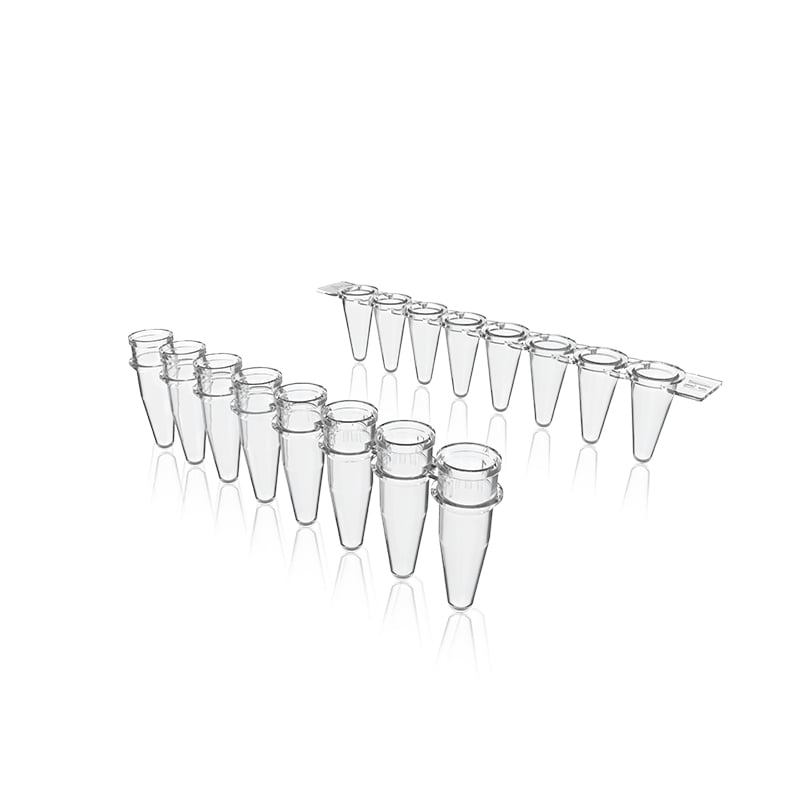
Introduction
Freeze-dried LAMP reagents are becoming more relevant in point-of-care molecular diagnostics, decentralized testing, veterinary diagnostics, agricultural testing, and low-resource laboratory environments.
Compared with liquid reagent formats, freeze-dried or room-temperature-stable reagent formats may help simplify storage, shipment, reaction setup, and field deployment.
However, a freeze-dried LAMP workflow does not depend on reagents alone.
It also needs reliable consumables for:
- Sample collection
- Sample preparation
- Reagent reconstitution
- Reaction setup
- Heating or incubation
- Sealing
- Visual or fluorescence-based detection
- Kit assembly
- Packaging and shipment
For OEM reagent companies, IVD companies, diagnostic kit developers, distributors, and private-label buyers, the real sourcing question is not only:
Can we source freeze-dried LAMP reagents?
It is:
Can we source the full reagent-and-consumables workflow reliably, flexibly, and at scale?
1. Why Freeze-Dried LAMP Matters for Point-of-Care Testing
LAMP is an isothermal nucleic acid amplification method. Unlike conventional PCR workflows that typically require thermal cycling, LAMP can be designed around constant-temperature amplification.
When combined with freeze-dried or room-temperature-stable reagent formats, LAMP may support:
- Simplified reagent handling
- Reduced cold-chain dependence
- Easier field deployment
- Pre-aliquoted reaction formats
- Shorter preparation steps
- Decentralized molecular testing
- Veterinary or agricultural field testing
- Low-resource or limited-laboratory settings
Typical application areas may include:
| Application Area | Example Workflow Need |
|---|---|
| Point-of-care molecular diagnostics | Fast sample-to-result testing close to the patient or site |
| Veterinary diagnostics | Farm, field, or regional animal disease testing |
| Agricultural pathogen testing | Plant disease screening outside central labs |
| Public health screening | Decentralized infectious disease monitoring |
| Low-resource settings | Reduced cold-chain and simplified workflow requirements |
| OEM reagent projects | Reagent + consumables + packaging bundle |
The opportunity is clear: freeze-dried LAMP can shift some molecular testing workflows closer to the point of need.
But that only works when the supporting consumables are also suitable for the workflow.
2. What Consumables Are Used in a Freeze-Dried LAMP Workflow?
A freeze-dried LAMP workflow usually involves more than one consumable category.
| Workflow Stage | Related Consumables |
|---|---|
| Sample collection | Swab tubes, sample collection tubes, sample storage tubes |
| Sample preparation | Microcentrifuge tubes, centrifuge tubes, filter tips, low-retention tips |
| Reagent handling | Pipette tips, low-retention tips, reagent reservoirs |
| Reaction setup | PCR tubes, 8-strip PCR tubes, reaction tubes, PCR plates where applicable |
| Sealing | Caps, optical caps, adhesive films, sealing films |
| Incubation / heating | Tubes or strips compatible with heating blocks or isothermal devices |
| Detection | Clear tubes for colorimetric reading or optical formats for fluorescence workflows |
| Kit assembly | Labels, cartons, barcodes, IFU inserts, private-label packaging |
| Shipment | Secondary packaging, carton planning, batch labeling |
This is why freeze-dried LAMP projects should be planned as a workflow supply chain.
A buyer may need reagents, reaction tubes, caps, sample tubes, tips, sealing materials, packaging, labeling, and documentation in one project.
3. Reaction Tubes, 8-Strip Tubes, and Sealing Requirements
In freeze-dried LAMP workflows, the reaction container is not just a plastic part.
It may influence handling, sealing, storage, heating, and result reading.
Buyers should evaluate:
- Tube format
- Single-tube or 8-strip format
- Cap fit and sealing performance
- Tube clarity
- Wall consistency
- Heating block or device fit
- Compatibility with colorimetric or fluorescence readout
- Evaporation control
- Packaging format
- Sterile or non-sterile status
- Documentation availability
- Batch consistency
For colorimetric LAMP workflows, tube clarity may matter because the user may need to visually judge color change.
For fluorescence-based workflows, optical performance and instrument compatibility may matter.
For kit assembly, sealing consistency and packaging stability may be as important as the reagent format itself.
4. Sample Preparation Consumables Before LAMP
Point-of-care molecular testing still needs sample preparation.
Depending on the workflow, buyers may need:
- Swab tubes
- Sample collection tubes
- Microcentrifuge tubes
- Centrifuge tubes
- Filter tips
- Low-retention tips
- Sample transfer consumables
- Storage tubes
- Disposable reaction consumables
Sample preparation is often where workflow risk appears.
Common questions include:
- Is the sample collected with a swab tube or separate tube?
- Is a transport medium used?
- Is the sample processed in a microcentrifuge tube?
- Does the workflow require heating or chemical lysis?
- Are filter tips needed to reduce contamination risk?
- Is low-retention liquid handling needed for small-volume transfer?
- Are tubes compatible with the intended heating or incubation device?
For OEM reagent buyers, these questions affect kit design.
For distributors, they affect which consumables should be bundled with the reagent workflow.
5. From Reagent Supply to Complete Kit Assembly
GSC queries such as OEM reagents, OEM reagents bulk, pcr reagent sourcing, molecular diagnostics consumables, and IVD consumables suggest that many buyers are not only looking for a reagent formula.
They are looking for a practical supply chain.
A freeze-dried LAMP kit may involve:
| Kit Component | Sourcing Consideration |
|---|---|
| Freeze-dried reagent | Stability, formulation, format, documentation |
| Reaction tube or strip | Tube fit, sealing, clarity, heating compatibility |
| Pipette tips | Filter, low-retention, sterile or non-sterile options |
| Sample tube | Collection, storage, or preparation role |
| Sealing component | Caps, films, evaporation control |
| Packaging | Label, carton, barcode, language, IFU |
| Documentation | ISO certificates, product specifications, claim-specific documents |
| Shipment plan | Trial order, mixed SKU shipment, repeat supply |
For buyers, the ideal partner is not only a reagent supplier or a tube supplier.
It is a supplier that can discuss the reagent workflow, the consumables, the packaging, and the repeat supply model together.
6. What Buyers Should Check Before Sourcing
Before sourcing freeze-dried LAMP reagents or related consumables, buyers should clarify:
| Evaluation Area | Questions to Ask |
|---|---|
| Application | POC diagnostics, veterinary testing, agricultural testing, research, screening, OEM kit? |
| Reagent format | Freeze-dried, lyophilized bead, dried mix, liquid reagent, or room-temperature-stable format? |
| Reaction vessel | PCR tube, 8-strip PCR tube, plate, custom tube, device-specific consumable? |
| Detection | Colorimetric, fluorescence, turbidity, lateral flow, or device-based readout? |
| Sample type | Swab, saliva, blood, environmental sample, plant sample, animal sample? |
| Sample preparation | Direct input, heat lysis, chemical lysis, extraction, or simplified prep? |
| Consumables | Tips, tubes, caps, sealing films, sample tubes, storage tubes? |
| Packaging | Bulk pack, kit pack, individual pack, private-label packaging? |
| Documentation | ISO certificates, product specifications, sterilization-related documents, FDA-related information where applicable? |
| Supply plan | Trial samples, pilot order, annual forecast, OEM/private-label cooperation? |
This checklist helps reduce miscommunication and makes RFQ discussions more efficient.
7. Quality and Documentation Control
Freeze-dried LAMP workflows may be used in research, veterinary, agricultural, industrial, public health, or diagnostic settings.
Documentation requirements vary by target market and product category.
Buyers should not assume that all products automatically meet the same claims.
Claims such as:
- sterile
- RNase-free
- DNase-free
- endotoxin-free
- pyrogen-free
- PCR inhibitor-free
- human DNA-free
- IVD-ready
- clinical diagnostic use
- room-temperature stability
should be confirmed with product-specific documentation, batch-level evidence, stability data, or market-specific regulatory review where applicable.
For private-label projects, this is especially important. Unsupported claims printed on packaging may create downstream risk for distributors and brand owners.
8. How Yuanzan Supports Freeze-Dried LAMP Workflow Buyers
Yuanzan supports selected laboratory consumables, PCR-related products, liquid handling products, reagents, lyophilized reagent options, and OEM/private-label cooperation based on project scope.
Related product categories may include:
| Application Area | Related Yuanzan Product Categories |
|---|---|
| LAMP / PCR reaction setup | PCR tubes, 8-strip PCR tubes, PCR plates, caps, sealing films |
| Liquid handling | Pipette tips, filter tips, low-retention tips, manual pipettes |
| Sample preparation | Microcentrifuge tubes, centrifuge tubes, sample processing consumables |
| Sample collection support | Selected sample tubes and related consumables based on project scope |
| Reagent support | Selected reagents and lyophilized reagent options based on application and project requirements |
| Kit assembly | Labels, cartons, barcodes, packaging language, SKU family packaging |
| OEM/private label | Product matching, packaging customization, trial order, repeat supply planning |
| Documentation support | ISO certificates, product specifications, sterilization-related documents, FDA-related information where applicable |
Yuanzan's manufacturing and supply capability includes:
| Capability Area | Yuanzan Capability |
|---|---|
| Injection molding | 23 injection molding machines |
| Injection molding range | 50-400T |
| Mold capability | 400+ mold sets |
| Cleanroom environment | 3,062 m² 100,000-class cleanroom environment |
| Quality system | ISO 9001:2015 and ISO 13485:2016 certified quality management systems |
| Sterilization options | Gamma and E-beam sterilization options based on project requirements |
| Sample support | Free samples available for selected products |
| Private-label support | Logo, label, carton, barcode, packaging language, SKU family packaging |
For OEM reagent companies, IVD buyers, and distributors, Yuanzan can help evaluate not only product availability, but also sample fit, packaging configuration, sterile or non-sterile options, and repeat supply feasibility.
Conclusion
Freeze-dried LAMP reagents are useful because they can support simpler, more decentralized molecular testing workflows.
But the reagent is only one part of the system.
A complete point-of-care LAMP workflow may also require sample tubes, swab tubes, microcentrifuge tubes, pipette tips, filter tips, low-retention tips, PCR tubes, 8-strip tubes, caps, sealing films, packaging components, labels, and documentation.
For OEM reagent companies, IVD companies, distributors, and private-label brands, the stronger sourcing strategy is to evaluate reagents and consumables together.
That means planning the full workflow:
sample collection -> sample preparation -> reagent handling -> reaction setup -> sealing -> detection -> packaging -> shipment
FAQ
What consumables are used with freeze-dried LAMP reagents?
Common consumables may include sample tubes, swab tubes, microcentrifuge tubes, pipette tips, filter tips, low-retention tips, PCR tubes, 8-strip PCR tubes, caps, sealing films, and kit packaging components.
Are freeze-dried LAMP reagents useful for point-of-care molecular diagnostics?
They may be useful in selected point-of-care, decentralized, veterinary, agricultural, field, and low-resource testing workflows because they can simplify reagent storage, shipment, and reaction setup. Suitability depends on reagent formulation, stability data, target market, and validation requirements.
What is the difference between freeze-dried LAMP and lyophilized PCR reagents?
Both formats involve dried or stabilized reagent approaches, but LAMP is an isothermal amplification method, while PCR usually requires thermal cycling. The required consumables may overlap, including tubes, tips, caps, sealing products, and sample preparation consumables.
Can Yuanzan support OEM reagent companies?
Yes. Yuanzan supports selected PCR-related products, reagents, lyophilized reagent options, laboratory consumables, and OEM/private-label cooperation based on product category, project scope, documentation requirements, and target market.
Does Yuanzan only supply laboratory consumables?
No. Yuanzan's product scope includes selected laboratory consumables, liquid handling products, PCR-related products, equipment, reagents, and lyophilized reagent options. Specific project scope should be confirmed by product category and market requirements.
Can buyers upload reference SKUs from Thermo Fisher, Fisher Scientific, VWR, Qiagen, NEB, Bio-Rad, Promega, Eppendorf, or other catalog brands?
Yes. Buyers may upload catalog pages, reference SKUs, product photos, drawings, packaging files, or technical datasheets from existing catalog brands for internal sample matching and project evaluation.
Brand names are used only as market reference examples. Yuanzan is not affiliated with these brands.
Are PCR tubes or 8-strip tubes automatically RNase-free, DNase-free, sterile, or PCR inhibitor-free?
Not by default. Claims such as RNase-free, DNase-free, sterile, endotoxin-free, human DNA-free, or PCR inhibitor-free should be confirmed with product-specific documentation or batch-level evidence where applicable.
Can Yuanzan support private-label LAMP or PCR workflow kits?
Private-label support can include labels, cartons, barcodes, packaging language, product family packaging, and selected kit component planning based on product category, MOQ, documentation needs, and project scope.
Can sterile and non-sterile samples be requested?
Yes. Sterile and non-sterile sample options can be discussed based on product category and evaluation needs.
What information should I provide for an OEM reagent or LAMP kit project?
Buyers should provide application, reagent format, reference SKU, reaction vessel type, sample type, target market, estimated annual volume, packaging requirements, documentation needs, and whether private-label or kit assembly support is required.
Need Consumables or Kit Components for Freeze-Dried LAMP Workflows?
Yuanzan supports selected PCR consumables, sample preparation consumables, liquid handling products, reagents, lyophilized reagent options, and OEM/private-label projects.
Send your reagent format, application, reference SKU, target market, annual volume, packaging requirements, and documentation needs. Our team can help evaluate sample availability, tube or strip fit, sterile or non-sterile options, private-label packaging, and repeat supply feasibility.