
Molecular Biology
PCR Workflow Sourcing Guide: Equipment, Reagents, and Consumables for Distributors
Learn how distributors and OEM buyers can source PCR workflow products, including PCR equipment, reagents, pipette tips, PCR tubes, PCR plates, sealing films, centrifuge tubes, and related laboratory consumables.
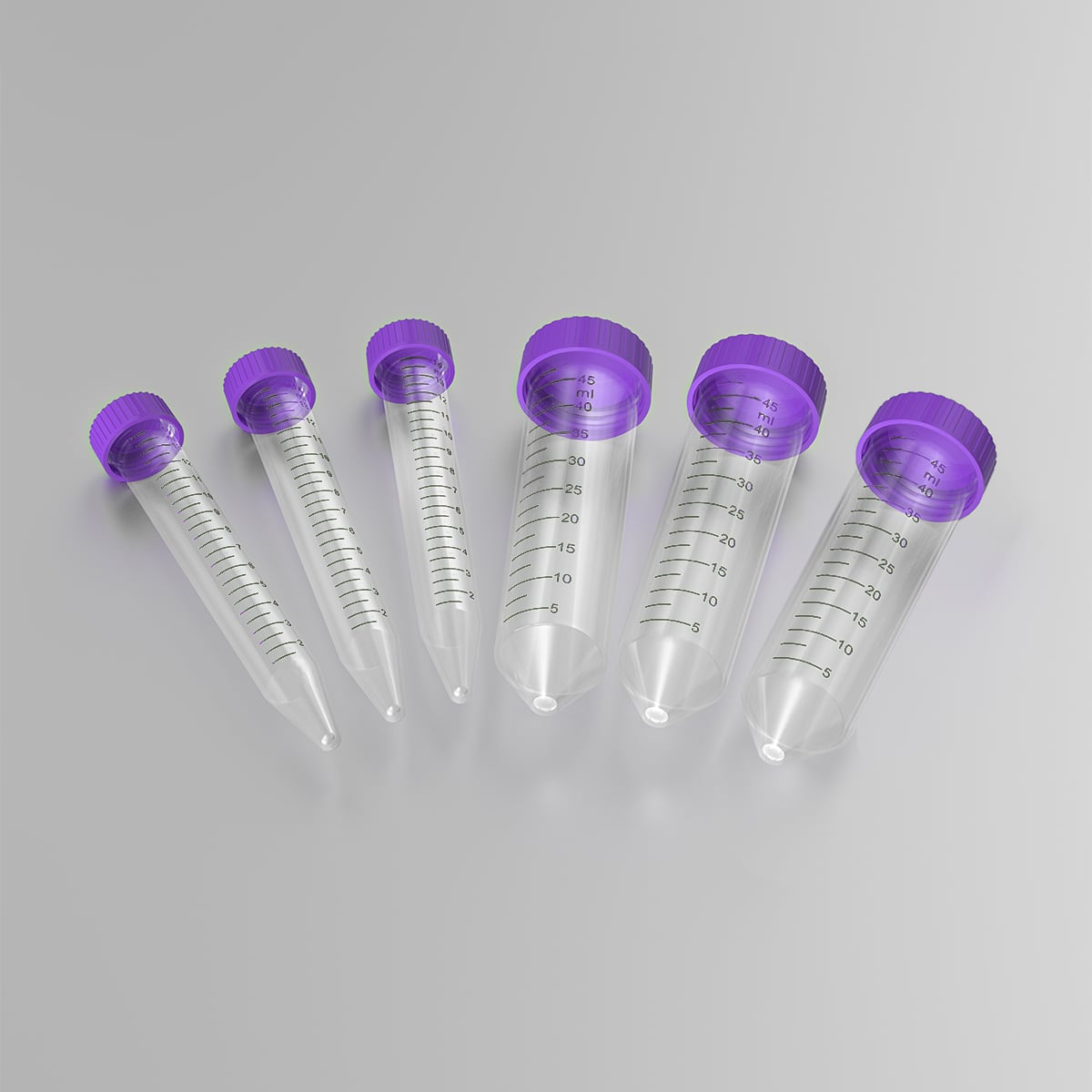
PCR workflows are not built from one product alone.
A laboratory may need instruments, reagents, pipettes, pipette tips, PCR tubes, PCR plates, sealing films, centrifuge tubes, storage consumables, and documentation support to run molecular biology workflows consistently.
For distributors, importers, OEM buyers, and regional laboratory brands, this creates a sourcing question:
Should PCR-related products be sourced as isolated SKUs, or as a connected workflow category?
For many buyers, the better approach is to evaluate PCR equipment, reagents, and consumables together.
1. Why PCR Workflow Sourcing Matters
PCR-related customers rarely purchase only one product category.
A molecular biology lab may need:
- PCR instruments
- PCR reagents
- Manual pipettes
- Pipette tips
- Filter tips
- PCR tubes
- PCR 8-strip tubes
- PCR plates
- Optical sealing films
- Centrifuge tubes
- Deep-well plates
- Sample storage consumables
For distributors, this means PCR is not only a product category. It is a workflow opportunity.
A workflow-based sourcing strategy can help distributors:
- Expand catalog coverage
- Build repeat-order product families
- Support molecular biology customers more completely
- Improve cross-selling between reagents and consumables
- Offer private-label or OEM product combinations
- Reduce supplier fragmentation
Instead of listing PCR tubes, PCR plates, and reagents separately, distributors can build a connected PCR workflow catalog.
2. Core Product Groups in a PCR Workflow
A practical PCR workflow usually includes three product groups.
PCR Equipment
PCR equipment may include PCR instruments, qPCR instruments, heating modules, or related laboratory equipment depending on the application.
For distributors, equipment helps open the customer relationship, but it may not create the highest repeat purchase frequency.
PCR Reagents
PCR reagents may include master mixes, enzymes, buffers, or related molecular biology reagents depending on the workflow.
Reagents require careful documentation, storage, stability, and application support.
PCR Consumables
PCR consumables are often the repeat-order layer of the workflow.
Common categories include:
- PCR tubes
- PCR 8-strip tubes
- PCR plates
- Optical sealing films
- Pipette tips
- Filter tips
- Low-retention tips
- Deep-well plates
- Centrifuge tubes
- Microcentrifuge tubes
For distributors, consumables can create stable reorder demand when product quality, packaging, and documentation are clear.
3. What Buyers Should Evaluate Before Sourcing PCR Products
PCR workflow sourcing should not be judged only by price.
Buyers should evaluate:
- Product range
- Instrument and consumable compatibility
- Reagent and consumable application fit
- Packaging format
- Sterile or non-sterile options
- Cleanroom production information
- ISO and quality documentation
- Product-specific claims
- Sample availability
- Private-label packaging support
- Repeat supply capability
This is especially important when products are supplied to molecular biology labs, IVD companies, academic research labs, biotech companies, or regional distributors.
4. Documentation and Claim Control
PCR-related products often involve technical claims.
For consumables, buyers should not assume that every product is automatically:
- RNase-free
- DNase-free
- PCR inhibitor-free
- Human DNA-free
- Endotoxin-free
- Sterile
These claims require product-specific documentation or batch-level evidence where applicable.
For equipment and reagents, documentation requirements may vary by product category, market, and application.
Buyers should clarify documentation during the RFQ stage, before placing orders or printing private-label packaging.
Useful documents may include:
- ISO certificates
- Product specification sheets
- Cleanroom information
- Product-level test reports
- Sterilization-related documents where applicable
- FDA-related information where applicable
- Reagent or equipment documents based on product type
5. OEM and Private-Label PCR Workflow Programs
For distributors and regional brands, PCR workflow sourcing can support several cooperation models.
Standard Supply
Suitable for buyers who want to launch quickly with existing products.
Private Label
Suitable for distributors who want their own packaging, SKU family, label language, barcode, carton, and product line identity.
OEM / ODM Cooperation
Suitable for buyers with deeper customization needs, project-specific requirements, or long-term volume planning.
A practical path may look like this:
Sample review -> product matching -> documentation check -> packaging confirmation -> pilot order -> repeat supply planning
This staged approach helps buyers reduce risk before launching a larger PCR product catalog.
6. Sample Evaluation Before Catalog Expansion
Before adding PCR workflow products to a catalog, distributors should request samples.
Sample evaluation helps check:
- Product appearance
- Packaging format
- Fit with existing workflow
- Sterile or non-sterile requirements
- Documentation availability
- Customer feedback
- Private-label feasibility
- Reorder potential
A PCR workflow sample kit may include:
- Pipette tips
- PCR tubes
- PCR plates
- Sealing films
- Centrifuge tubes
- Deep-well plates
- Related molecular biology consumables
For distributors, samples are not only for quality checking. They are a practical first step before pilot SKU planning and repeat supply.
Conclusion
PCR workflow sourcing should not be limited to one product type.
For distributors and OEM buyers, the opportunity is to build a connected product system covering PCR equipment, reagents, and laboratory consumables.
A reliable supplier should support product selection, sample review, documentation clarification, packaging options, pilot SKU planning, and repeat supply discussion.
FAQ
Does Yuanzan only supply laboratory consumables?
No. Yuanzan's product scope includes selected laboratory consumables, liquid handling products, PCR-related products, equipment, and reagents. Project scope should be confirmed by product category and market requirement.
What consumables are commonly used in PCR workflows?
Common PCR workflow consumables include pipette tips, filter tips, PCR tubes, PCR 8-strip tubes, PCR plates, optical sealing films, centrifuge tubes, microcentrifuge tubes, and deep-well plates.
Can Yuanzan support PCR consumables samples?
Yes. Yuanzan can support free sample requests for selected PCR and molecular biology-related consumables based on product category and evaluation needs.
Can Yuanzan support private-label PCR consumables?
Yes. Private-label support can include customer logo, labels, cartons, barcodes, packaging language, and SKU family packaging based on product and project requirements.
Are PCR consumables automatically RNase-free or DNase-free?
No. RNase-free, DNase-free, PCR inhibitor-free, sterile, and similar claims require product-specific documentation or batch-level evidence where applicable.
Can I upload a reference SKU or product list?
Yes. Buyers may upload product lists, catalog pages, reference SKUs, product photos, drawings, or packaging files to help evaluate product fit and sample matching.
Looking for PCR Workflow Products and Laboratory Consumables?
Yuanzan supports selected PCR-related products, laboratory plastic consumables, liquid handling products, molecular biology consumables, and OEM/private-label cooperation.
Send your product list, target market, estimated annual volume, and documentation requirements. Our team can help evaluate sample availability, product fit, packaging options, and next steps for quotation.