
Sourcing & Cost Optimization
10 Lab Equipment, Reagent, and Consumables Brands Buyers Should Know in 2026
Explore 10 lab equipment, reagent, and consumables brands buyers should know in 2026, with sourcing notes for benchmark comparisons and China OEM/private-label supply.
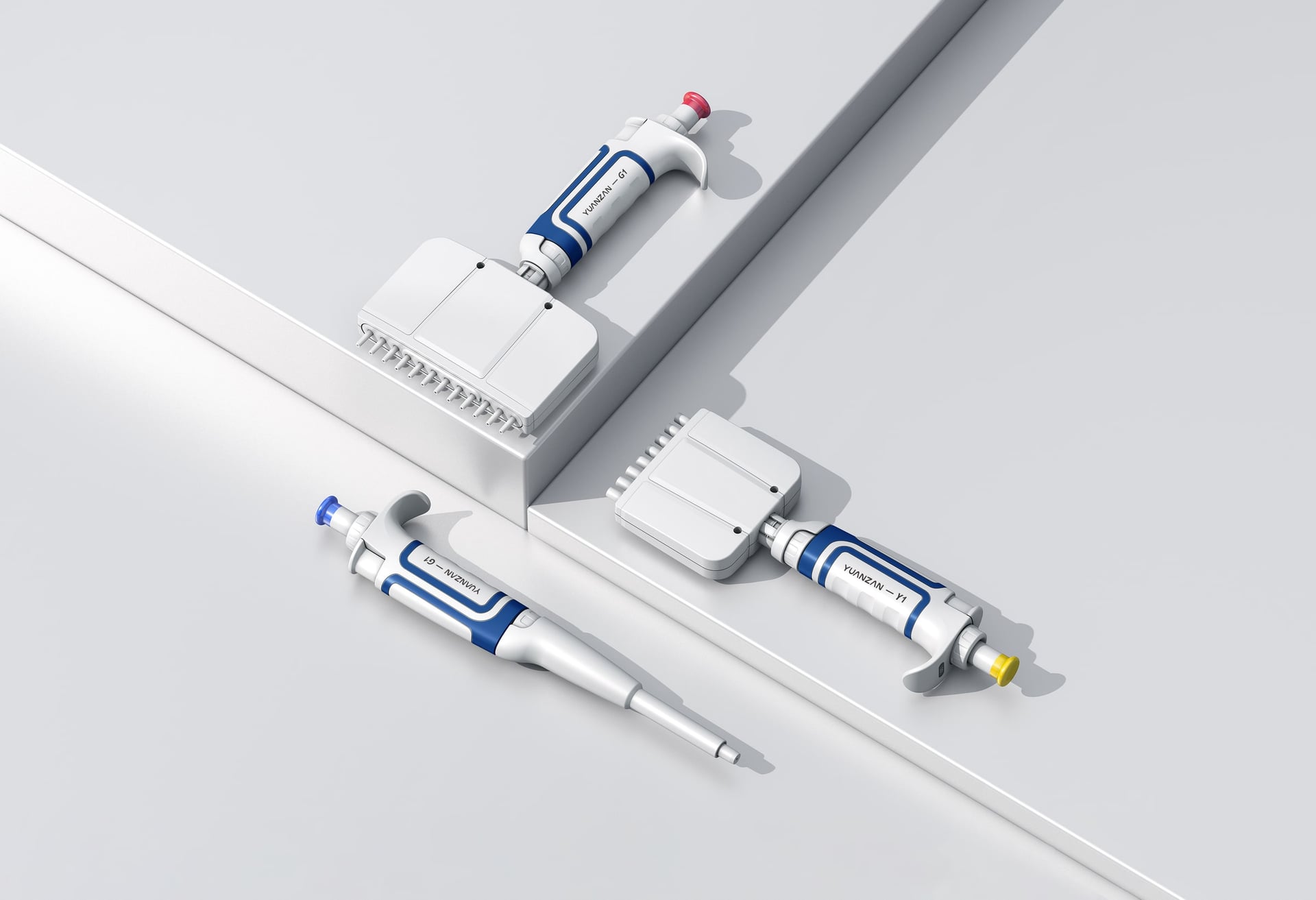
Laboratory buyers, distributors, and private-label brands often use global lab equipment, reagent, and consumables brands as benchmarks for product range, documentation expectations, packaging standards, buyer familiarity, and local market positioning.
This guide introduces 10 lab equipment, reagent, and consumables brands buyers should know in 2026. The brands are listed in no particular order. This is not a ranking.
The purpose is not to say which brand is “best.” Instead, this buyer guide helps distributors compare global benchmark brands with China-based OEM, private-label, and wholesale lab consumables supply options.
For buyers in Europe, Latin America, and Southeast Asia, this comparison can be useful when planning product catalogs, evaluating reference SKUs, building private-label lines, or sourcing laboratory consumables from China.
Quick Answer: Which Lab Equipment, Reagent, and Consumables Brands Should Buyers Know?
The following brands are commonly used as global or regional benchmarks in laboratory equipment, reagents, consumables, life science workflows, molecular diagnostics, cell culture, liquid handling, and distributor catalog planning.
Brands are listed in no particular order:
- Thermo Fisher Scientific
- Merck / Sigma-Aldrich / Millipore
- Avantor / VWR
- Eppendorf
- Corning Life Sciences
- Sartorius
- Bio-Rad
- QIAGEN
- Greiner Bio-One
- NEST Scientific
Buyers may use these brands as references when comparing product categories, packaging formats, documentation expectations, premium pricing, catalog structure, and local availability.
However, global brands are not the only sourcing option.
Many distributors also evaluate China-based OEM, ODM, private-label, and wholesale supply when they want lower landed cost, flexible SKU planning, mixed shipment, sample-based evaluation, and factory-direct communication.
China OEM Supply Note: Where Yuanzan Fits
Global brands are useful benchmarks. But distributors and private-label brands may also need factory-direct supply options when they want:
- private-label packaging
- flexible SKU planning
- sample-based evaluation
- mixed-product shipment
- wholesale lab consumables from China
- OEM / ODM cooperation
- regional distributor margin protection
- long-term repeat supply planning
Yuanzan is based in Kunshan, Jiangsu, near Shanghai, China. The company supports selected laboratory plastic consumables, liquid handling products, PCR-related products, reagents, lyophilized reagent options, OEM/ODM cooperation, and private-label packaging based on product category and project scope.
For buyers comparing global catalog brands with China OEM supply, Yuanzan can support:
- product list review
- reference SKU evaluation
- sample requests
- sterile and non-sterile sample discussion
- documentation review
- private-label packaging discussion
- pilot SKU planning
- distributor supply planning
Yuanzan does not position itself as a replacement for every global brand. Instead, it can be considered as a China-based manufacturing and OEM/private-label supply option for selected laboratory consumables and workflow-related products.
How Buyers Should Use Global Brands as Benchmarks
Global brands can help buyers understand what the market expects.
Distributors may use brand catalogs to benchmark:
| Benchmark Area | What Buyers Can Learn |
|---|---|
| Product category design | Which products are commonly grouped together |
| Packaging format | Bulk, rack, sterile, individually wrapped, kit-based, or private-label format |
| Documentation expectations | Product specifications, certificates, sterilization documents, claim-specific evidence |
| Pricing structure | Premium catalog pricing vs factory-direct supply cost |
| Reference SKU matching | Existing SKU, dimensions, material, volume, packaging, compatibility |
| Workflow bundling | PCR, liquid handling, cell culture, sample processing, molecular diagnostics |
| Regional availability | Which products are easy or difficult to source locally |
The goal is not to copy global brands.
The goal is to understand buyer expectations and then build a sourcing strategy that fits the distributor’s market.
10 Lab Equipment, Reagent, and Consumables Brands Buyers Should Know in 2026
1. Thermo Fisher Scientific
Known for: laboratory equipment, reagents, consumables, diagnostics, molecular biology tools, genetic analysis, lab supply channels, and broad laboratory workflow support.
Thermo Fisher’s Thermo Scientific brand covers analytical instruments, laboratory equipment, software, consumables, bioprocessing, and services, while also supporting life sciences, clinical and diagnostics, industrial and applied sciences, and bioprocessing workflows.
Useful reference categories:
- lab equipment
- molecular biology tools
- PCR / qPCR workflow products
- laboratory consumables
- diagnostic workflow products
- life science reagents
Buyer note: Buyers often use Thermo Fisher or Fisher Scientific catalog products as reference SKUs when comparing specifications, packaging, documentation, and local availability.
2. Merck / Sigma-Aldrich / Millipore
Known for: life science reagents, chemicals, filtration, lab water, biomanufacturing support, analytical testing, and laboratory materials.
Merck’s life science platform includes Sigma-Aldrich, Millipore, Supelco, SAFC, Milli-Q, and other solution brands, covering research, biotechnology development, production, pharmaceutical development, analytical testing, and biomanufacturing workflows.
Useful reference categories:
- reagents
- chemicals
- filtration products
- lab water systems
- analytical testing supplies
- bioprocess and life science workflow products
Buyer note: For reagent companies, academic labs, biotech companies, and distributors, Merck / Sigma-Aldrich / Millipore products are often used as high-recognition references for reagent sourcing, laboratory workflow planning, and documentation expectations.
3. Avantor / VWR
Known for: laboratory distribution, catalog supply, chemicals, consumables, equipment, services, and inventory support.
VWR is part of Avantor and operates as Avantor’s distribution channel. Avantor describes VWR as a global laboratory supply and service platform supporting customers in life sciences and advanced technologies; its distribution platform includes 40 distribution centers globally.
Useful reference categories:
- distributor catalog structure
- lab consumables
- chemicals
- equipment
- inventory management
- laboratory supply services
Buyer note: For distributors, VWR is useful as a catalog and distribution benchmark. Buyers can study how broad lab supply catalogs are organized and how products are grouped across workflows.
4. Eppendorf
Known for: pipettes, liquid handling, centrifuges, tubes, PCR consumables, sample handling, cell handling, and laboratory instruments.
Eppendorf describes its portfolio as covering pipetting and automated liquid handling, centrifugation, cell incubation, cold storage, PCR, photometry, consumables, instruments, and accessories.
Useful reference categories:
- manual pipettes
- liquid handling
- pipette tips
- centrifuge tubes
- PCR consumables
- sample handling consumables
Buyer note: Eppendorf is a strong reference for buyers evaluating liquid handling products, pipettes, microcentrifuge tubes, PCR consumables, and sample processing workflows.
5. Corning Life Sciences
Known for: cell culture products, lab consumables, microplates, surfaces, flasks, dishes, and life science workflow products.
Corning Life Sciences offers cell culture products such as cell cultureware, plates, surfaces, and media. Corning also positions its lab essentials and core consumables around laboratory productivity, repeatability, and cell culture workflows.
Useful reference categories:
- cell culture plates
- flasks
- dishes
- microplates
- lab essentials
- cell culture consumables
Buyer note: For distributors building cell culture consumables lines, Corning is a common benchmark for product category planning, surface-related product positioning, and packaging expectations.
6. Sartorius
Known for: laboratory instruments, bioprocessing products, filtration, balances, liquid handling, lab services, and consumables.
Sartorius describes its product offering as instruments, consumables, and services for biopharmaceutical, chemical, food, and academic laboratories.
Useful reference categories:
- lab instruments
- filtration
- bioprocessing products
- balances
- liquid handling
- lab consumables
Buyer note: Sartorius is useful as a benchmark for laboratories and distributors working across biopharma, filtration, laboratory measurement, and process-related workflows.
7. Bio-Rad
Known for: PCR, qPCR, ddPCR, life science research tools, reagents, instruments, western blotting, protein analysis, and clinical research support.
Bio-Rad offers laboratory reagents and instrumentation for applications including digital PCR, real-time PCR, conventional PCR, western blotting, cell biology, and protein purification.
Useful reference categories:
- PCR and qPCR instruments
- ddPCR systems
- amplification reagents
- protein analysis tools
- western blot workflows
- life science research reagents
Buyer note: Bio-Rad is a strong benchmark for PCR, qPCR, ddPCR, protein workflow, and molecular biology reagent buyers.
8. QIAGEN
Known for: sample preparation, nucleic acid purification, molecular diagnostics, PCR / dPCR workflows, clinical research, and diagnostic sample processing.
QIAGEN’s diagnostic sample processing portfolio includes nucleic acid purification kits and automated systems such as QIAcube Connect and QIAsymphony SP/AS for DNA/RNA purification and assay setup workflows.
Useful reference categories:
- nucleic acid purification
- sample preparation
- molecular diagnostics
- PCR / dPCR workflows
- clinical research products
- automated sample processing
Buyer note: For molecular diagnostics and OEM reagent buyers, QIAGEN is useful as a benchmark for sample preparation workflow design and molecular testing supply chains.
9. Greiner Bio-One
Known for: plastic laboratory consumables, cell culture products, microplates, IVD supply, biotechnology, diagnostics, and pharmaceutical laboratory products.
Greiner Bio-One is described as a globally active company for plastic products serving in-vitro diagnostics, biotechnology, diagnostic, and pharmaceutical industries, including laboratory vessels for cell culture and microplates for high-throughput biochemical, genetic, or pharmacological tests.
Useful reference categories:
- plastic lab consumables
- cell culture products
- microplates
- IVD consumables
- diagnostic workflow products
- pharma and biotech lab consumables
Buyer note: Greiner Bio-One is a practical benchmark for buyers focused on plastic consumables, cell culture, microplates, and diagnostic lab supply.
10. NEST Scientific
Known for: China-based laboratory consumables, plastic injection molding, cell culture products, automation consumables, clean manufacturing systems, and lab plasticware.
NEST Scientific presents itself as a China-based laboratory consumables supplier with decades of plastic injection molding experience and clean manufacturing systems covering life science consumables and medical device pharmaceutical packaging fields.
Useful reference categories:
- China-based lab consumables
- plastic injection molding
- cell culture products
- automation consumables
- PCR and molecular workflow consumables
- distributor supply reference
Buyer note: NEST Scientific is useful as a China manufacturing benchmark for buyers comparing global catalog brands with China-based lab consumables manufacturers.
Regional Buyer Notes
Europe
European buyers often prioritize documentation, traceability, packaging consistency, and claim control.
For European distributors, global brands may be useful as benchmarks for:
- product specifications
- packaging language
- batch traceability
- import documentation
- sterilization-related documents where applicable
- product-specific claim evidence
- premium catalog positioning
When comparing global brands with China OEM or private-label supply, European buyers should validate documentation before large catalog expansion.
Recommended path:
reference SKU review → sample evaluation → documentation check → pilot SKU launch → private-label expansion
Latin America
Latin American buyers often balance landed cost, distributor margin, quote validity, product availability, and shipment planning.
Global brands may provide strong local recognition, but distributors may also explore China wholesale or factory-direct supply when they need:
- lower landed cost
- mixed SKU shipment
- flexible MOQ discussion
- private-label packaging
- inventory buffer planning
- distributor margin protection
- repeat supply forecast
Recommended path:
cost review → sample request → mixed-product pilot shipment → customer feedback → annual supply plan
Southeast Asia
Southeast Asian buyers may benefit from faster China-to-region communication and flexible replenishment planning.
Global brands are useful for market education and reference SKUs, while China-based suppliers may support:
- faster sample evaluation
- smaller pilot lots
- PCR and molecular diagnostics bundles
- veterinary and agricultural testing consumables
- flexible SKU combinations
- more frequent replenishment
- private-label catalog testing
Recommended path:
sample request → small pilot SKU launch → fast customer feedback → SKU expansion → OEM/private-label planning
When Buyers Should Consider China OEM, Private-Label, or Wholesale Supply
Global brands are important for benchmarking. But distributors may also need China-based OEM or wholesale suppliers when they want more control over catalog expansion and sourcing economics.
Buyers may consider China OEM/private-label supply when they need:
- lower total sourcing cost
- flexible MOQ discussion
- private-label packaging
- logo, label, carton, barcode, or packaging language customization
- mixed SKU shipment
- factory-direct communication
- sample-based evaluation
- distributor catalog expansion
- regional margin protection
- repeat supply planning
- OEM / ODM cooperation
This is especially relevant for products such as:
- pipette tips
- filter tips
- low-retention tips
- centrifuge tubes
- microcentrifuge tubes
- PCR tubes
- PCR 8-strip tubes
- PCR plates
- sealing films
- deep-well plates
- selected cell culture consumables
- manual pipettes
- sample processing consumables
MOQ, Trade Terms, and Factory-Direct Questions
MOQ is not only a number.
For laboratory consumables, MOQ may depend on product category, packaging format, sterilization requirement, private-label design, documentation needs, and annual forecast.
Before choosing a China lab consumables manufacturer or wholesale supplier, buyers should ask:
| Question | Why It Matters |
|---|---|
| What is the MOQ by product category? | Tips, tubes, plates, and packaging may differ |
| Are free samples available? | Helps evaluate fit before bulk order |
| Are sterile and non-sterile samples available? | Supports workflow comparison |
| Is private-label packaging required? | Labels, cartons, and barcodes affect MOQ and lead time |
| Can multiple SKUs ship together? | Helps distributors reduce fragmented logistics |
| Is the quote EXW, FOB, CIF, DAP, or DDP? | Trade terms affect cost and responsibility |
| How long is the quote valid? | Useful for currency and freight planning |
| Can annual forecast improve supply planning? | Helps build repeat supply instead of one-time sourcing |
| What documents are available? | Supports distributor, importer, and end-user confidence |
Incoterms® rules are a set of eleven three-letter trade terms used in international and domestic contracts for the delivery of goods; ICC states that Incoterms help clarify the tasks, costs, and risks involved in delivery from sellers to buyers.
For B2B lab consumables buyers, this means trade terms should be discussed before placing a pilot or bulk order.
How Yuanzan Supports OEM / Private-Label Buyers
Yuanzan supports distributors, importers, OEM/ODM buyers, reagent companies, IVD companies, and private-label brands with selected laboratory plastic consumables and workflow-based supply planning.
| Capability Area | Yuanzan Support |
|---|---|
| Location | Kunshan, Jiangsu, near Shanghai, China |
| Manufacturing | 23 injection molding machines |
| Injection molding range | 50–400T |
| Mold capability | 400+ mold sets |
| Cleanroom environment | 3,062 m² 100,000-class cleanroom environment |
| Quality system | ISO 9001:2015 and ISO 13485:2016 certified quality management systems |
| Product scope | Pipette tips, filter tips, centrifuge tubes, PCR tubes, PCR plates, deep-well plates, sealing films, selected cell culture consumables, manual pipettes, related workflow products |
| Sterilization options | Gamma and E-beam sterilization options based on project requirements |
| Sample support | Free samples available for selected products |
| Private-label support | Logo, label, carton, barcode, packaging language, SKU family packaging |
| Documentation support | ISO certificates, specifications, cleanroom information, sterilization-related documents, FDA-related information where applicable |
Yuanzan can help buyers move from brand benchmark comparison to practical sourcing steps:
- Upload reference SKUs
- Request free samples
- Compare product specifications
- Review documentation
- Discuss packaging and private-label needs
- Plan pilot SKUs
- Build repeat supply
Conclusion
Global lab equipment, reagent, and consumables brands are useful benchmarks for buyers in 2026.
They help laboratories and distributors understand product categories, documentation expectations, packaging formats, premium pricing, and workflow-based catalog structure.
But many distributors also need China OEM, private-label, and wholesale supply options when building product lines for Europe, Latin America, and Southeast Asia.
The best sourcing strategy is not to copy global brands.
It is to use them as benchmarks, validate products through samples and documentation, and build a supply model that fits local market needs.
FAQ
Are these lab equipment, reagent, and consumables brands ranked?
No. The brands are listed in no particular order. This article is a buyer guide, not a ranking.
Why should distributors study global lab brands?
Global brands can help distributors understand product categories, packaging expectations, documentation standards, premium pricing, workflow bundles, and buyer familiarity.
Can buyers use global brand SKUs as sourcing references?
Yes. Buyers may use existing catalog-brand SKUs as references for internal sample matching, specification comparison, and sourcing evaluation.
Can China OEM suppliers replace global brands?
Not always. China OEM suppliers should not be assumed to replace every global brand or product. Buyers should validate samples, documentation, specifications, packaging, and product-specific claims before switching suppliers.
What should buyers check before switching from catalog brands to factory-direct supply?
Buyers should check product specifications, material information, sample performance, packaging format, sterilization-related documents where applicable, ISO certificates, claim-specific documents, MOQ, lead time, and repeat supply capacity.
What MOQ should buyers expect for lab consumables?
MOQ depends on product category, packaging format, sterilization requirement, private-label design, and annual forecast. Buyers should discuss MOQ by product family rather than assuming one MOQ applies to all products.
Can private-label packaging be supported?
Yes. Private-label packaging may include logo, labels, cartons, barcodes, packaging language, and SKU family packaging based on product category, MOQ, documentation needs, and project scope.
Can buyers upload reference SKUs from Thermo Fisher, VWR, Eppendorf, Corning, QIAGEN, Bio-Rad, Greiner Bio-One, NEST, or other catalog brands?
Yes. Buyers may upload catalog pages, reference SKUs, product photos, drawings, packaging files, or technical datasheets from existing catalog brands for internal sample matching and sourcing evaluation.
Brand names are used only as market reference examples. Yuanzan is not affiliated with these brands.
Does Yuanzan only supply laboratory consumables?
No. Yuanzan’s product scope includes selected laboratory consumables, liquid handling products, PCR-related products, equipment, reagents, and lyophilized reagent options. Specific project scope should be confirmed by product category and market requirements.
Can sterile and non-sterile samples be requested?
Yes. Sterile and non-sterile sample options can be discussed based on product category and evaluation needs.
Looking for China OEM, Private-Label, or Wholesale Lab Consumables Supply?
Send your product list, reference SKUs, target market, estimated annual volume, packaging requirements, and documentation needs.
Yuanzan can help evaluate sample availability, product category fit, sterile or non-sterile options, private-label packaging, documentation requirements, pilot SKU planning, and repeat supply feasibility.