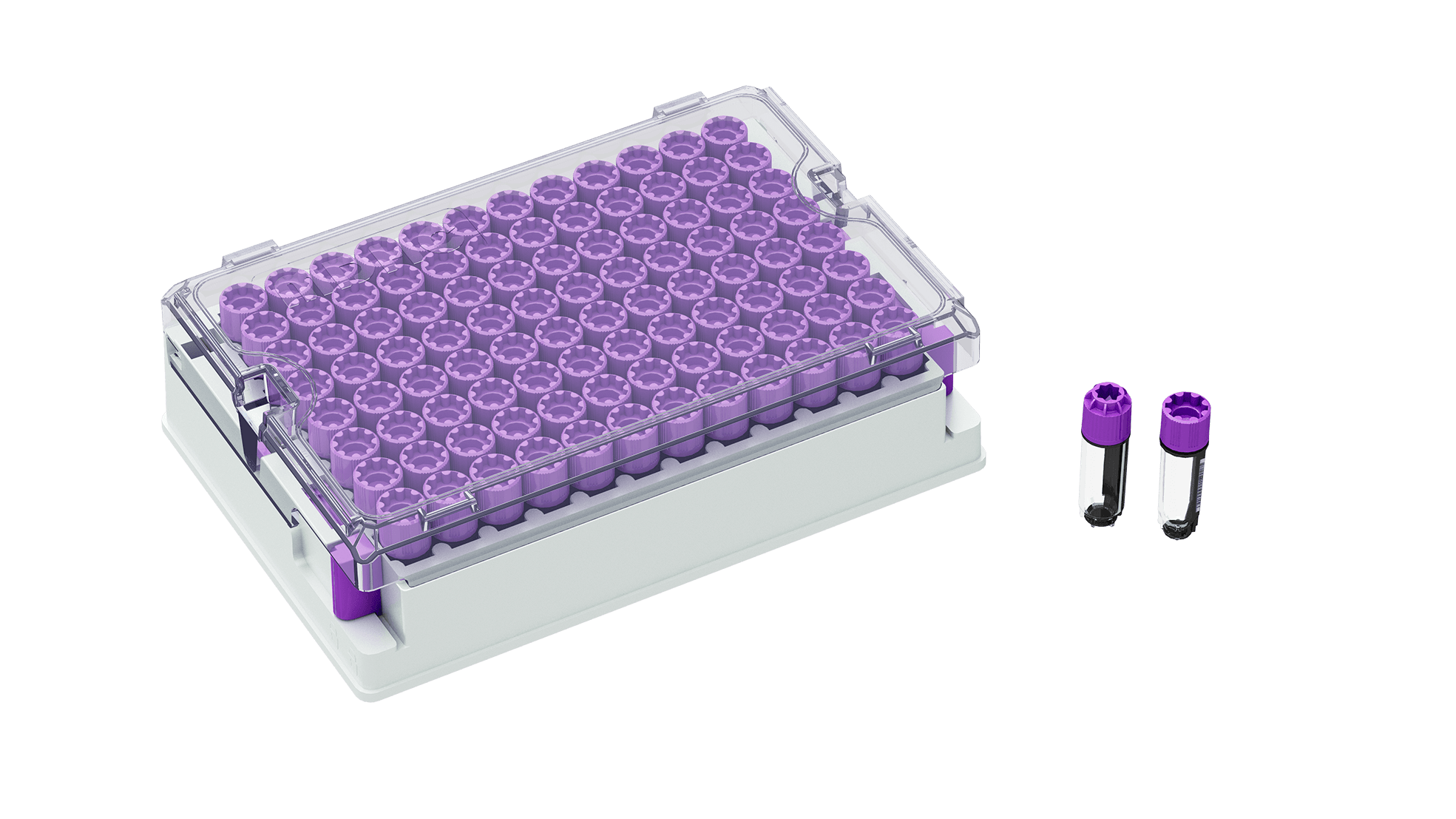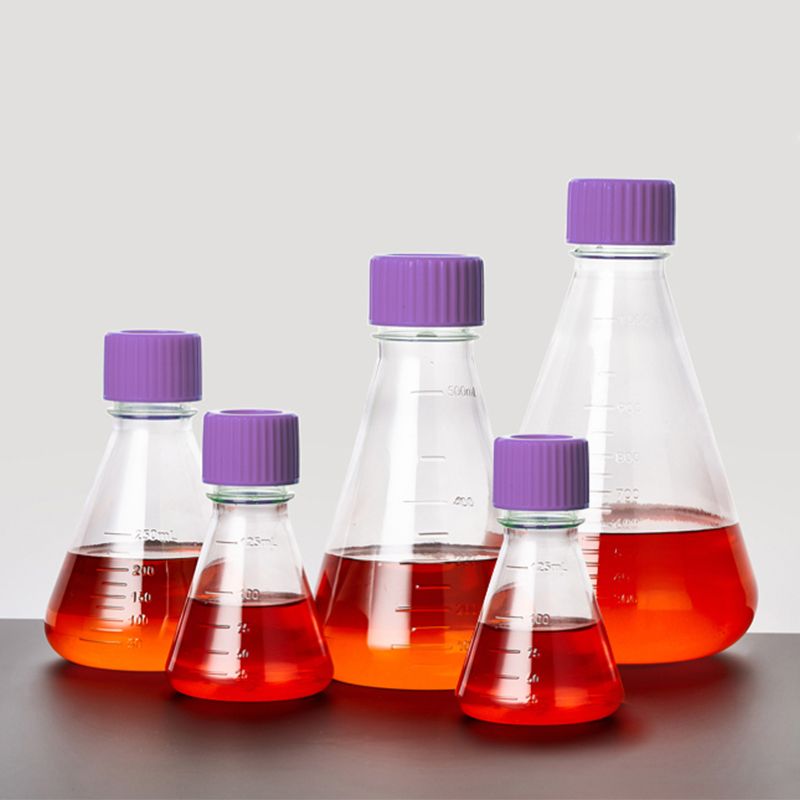
Cell therapy manufacturing places demanding requirements on the materials, equipment, and consumables used throughout the production process.
As a cell therapy program moves from early research to process development and controlled manufacturing, purchasing decisions become increasingly connected to product quality, process consistency, and supplier qualification.
However, not every consumable used in a cell therapy facility carries the same level of risk.
A pipette tip used for routine analytical work, a vessel that directly contacts a cellular product, and a cryogenic container used for sample retention may require different levels of assessment.
For manufacturing organizations, quality teams, and procurement professionals, the central question is not whether a supplier describes its products as "GMP-ready."
It is whether a specific consumable, supported by appropriate documentation and qualification activities, is suitable for its intended use.
This guide presents a risk-based approach to consumable selection, documentation review, and supplier qualification for cell therapy-related workflows.
Quick Answer: How Should Cell Therapy Consumables Be Qualified?
Start by defining the intended use of each consumable and its potential impact on the manufacturing process or analytical result.
A practical qualification approach includes six considerations:
1. Intended use: Determine whether the product supports research, process development, quality-control testing, or a manufacturing operation.
2. Product-contact risk: Identify whether the consumable directly contacts cells, intermediates, or other critical process materials.
3. Material and performance requirements: Confirm compatibility with the intended process conditions.
4. Quality documentation: Review product specifications, relevant test evidence, and supplier quality information.
5. Traceability and change control: Establish how lots, specifications, and manufacturing changes will be managed.
6. Supplier qualification: Evaluate samples and documentation before approving the product for the intended use.
A quality management certificate or product catalog cannot establish GMP suitability on its own.
Qualification must reflect the specific product, manufacturing process, applicable regulatory requirements, and the customer's quality system.
1. Understanding Consumable Risk by Intended Use
Cell therapy workflows can involve cell collection and preparation, activation, modification, expansion, harvesting, quality-control testing, and cryopreservation.
Different products may be used at different stages.
The same consumable category may also have different requirements depending on how it is used.
For example, a centrifuge tube used during early process development may be evaluated differently from a container that directly contacts material in an approved manufacturing process.
A Practical Consumable Risk Matrix
| Intended Use | Example Consumables | Main Qualification Considerations |
|---|---|---|
| Research and process development | Pipette tips, centrifuge tubes, culture vessels | Functional suitability, material, dimensions, compatibility |
| QC and analytical testing | PCR plates, PCR tubes, filter tips | Method compatibility, contamination control, analytical performance |
| Direct product-contact operations | Process-contact vessels, tubing or other qualified single-use components | Material interaction, contamination risk, integrity, process-specific evidence |
| Sample retention and cryopreservation | Cryogenic tubes and storage products | Temperature suitability, closure integrity, identification, traceability |
This is a practical purchasing framework, not a universal regulatory classification.
A consumable's risk classification must be determined in the context of the actual process.
For example, even a product commonly described as routine laboratory plasticware may require additional qualification if it becomes part of a critical manufacturing operation.
Conversely, not every product used within a GMP facility requires the same product-contact validation package.
The intended use determines the evidence needed—not the location in which the consumable is used.
2. Process Development vs. GMP Manufacturing: What Changes?
Consumables selected during early development may not automatically remain suitable as a manufacturing process becomes more controlled.
During process development, scientists may compare different materials, vessel formats, or suppliers while refining the workflow.
As the process progresses, the organization may need to establish approved product specifications, document critical materials, assess supplier changes, and evaluate the effect of substitutions on process performance.
| Qualification Area | Process Development | GMP-Related Manufacturing |
|---|---|---|
| Product specifications | May evolve during optimization | Defined and controlled specifications |
| Material compatibility | Investigated according to process needs | Supported by evidence appropriate to criticality |
| Supplier changes | May be evaluated during development | Managed through documented change assessment |
| Product documentation | Research and development requirements | Applicable quality-system and process requirements |
| Lot traceability | Based on development needs | Managed according to material criticality and applicable procedures |
| Alternative suppliers | Compared for feasibility | Qualified before use under established controls |
This does not mean that every material requires the same formal testing program.
The appropriate level of qualification should reflect risk, intended use, and applicable regulations.
Regulatory Context
In the United States, the FDA's January 2024 guidance on CAR T-cell product development discusses chemistry, manufacturing, and control considerations as part of the development of these products.
In the European Union, advanced therapy medicinal products (ATMPs) have a dedicated GMP framework under EudraLex Volume 4, Part IV.
Requirements from other GMP documents, including general sterile-manufacturing guidance, should not automatically be applied to ATMPs without considering the scope and references of the applicable framework.
These documents provide regulatory context for manufacturers. They do not constitute certification of an individual consumable.
3. Product-Contact Risk: Material, Contamination, and Integrity
One of the most important distinctions in cell therapy consumables sourcing is whether a component directly contacts the cellular product or critical process intermediates.
Where direct contact occurs, buyers may need to evaluate additional risks.
Material Compatibility
The selected material should be suitable for the intended process.
Relevant questions may include:
● Does the material contact cells or critical process intermediates?
● What are the contact time and operating temperature?
● Could the surface affect adsorption or recovery?
● Is the material compatible with the relevant process solutions?
● Are additional material-characterization data required?
Material suitability cannot be determined from a general resin description alone.
The manufacturing process and intended operating conditions also matter.
Extractables and Leachables
For some product-contact single-use systems, extractables and leachables may require risk assessment.
Extractables are chemical substances that may be released from a material under specified extraction conditions.
Leachables are substances that can migrate into the process material under actual or simulated use conditions.
The need for testing depends on the component, material, contact conditions, process risk, and applicable requirements.
A detailed extractables and leachables study should not be assumed necessary for every laboratory consumable.
Likewise, the absence of such a study should not automatically be interpreted as a product failure without considering its intended use.
Contamination-Control Requirements
Depending on the application, buyers may need evidence relating to:
● Sterility
● Endotoxin or pyrogen-related specifications
● Particulate contamination
● Product cleanliness
● Nuclease-related specifications for analytical workflows
These are distinct product attributes.
For example, sterile does not automatically mean endotoxin-free, and ISO certification does not establish that an individual product has passed a defined sterility or cleanliness test.
The required attributes should be specified before supplier qualification.
Container and System Integrity
For containers and other single-use components, buyers may need to review closure integrity, leakage performance, operating limitations, or compatibility with defined processing conditions.
The appropriate assessment varies significantly between a routine laboratory tube and a critical process-contact single-use system.
The key principle is to align qualification activities with actual risk rather than apply the same testing requirements to every product.
4. Quality Documentation: What Should Buyers Request?
Supplier documentation is a central part of consumable qualification.
However, different documents provide different types of evidence.
| Document or Record | What It Helps Establish |
|---|---|
| Product specification | Material, dimensions, intended use and defined characteristics |
| Certificate of Analysis (COA), where available | Reported results for specified tests and applicable product or lot |
| Certificate of Conformity (COC), where applicable | Supplier declaration of conformity to defined requirements |
| Sterilization documentation | Applicable sterilization status, method and supporting evidence |
| Product-specific test reports | Evidence supporting a defined performance or cleanliness claim |
| Quality management certificate | Certified quality management system, site and scope |
| Lot identification records | Traceability between supplied products and relevant manufacturing records |
| Change notification arrangements | How defined product or manufacturing changes are communicated |
The appropriate documentation package depends on the product and its intended use.
Not every supplier provides a COA for every non-sterile plastic consumable.
A buyer should establish which documents are required, which are available, and whether any evidence gaps are acceptable under its qualification process.
Why ISO 13485 Is Not the Same as GMP Approval
ISO 13485 applies to quality management systems for medical devices and related activities within the applicable certification scope.
It does not automatically establish that every product manufactured by an organization is suitable for a specific cell therapy manufacturing process.
Similarly, production in a controlled cleanroom environment does not independently establish the sterile status, material compatibility, or GMP suitability of every SKU.
A product-specific qualification assessment remains necessary.
5. Supplier Change Control and Long-Term Supply
Supplier qualification does not end after a sample is approved.
Cell therapy programs may depend on consistent materials and documented process performance over extended periods.
Changes to a product or its manufacturing process may require evaluation before the product continues to be used.
Potentially relevant changes include:
● Material or resin specifications
● Product dimensions or critical tooling
● Manufacturing site or production process
● Sterilization method
● Packaging configuration
● Critical quality attributes
● Product discontinuation or substitution
The buyer and supplier should agree on which changes require notification and how those changes will be assessed.
The exact terms depend on the product's criticality, the business relationship, and the applicable quality requirements.
Assessing Supply Continuity
Procurement teams should also consider:
● Expected annual usage
● Repeat production capability
● Lot identification and traceability
● Lead times
● Available alternative products
● Documentation support
● Procedures for addressing nonconforming material
These factors are especially important when replacing an established supplier or qualifying a second source.
6. A Practical Cell Therapy Consumables Supplier Qualification Matrix
The following matrix provides a starting point for supplier discussions and internal procurement review.
It should be adapted to the product and the customer's quality system.
| Qualification Area | Required Information | Buyer Decision |
|---|---|---|
| Intended use | Research, QC, process development or manufacturing use | Defined / Unclear |
| Product-contact classification | Contact with cells or critical process materials | Assessed / Pending |
| Critical specifications | Material, dimensions, capacity and performance | Accepted / Pending |
| Contamination requirements | Product-specific sterile or cleanliness claims | Supported / Not required / Pending |
| Material-related risks | Compatibility and further assessments where applicable | Addressed / Pending |
| Traceability | Product and lot identification arrangements | Adequate / Pending |
| Change control | Agreed notification and assessment requirements | Adequate / Pending |
| Sample evaluation | Results under intended or representative conditions | Pass / Fail / Pending |
| Supply continuity | Availability, repeat orders, lead times | Accepted / Pending |
| Final supplier qualification | Documented approval under the buyer's procedure | Approved / Conditional / Rejected |
A structured matrix can help procurement and quality teams identify missing evidence before placing larger orders.
It does not replace the manufacturer's formal qualification, validation, or regulatory responsibilities.
7. Where Yuanzan Can Support Consumables Evaluation
Yuanzan supplies selected laboratory plastic consumables used in cell biology, liquid handling, sample processing, molecular biology, and sample storage.
Relevant categories include:
● Pipette tips and serological pipettes
● Centrifuge and microcentrifuge tubes
● Selected cell culture flasks, dishes and plates
● PCR tubes, PCR plates and related analytical consumables
● Selected cryogenic storage products
These products may be relevant to cell therapy research, process development, quality-control workflows, or related laboratory activities.
Their availability does not imply that every product is qualified for direct product contact or commercial GMP cell therapy manufacturing.
Manufacturing and Quality Management
Yuanzan's manufacturing capabilities include:
● 23 injection molding machines
● 50–400T injection molding range
● More than 400 mold sets
● A 3,062 m² Class 100,000 cleanroom environment
Yuanzan operates quality management systems certified to ISO 9001:2015 and ISO 13485:2016 within their applicable certified scope.
These capabilities support selected laboratory consumables manufacturing and supply.
Any product-specific requirements—including sterilization status, material compatibility, specialized testing or GMP manufacturing suitability—must be assessed separately.
For laboratories, distributors, and OEM buyers, Yuanzan can review product lists, reference SKUs, packaging needs, sample requests, and available quality documentation according to project feasibility.
● Explore Yuanzan Cell Biology Products
● Review Yuanzan Manufacturing Capabilities
Conclusion
Consumables selection in cell therapy is ultimately an exercise in intended-use assessment and risk management.
The right supplier is not necessarily the one offering the longest list of quality claims.
It is the supplier whose products, documentation, manufacturing controls, and communication can be assessed against the requirements of the specific workflow.
For early research, that may involve functional testing and product compatibility.
For critical manufacturing applications, the qualification process may require substantially more evidence and closer coordination between technical, quality, and procurement teams.
A risk-based approach provides a more useful foundation than treating all consumables as interchangeable or relying on the general label "GMP-ready."
Evaluating Laboratory Consumables for Cell Therapy-Related Workflows?
Yuanzan supports commercial sample evaluation and sourcing discussions for selected laboratory consumables used in cell biology, process development, analytical testing and related applications.
Share your product category, intended use, reference SKU, required specifications, documentation needs, target market and estimated annual demand.
Our team can review available product options and discuss suitable next steps.
● Request Samples for Supplier Evaluation
● Discuss OEM and Private-Label Manufacturing
Sample availability, specialized documentation and customization support depend on the product and project scope. Yuanzan does not represent its complete laboratory consumables portfolio as universally GMP-qualified for cell therapy production.
References
2. European Commission — GMP Guidelines Specific to Advanced Therapy Medicinal Products
3. European Commission — EudraLex Volume 4
These references provide regulatory context. Applicability depends on jurisdiction, product type, process and intended use.
FAQ
What are the most important factors when selecting cell therapy consumables?
Intended use, product-contact risk, material compatibility, relevant contamination-control requirements, documentation, traceability and supplier qualification are key considerations.
Does ISO 13485 certification mean a consumable is GMP-ready?
No. ISO 13485 certification relates to the supplier's quality management system within its certified scope. Product suitability for a specific GMP manufacturing process requires a separate assessment.
Do all cell therapy consumables require extractables and leachables testing?
No. The need for testing depends on material, contact conditions, product criticality, process risks and applicable requirements.
Can research-grade consumables be used in GMP manufacturing?
A general research designation does not establish GMP manufacturing suitability. Any proposed use must be evaluated against the applicable process, quality and regulatory requirements.
What documents should suppliers provide?
Depending on the product and use, buyers may request specifications, available COAs or COCs, supporting test reports, sterilization evidence where applicable, quality management certificates and traceability information.
Can Yuanzan support cell therapy consumables sourcing?
Yuanzan can discuss selected laboratory consumables for cell therapy research, process development, QC and related workflows. Direct product-contact or GMP manufacturing suitability must be confirmed through product-specific evaluation.
pics of lab consumables