Choosing a manual pipette involves more than matching its maximum volume to a laboratory procedure.
In daily laboratory work, the pipette and pipette tip operate as a connected liquid-handling system. Tip geometry, sealing, mechanical operation and calibration all influence how suitable a pipette is for a particular workflow.
These considerations become especially important when laboratories use multiple pipettes, share supplies across departments or purchase consumables in large quantities.
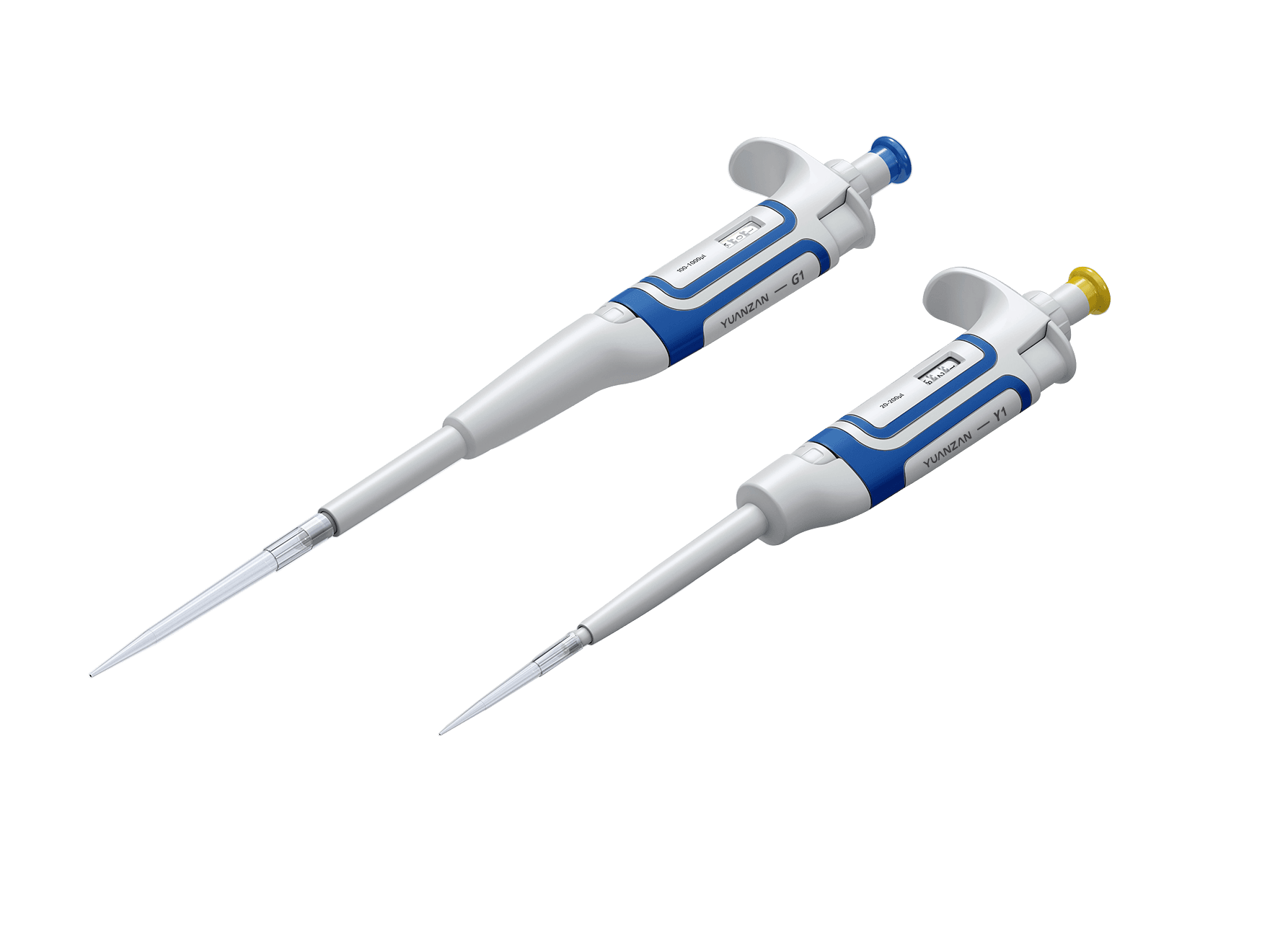
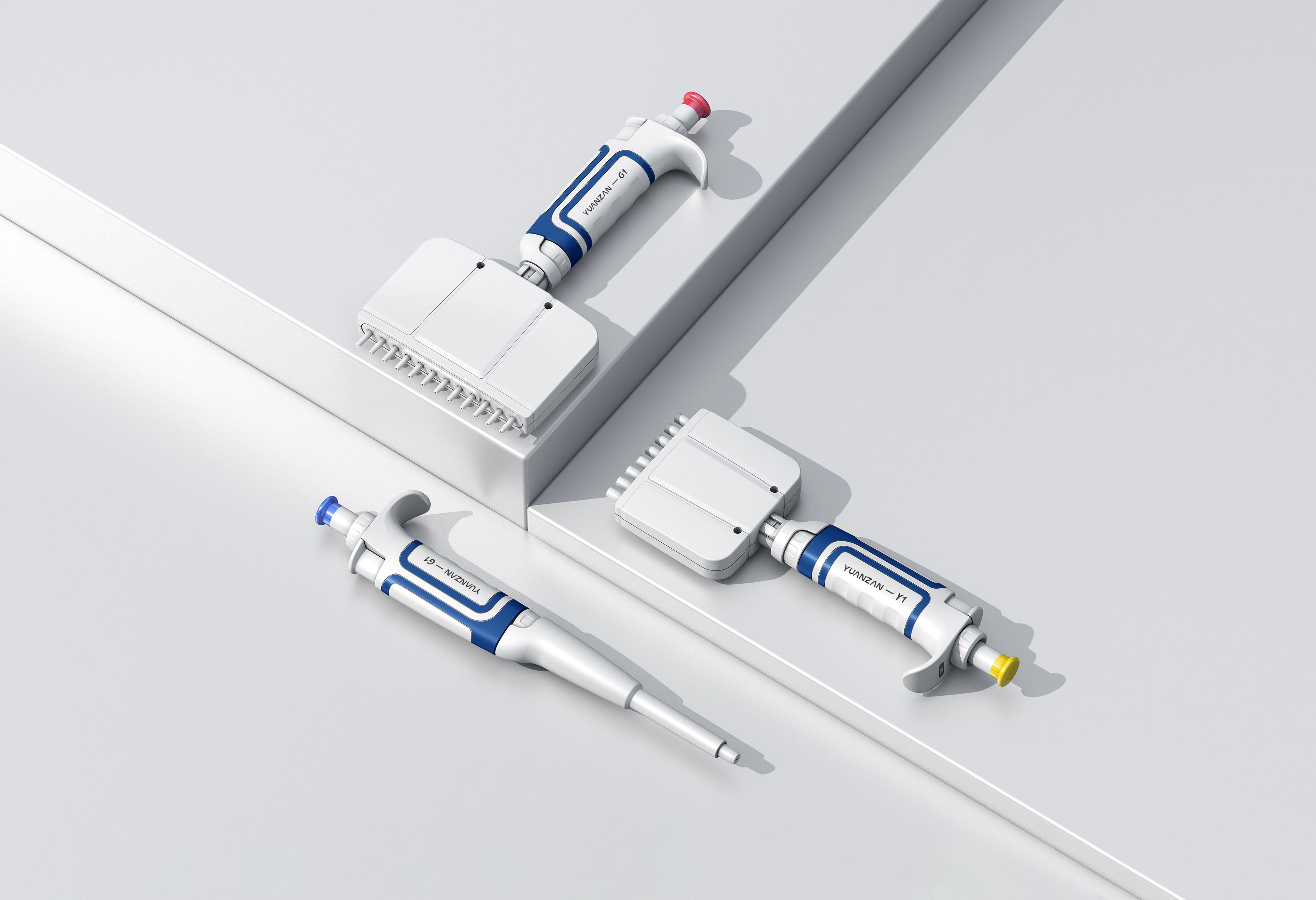
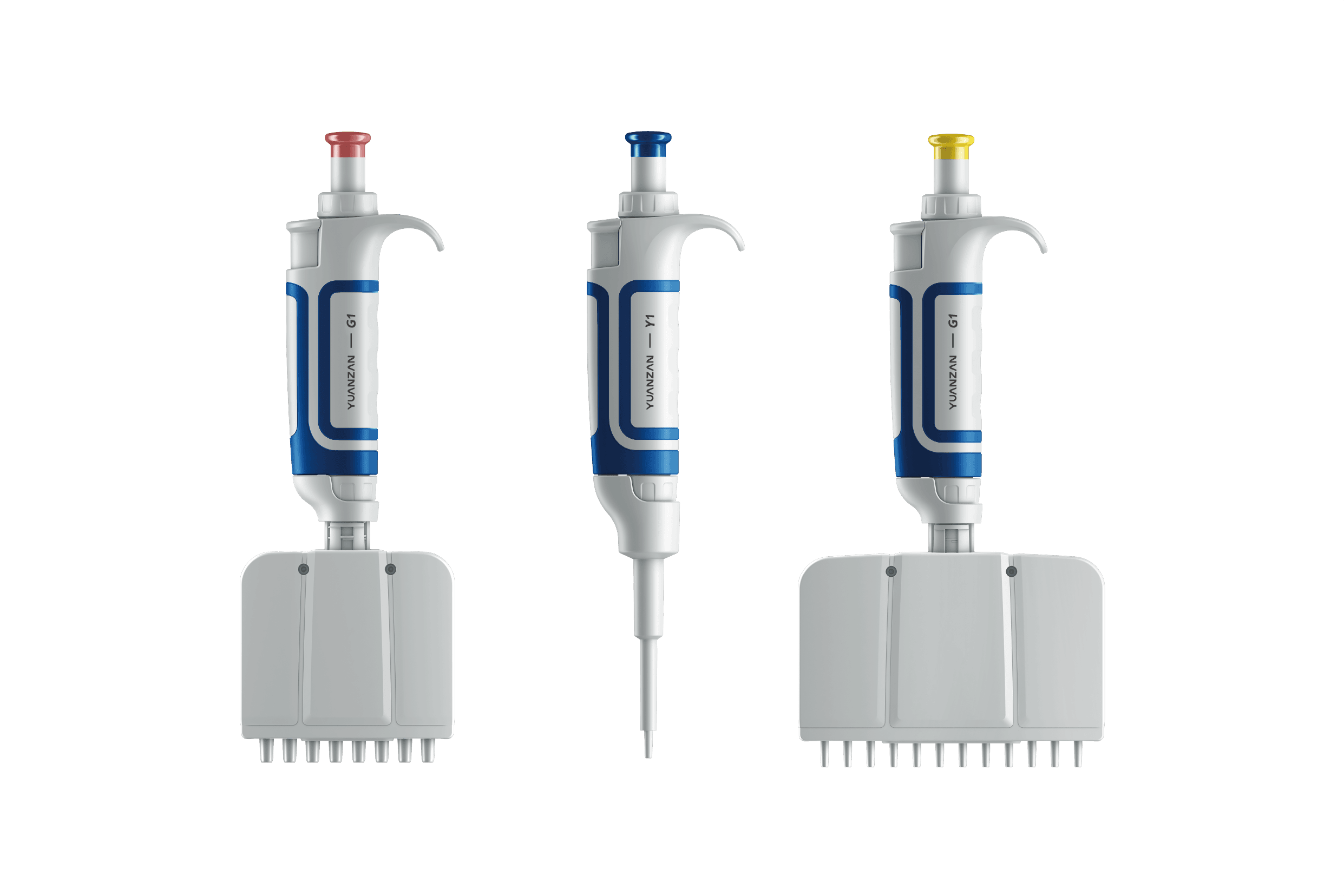
Yuanzan's Y1 and G1 manual pipettes are designed around different tip-interface approaches.
The Y1 family uses a cylindrical tip system with matching tips, while the G1 family uses a conventional conical interface intended for compatible standard-style tips.
Neither interface should be considered universally superior.
The better choice depends on the laboratory's working volumes, frequency of use, existing tip inventory, throughput requirements and purchasing priorities.
This guide compares the two product families and provides a practical evaluation method for laboratories, distributors and equipment procurement teams.
Quick Answer: What Is the Difference Between Y1 and G1 Pipettes?
The central difference is the tip attachment system.
Y1: A cylindrical shaft with a matching tip design, intended to provide controlled attachment and removal characteristics.
G1: A conical tip interface intended to support commonly used pipette tip formats, subject to fit and performance verification.
The differences extend beyond the interface.
| Feature | Yuanzan Y1 | Yuanzan G1 |
|---|---|---|
| Tip interface | Cylindrical | Conical |
| Tip selection | Matching cylindrical-system tips | Compatible conical-style tips |
| Main purchasing consideration | Interface handling and matching tip supply | Tip sourcing flexibility and shared workflows |
| Single-channel models | Available | Available |
| Multichannel models in 2026 product brochure | Not listed | 8-channel and 12-channel |
| Recommended evaluation | Operating characteristics, tip fit, calibration and supply | Tip compatibility, calibration, channel consistency and supply |
The relevant product specifications should be confirmed for the exact model and volume range.
A conical interface does not guarantee compatibility with every tip brand, and a cylindrical interface does not eliminate the need for tip qualification.
1. Why the Pipette-Tip Interface Matters
A pipette tip must attach securely to the pipette shaft while allowing the instrument to aspirate and dispense liquid as intended.
The mechanical connection can affect:
● Tip attachment and removal
● Sealing characteristics
● Liquid transfer performance
● Operator handling
● Compatibility with different tip products
● Long-term consumable sourcing
The interface is particularly important when an organization operates many pipettes and wants to standardize its consumable inventory.
Cylindrical Tip Systems
A cylindrical tip system uses a shaft and a corresponding tip geometry designed to form a controlled connection.
The objective is to establish a suitable seal without relying entirely on the same conical interference fit used in traditional designs.
Potential advantages may include consistent attachment characteristics and lower insertion effort in a matched system.
However, these benefits depend on the actual shaft design, tip geometry, materials and test conditions.
A cylindrical tip system generally requires careful selection of matching tips rather than assuming standard conical tips will fit.
Conical Tip Systems
A conventional conical interface uses a tapered connection between the pipette shaft and tip.
This architecture is common among manual pipettes and may provide access to a wider selection of suitable third-party tips.
However, pipette and tip dimensions vary between manufacturers.
Even if a tip can be physically attached, the connection should still be evaluated for sealing, removal effort and liquid transfer performance.
Physical fit alone is not proof of volumetric compatibility.
2. Yuanzan Y1: A Matching Cylindrical Tip System
The Y1 manual pipette family uses a cylindrical interface intended to work with corresponding tips.
Yuanzan's 2026 product brochure describes the Y1 design as emphasizing controlled tip attachment and ergonomic handling.
Manufacturer materials report approximately 660 g of tip attachment force and approximately 120 g for a defined plunger operation in the specified design.
These values describe different mechanical actions. They are not interchangeable and should not be compared directly.
They are also manufacturer-reported measurements, not independent evidence of reduced injury risk or lower fatigue during every laboratory activity.
When Should Laboratories Consider Y1?
Y1 may be worth evaluating when:
● Operators perform repetitive manual liquid transfers
● The laboratory prefers a matched pipette-tip system
● Consistent attachment and removal characteristics are important
● The organization can maintain a suitable supply of matching tips
● Single-channel pipetting meets the intended workflow
What Should Be Tested?
A useful hands-on evaluation should include:
1. Attaching the recommended tip
2. Checking connection stability
3. Evaluating aspiration and dispensing behavior
4. Assessing tip removal
5. Reviewing performance at actual working volumes
6. Confirming tip availability and repeat purchasing arrangements
The laboratory should evaluate several users or representative workflows if handling characteristics are a major selection factor.
The purpose is to determine whether the interface is suitable—not to assume ergonomic benefits from a brochure figure alone.
3. Yuanzan G1: Conical Interface and Workflow Flexibility
The G1 family uses a conventional conical tip interface.
For laboratories already purchasing standard-style pipette tips, this design may offer a practical starting point for compatibility evaluation.
Yuanzan's 2026 pipette brochure includes G1 single-channel, 8-channel and 12-channel configurations.
This makes G1 relevant to both routine tube-based transfers and repetitive plate-based liquid handling.
When Should Laboratories Consider G1?
G1 may be suitable for evaluation when:
● A laboratory already manages several compatible conical-tip product ranges
● Different teams share pipette tip inventory
● Multiwell workflows require 8-channel or 12-channel pipettes
● Distributors want to source pipettes with corresponding consumables
● The buyer wants to assess alternative tip suppliers
However, compatibility should be verified for the actual pipette model and tip SKU.
It is not sufficient to describe the interface as compatible with "all brands."
Tip Compatibility Evaluation
Buyers should assess:
● Tip attachment and sealing
● Aspirated and dispensed volume performance
● Tip removal characteristics
● Mechanical stability
● Matching of nominal and usable volume
● Tip packaging and rack compatibility where relevant
● Availability of the approved tip SKU
For multichannel pipettes, channel-to-channel consistency and uniform tip attachment require additional attention.
A tip that performs acceptably on a single-channel pipette may not automatically perform identically across an 8-channel or 12-channel configuration.
4. Compare Volume Range Before Comparing Pipette Design
Interface design matters, but working volume remains a primary selection criterion.
The pipette should be selected around the volumes used most frequently, not simply the largest volume it can handle.
Yuanzan's 2026 brochure lists the following single-channel volume ranges for Y1 and G1.
| Single-Channel Volume Range | Y1 | G1 |
|---|---|---|
| 0.1–2 µL | Available | Available |
| 0.5–10 µL | Available | Available |
| 2–20 µL | Available | Available |
| 10–100 µL | Available | Available |
| 20–200 µL | Available | Available |
| 100–1000 µL | Available | Available |
The same brochure also lists several 8-channel and 12-channel G1 models for common small- and medium-volume plate workflows.
The exact range should be checked against the selected product code before quotation.
Why Nominal Range Is Not Enough
A pipette's measurement characteristics can differ across its volume range.
A performance table may report results at several test points rather than provide one universal accuracy figure.
For low-volume workflows, laboratories should pay particular attention to performance near their intended working volume.
For example, a laboratory frequently transferring small qPCR reaction components should evaluate pipetting performance at the volumes actually used in the assay.
A higher maximum capacity or a broadly stated accuracy percentage does not replace this assessment.
5. Accuracy and Precision: What the Product Specifications Mean
A reliable pipette evaluation should consider both systematic and random error.
Systematic error describes the difference between the mean delivered volume and the target volume.
Random error describes variation between repeated deliveries under defined conditions.
These are distinct measures.
A pipette may produce repeatable results while consistently delivering too much or too little liquid.
Likewise, its mean delivered volume may be close to the target even though individual measurements vary.
What to Request From the Supplier
| Performance Evidence | Why It Matters |
|---|---|
| Model-specific volume range | Confirms nominal operating range |
| Systematic error data | Evaluates bias at defined volumes |
| Random error data | Evaluates repeatability |
| Test volumes and replicates | Establishes the basis of the reported result |
| Calibration or test procedure | Explains how performance was assessed |
| Environmental conditions | Helps interpret gravimetric testing |
| Tip reference | Identifies the pipette-tip combination used |
| Acceptance criteria | Clarifies the qualification decision |
ISO 8655 provides an established reference framework for piston-operated volumetric apparatus.
However, ISO 8655-related testing should not be presented as a universal certification of every pipette and tip combination.
A supplier's test report should be reviewed for the applicable model, method and conditions.
For more detail, see ISO 8655 Pipette Calibration: Trueness, Precision and a Buyer's Checklist.
6. Ergonomics: Separate Measured Forces From User Outcomes
Manual pipettes involve several different physical actions:
● Pressing the plunger
● Attaching a pipette tip
● Ejecting a used tip
● Adjusting the volume
● Holding and positioning the instrument
These actions can involve different mechanical forces.
For example, an attachment-force measurement cannot be substituted for a plunger-force or tip-ejection-force measurement.
Nor can a low measured operating force independently establish reduced fatigue or protection against musculoskeletal injury.
When comfort is an important purchasing requirement, buyers should evaluate the instrument through representative laboratory use.
A Practical User Evaluation
Ask operators to assess:
● Hand position and instrument grip
● Plunger movement and control
● Tip attachment
● Tip removal
● Volume adjustment
● Balance during use
● Performance during the intended workflow
Use the same relevant tip format and comparable operating conditions when comparing models.
Feedback from actual laboratory users can complement mechanical specifications, but it should not be interpreted as a substitute for formal ergonomic or clinical evidence.
7. Consumable Cost: Why Tip Choice Influences Long-Term Purchasing
A manual pipette is generally purchased less frequently than its disposable tips.
For laboratories with regular liquid-handling workloads, consumable expenditure may become a substantial part of the total cost of ownership.
A simple purchasing model is:
Five-Year Pipetting Cost = Pipette Purchase + Calibration/Maintenance + Five Years of Tip Consumption + Other Applicable Costs
The calculation should use realistic annual consumption and current supplier quotations.
Example of a Tip-Cost Comparison
Consider two compatible pipette-tip options with a hypothetical unit-price difference of $0.01.
If a laboratory uses 20,000 tips per year, the five-year difference in tip purchasing expense would be:
$0.01 × 20,000 tips × 5 years = $1,000
This is an illustrative calculation, not a measured savings claim for Y1, G1 or any competing pipette system.
The result does not include pipette price, calibration, wastage, packaging, shipping or inventory costs.
The purpose is to show why high-volume buyers should compare the complete liquid-handling supply arrangement.
Cost Is Not the Only Consideration
A lower-priced tip may not provide a suitable seal or the required liquid transfer performance.
Conversely, a matched tip system may simplify qualification but require more deliberate supply planning.
The appropriate purchasing decision should balance:
● Functional compatibility
● Performance
● Operator requirements
● Tip availability
● Product documentation
● Total purchasing cost
For distributors, these factors also affect the ability to provide consistent replacement consumables to end customers.
8. Y1 vs G1: A Buyer Decision Matrix
Use the following matrix to identify the more relevant model family for initial evaluation.
| Purchasing Situation | Initial Evaluation Direction |
|---|---|
| Preference for a matched cylindrical interface | Evaluate Y1 |
| Requirement for conical-style tip sourcing | Evaluate G1 |
| Existing inventory of common conical tips | Check G1 compatibility |
| Repetitive 96-well plate transfers | Consider G1 multichannel options |
| Repeated single-channel operation | Compare Y1 and G1 under representative use |
| Limited availability of matching cylindrical tips | Verify Y1 supply before approval |
| Distributor expanding a liquid-handling product portfolio | Review both families and their corresponding tip supply |
| Application requiring documented volumetric performance | Evaluate exact model, volume and tip combination |
This matrix is intended to guide sample selection, not replace actual product qualification.
Before Ordering, Confirm the Following
● Required volume ranges
● Single-channel or multichannel configuration
● Preferred tip format
● Existing compatible tip references
● Required accuracy and precision documentation
● Estimated annual tip consumption
● Product quantity
● Destination country
● Packaging and distribution requirements
For larger orders, buyers should also clarify available documentation, replacement parts, after-sales arrangements and repeat supply conditions.
9. Yuanzan Manual Pipette Selection and Supply Support
Yuanzan offers Y1 and G1 manual pipette families together with selected liquid-handling consumables.
The two designs support different purchasing priorities.
Y1 focuses on a matching cylindrical tip system.
G1 uses a conventional conical interface and includes multichannel configurations in the 2026 product brochure.
The available portfolio also includes selected universal-style, filter and low-retention pipette tips.
Availability and compatibility should be confirmed by product model and tip SKU.
For laboratories, Yuanzan can review volume ranges and product specifications.
For distributors and procurement teams, discussions may also include product configuration, packaging, documentation and repeat supply requirements.
Explore Yuanzan Manual Pipettes
Explore Liquid Handling Solutions
Conclusion: Choose the Pipette and Tip as One System
The choice between Y1 and G1 is not simply a comparison of appearance, nominal precision or purchase price.
It is a decision about how a pipette will be used, how the tip interface functions and whether compatible consumables can be supplied consistently.
Y1 provides a matched cylindrical tip approach that may be relevant to laboratories prioritizing defined handling characteristics.
G1 provides a conventional conical interface with single- and multichannel choices, making it relevant to laboratories that want to assess a broader range of tip sourcing arrangements.
Neither option should be selected without evaluating the actual working volume and pipette-tip combination.
A structured comparison of performance, compatibility, operator experience and total consumable cost provides a more reliable foundation for purchasing.
Need Help Selecting Y1 or G1 Pipettes?
Yuanzan can review your laboratory's volume requirements, current pipette-tip inventory and intended applications to help identify suitable products for technical evaluation.
For distributors and OEM/private-label buyers, include your target market, estimated purchasing quantities and packaging needs.
View Yuanzan Manual Pipette Series
Review Selected Pipette Tip Samples
Selected consumable samples are intended for qualified commercial evaluation and are subject to availability. Requests involving manual pipette instruments should be discussed separately with the sales team.
Further Reading
● ISO 8655 Pipette Calibration: Trueness, Precision and a Buyer's Checklist
● High-Throughput Liquid Handling: How to Choose Multichannel Pipettes and Tips
● Yuanzan Life Sciences. Manual Pipette Product Brochure, 2026.
● Yuanzan Life Sciences. Laboratory Pipette System Technical White Paper, University Edition, V4.0, September 2026.
FAQ
What is the main difference between Yuanzan Y1 and G1?
Y1 uses a matching cylindrical pipette-tip interface. G1 uses a conical interface intended for compatible standard-style tips.
Can Y1 pipettes use every universal tip?
No. Y1 uses a cylindrical interface and should be evaluated with the corresponding compatible tip products.
Are G1 pipettes compatible with every pipette tip brand?
No. Physical fit and liquid transfer performance should be evaluated for the actual pipette and tip combination.
Which model is more suitable for 96-well plate workflows?
The 2026 brochure lists 8-channel and 12-channel G1 configurations. Buyers should select the relevant volume range and confirm tip compatibility for the intended plate workflow.
Does a lower tip attachment force guarantee better ergonomics?
No. Tip attachment, plunger operation and tip ejection are different measurements. User comfort should be evaluated under representative operating conditions.
Should I choose pipettes based on maximum volume?
Not alone. The laboratory should assess performance at the volumes used most frequently and select suitable pipette and tip combinations.
How should I compare the long-term cost of Y1 and G1?
Compare instrument purchase price, calibration and maintenance expenses, actual tip consumption, available tip quotations and other applicable operating costs.
Can Yuanzan provide samples before a distributor order?
Yuanzan supports commercial evaluation of selected laboratory plastic consumables. Manual pipette instrument evaluation and supply arrangements should be discussed separately with the sales team.
Y1 vs G1 Manual Pipettes