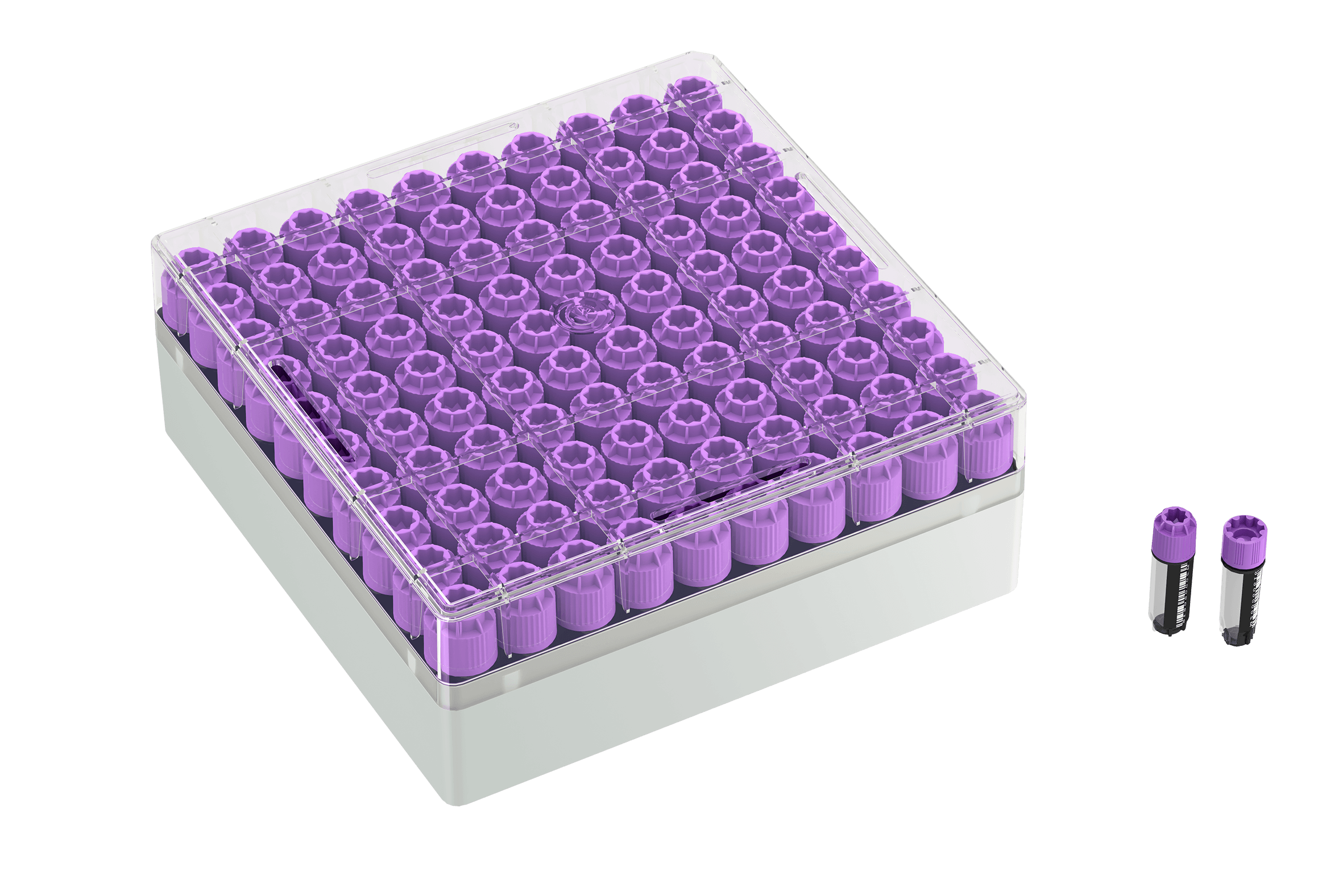
Cryogenic tubes are widely used for storing biological samples in laboratory research, cell biology, molecular biology, and sample collection management.
Although they may appear to be simple storage containers, selecting the right cryogenic tube requires more than comparing capacity and unit price.
Storage temperature, closure design, material compatibility, sample identification, and integration with storage systems can all influence long-term laboratory operations.
For laboratories, biobanks, and distributors, the objective is to find a tube that meets the intended storage requirements while supporting reliable sample identification, manageable inventory, and consistent purchasing.
This guide explains how to evaluate conventional and coded cryogenic tubes, including the technical and procurement considerations buyers should review before ordering.
Quick Answer: What Should You Check Before Buying Cryogenic Tubes?
Before selecting a cryogenic tube, confirm the intended storage temperature, storage environment, tube capacity, sealing design, and identification requirements.
For routine storage, a conventional cryogenic tube may be sufficient.
For larger sample collections that require systematic identification and digital traceability, coded cryogenic tubes may provide additional operational value.
The appropriate choice depends on actual laboratory requirements rather than the number of features offered.
| Selection Factor | What Buyers Should Check |
|---|---|
| Storage temperature | Manufacturer's specified temperature range |
| Storage environment | Freezer, liquid nitrogen vapor phase, or another approved method |
| Capacity | Sample volume and permitted filling conditions |
| Closure design | Cap type, fit, and sealing specifications |
| Material | Compatibility with the sample and storage conditions |
| Identification | Writing area, printed label, barcode, QR code, or integrated coding |
| Storage compatibility | Fit with cryoboxes, racks, and scanning systems |
| Purchasing | Packaging, documentation, order quantity, and repeat supply |
1. Match Cryogenic Tubes to the Storage Temperature and Environment
Different storage environments impose different requirements on cryogenic tubes.
Before comparing products, laboratories should define where samples will be stored, how long they will remain in storage, and how they will be handled during retrieval.
Storage at −20°C or −80°C
Laboratories may use low-temperature freezers for different biological sample types.
At these temperatures, buyers should verify that the selected tube is specified for the intended storage conditions.
Capacity and sealing design remain important, but laboratories should also consider material performance, labeling, and the handling procedure used when samples are removed from storage.
A product's suitability should be confirmed through its technical specifications, not inferred from its name.
Liquid Nitrogen Vapor-Phase Storage
Some biological sample collections require cryogenic storage in the vapor phase of liquid nitrogen.
Where this method is used, buyers should confirm that the tube is specifically intended for the relevant storage environment.
Important considerations include:
● Temperature compatibility
● Cap and closure design
● Sealing performance
● Product documentation
● Recommended handling and storage procedures
The intended storage method should be clearly identified before purchasing.
Liquid Nitrogen Liquid-Phase Storage
A stated temperature rating of −196°C does not automatically establish suitability for direct immersion in liquid nitrogen.
Products designed for vapor-phase storage should not be assumed suitable for liquid-phase immersion.
Liquid nitrogen entering a storage container may create additional hazards during warming or handling.
Buyers should therefore verify the manufacturer's stated storage method, limitations, and relevant test information before use.
Key purchasing principle: Select cryogenic tubes according to the specific storage environment, not only the lowest temperature shown in a product description.
2. Conventional vs. Tri-Coded Cryogenic Tubes
The next consideration is how biological samples will be identified and managed during storage.
Not every laboratory requires the same identification system.
Conventional Cryogenic Tubes
Conventional cryogenic tubes may be suitable for laboratories with routine sample storage requirements and straightforward identification procedures.
Typical purchasing considerations include:
● Available capacity
● Cap and closure design
● Specified storage temperature
● Writing or labeling area
● Packaging format
● Storage box compatibility
For smaller collections or laboratories using established manual labeling procedures, a conventional tube may provide a practical solution.
Tri-Coded Cryogenic Tubes
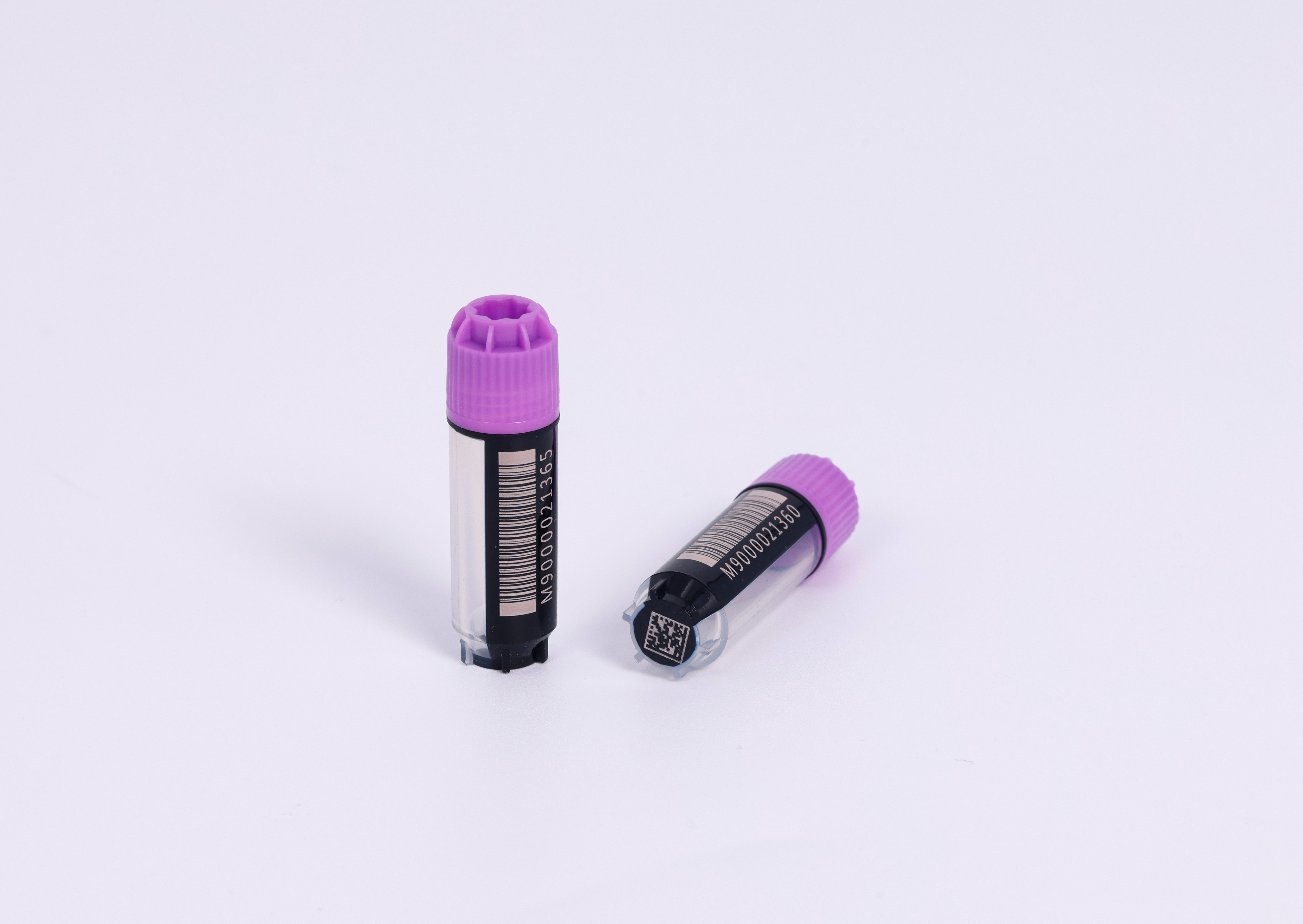
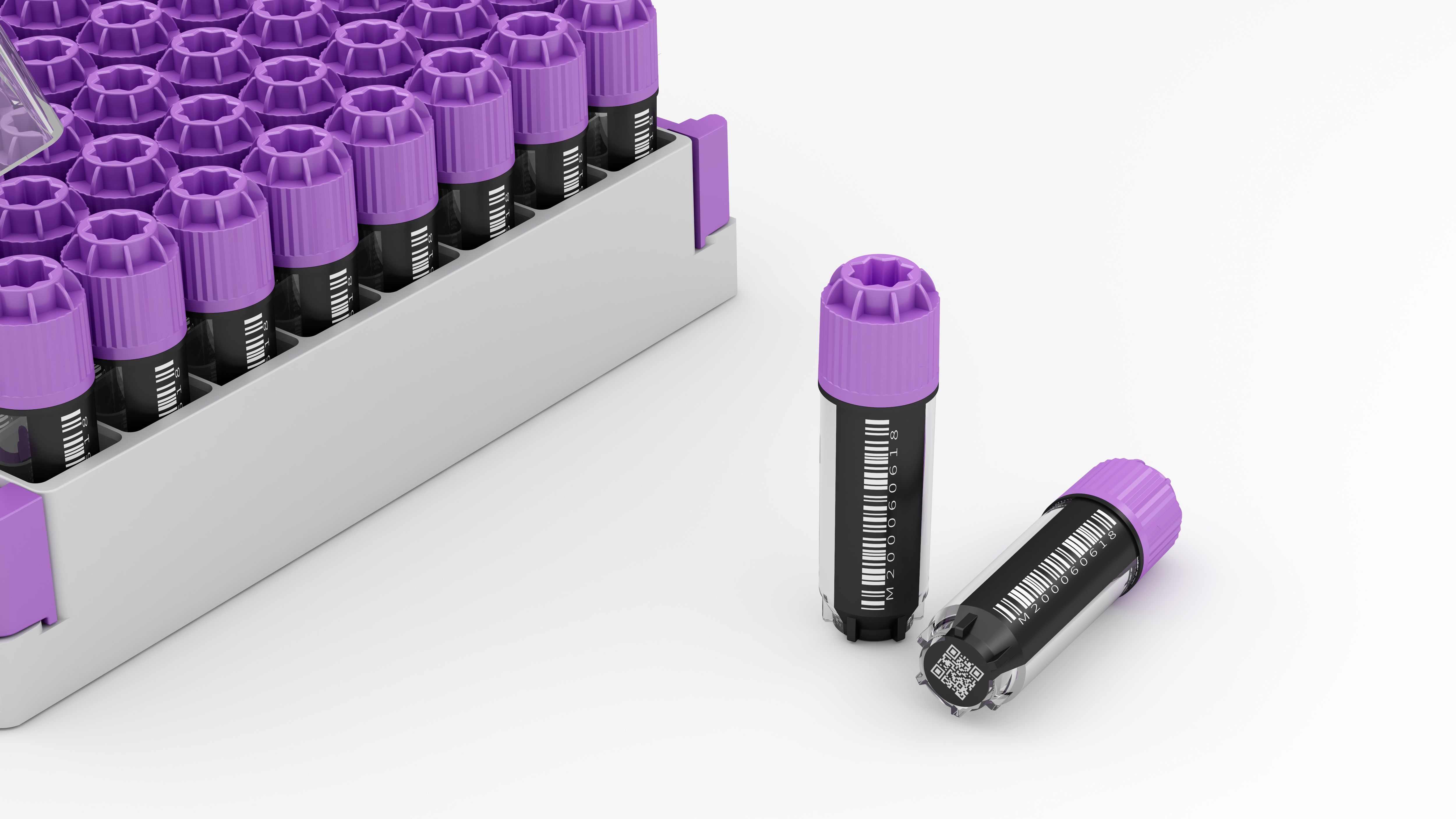
Tri-coded cryogenic tubes combine multiple identification methods to support sample tracking.
Yuanzan's tri-coded product design incorporates:
● A QR code on the tube bottom
● A barcode on the tube side
● A human-readable numerical code
These identification methods can support both visual checking and compatible electronic scanning.
For laboratories handling large numbers of samples, integrated identification may help standardize tube records and reduce dependence on separate handwritten labels.
However, a coded tube does not automatically establish compatibility with every scanner or laboratory information management system (LIMS).
Code format, readability, uniqueness, and system integration should be verified before procurement.
Which Type Should You Choose?
For laboratories and distributors, the right product is the one that meets the required storage and identification workflow at an appropriate total cost.
| Laboratory Requirement | Option Worth Evaluating |
|---|---|
| Routine storage with manual identification | Conventional cryogenic tubes |
| Small sample collections | Conventional tubes with suitable labeling |
| Large sample collections | Tri-coded cryogenic tubes |
| Electronic sample tracking | Coded tubes compatible with the laboratory's scanner |
| Automated storage workflows | Coded tubes and compatible storage equipment |
| Budget-sensitive routine storage | Products meeting essential specifications without unnecessary features |
3. Choose the Right Tube Capacity and Closure Design
Tube capacity should match the sample volume, handling procedure, and storage space.
A tube that is too small may not accommodate the required sample preparation or permitted filling conditions.
An unnecessarily large tube may consume additional storage space or complicate the management of large sample collections.
Capacity and Storage Efficiency
When comparing tube sizes, laboratories should check:
● Required sample volume
● Manufacturer-specified capacity
● Applicable filling limitations
● Available cryobox configurations
● Number of samples stored per box or rack
● Handling and retrieval requirements
For laboratories managing thousands of samples, standardizing a limited number of suitable tube formats may simplify purchasing and storage organization.
Cap Design and Sealing
Cryogenic tubes may use different closure structures, including internal-thread and external-thread designs.
Neither design should automatically be considered superior for every application.
The important questions are whether the specific tube provides suitable sealing performance and whether its closure system is appropriate for the intended storage and handling conditions.
Buyers should review relevant test information where available and consider evaluating samples before bulk purchasing.
Material and Product Documentation
Material specifications also matter.
Laboratories should confirm the tube material, intended temperature range, applicable processing conditions, and available quality documentation.
Claims relating to sterility, DNase-free or RNase-free status, endotoxins, or other special performance attributes must be evaluated for the relevant product and SKU.
A supplier's quality management certification alone does not establish every individual product claim.
4. Barcode Traceability and Cryogenic Storage System Compatibility
Sample identification becomes increasingly important as a collection grows.
For a small research project, manual labeling may be sufficient.
For large biobanks or laboratories managing recurring sample collections, electronic identification can support more systematic sample records and retrieval.
Choosing an Identification Method
Integrated coding can reduce reliance on additional labeling steps, but benefits depend on the laboratory's existing processes and equipment.
Before selecting tri-coded products, buyers should confirm the intended scanning method and sample management system.
| Identification Method | Main Consideration |
|---|---|
| Handwritten labeling | Suitable marking area and label durability |
| Printed labels | Adhesion and readability at the intended storage temperature |
| Barcodes | Scanner and software compatibility |
| QR codes | Code readability, size, and scanning configuration |
| Human-readable codes | Manual checking and identification |
| Integrated multiple codes | Compatibility with the laboratory's complete tracking workflow |
Cryobox and Rack Compatibility
Cryogenic tubes are not used independently of their storage equipment.
They must fit the laboratory's cryoboxes, racks, and retrieval procedures.
Key factors include:
● Tube dimensions and height
● Box opening and well spacing
● Rack compatibility
● Box identification
● Storage system capacity
● Automated handling requirements, where applicable
Where SBS-format storage products are specified, laboratories should verify the exact dimensions and compatibility with their existing equipment.
An SBS-format claim should not be assumed for every cryobox or rack.
Scanning and Automation
For laboratories using automated sample storage or retrieval systems, coded tubes and boxes must work with the intended equipment.
Before purchasing a large quantity, buyers should evaluate the complete combination:
Cryogenic Tube → Cryobox → Rack → Scanner → Sample Management System
A successful individual tube scan does not necessarily confirm compatibility with the entire automated workflow.
5. Evaluate the Total Cost of Cryogenic Sample Storage
The lowest tube price is not always the lowest operational cost.
For routine storage, the cost of the tube itself may be the main consideration.
For larger sample collections, other factors may become important, including identification, storage density, inventory organization, and sample retrieval.
A practical purchasing model is:
Total Storage Cost = Tube Cost + Labeling Cost + Storage Space + Identification and Handling Labor + Retrieval and Management Costs
This is a procurement planning framework, not a claim that any particular tube automatically reduces costs.
Conventional vs. Coded Tube Costs
A conventional tube may have a lower initial purchasing price.
A coded tube may add value in workflows where sample identification, scanning, and record management are important.
Whether the additional functionality justifies its cost depends on how the laboratory operates.
Before placing an order, procurement teams should consider:
● Expected annual tube consumption
● Number of samples stored
● Existing labeling procedures
● Scanner and software availability
● Storage box and rack requirements
● Packaging quantities
● Supplier consistency
● Future sample collection growth
For distributors, demand forecasting and product standardization are equally important.
A suitable range of conventional and coded products may address different end-user budgets and storage requirements without creating unnecessary inventory complexity.
6. A Cryogenic Tube Procurement Checklist
Before requesting quotations or samples, buyers should prepare the following information.
For new suppliers, sample evaluation can help confirm product fit and compatibility before larger purchasing commitments.
For distributor and OEM projects, providing a competitor reference SKU, product drawing, or current packaging reference may also help clarify requirements.
| Requirement | Information to Provide |
|---|---|
| Application | Cell research, molecular biology, biobanking, or other intended use |
| Storage method | Freezer or specified cryogenic storage environment |
| Temperature | Required storage range |
| Tube capacity | Target sample volume and preferred format |
| Closure | Required cap structure and sealing specifications |
| Identification | Manual label, barcode, QR code, or tri-code |
| Storage equipment | Existing cryobox, rack, or automated system |
| Documentation | Product specifications and required test records |
| Packaging | Quantity, format, and labeling needs |
| Annual volume | Estimated purchasing demand |
| Customization | OEM or private-label requirements |
7. Yuanzan Cryogenic Tubes and Sample Storage Solutions
Yuanzan supplies selected laboratory consumables for biological sample storage, sample processing, and related laboratory applications.
Relevant products include conventional cryogenic tubes, tri-coded cryogenic tubes, cryoboxes, and compatible storage accessories, subject to the selected product specifications.
Conventional Cryogenic Storage Options
Yuanzan offers selected conventional freezing and cryogenic tube formats for laboratories requiring routine sample storage.
Buyers should confirm available tube capacities, closure designs, temperature specifications, and packaging configurations before ordering.
These products may be suitable for laboratories that prioritize straightforward identification and standardized storage procedures.
Tri-Coded Cryogenic Tubes
Yuanzan's tri-coded cryogenic tubes are designed for applications where multiple identification methods are useful.
The integrated QR code, barcode, and numerical identifier provide options for visual and electronic sample identification.
For laboratories planning barcode-based or automated storage workflows, compatibility with scanners, boxes, racks, and software should be evaluated as part of the purchasing process.
Manufacturing and Quality Support
Yuanzan's manufacturing capabilities include:
● 23 injection molding machines
● 50–400T injection molding range
● More than 400 mold sets
● A 3,062 m² 100,000-class cleanroom environment
● ISO 9001:2015 and ISO 13485:2016 certified quality management systems within the applicable certified scope
These capabilities support selected laboratory consumables manufacturing and supply.
Specific cryogenic storage ratings, sterility claims, sealing performance, and other product attributes should be confirmed through relevant product specifications and supporting documentation.
For distributors, laboratory brands, and procurement teams, Yuanzan can discuss reference SKU evaluation, product specifications, packaging options, sample availability, and selected OEM/private-label projects.
Explore Yuanzan Cell Biology and Sample Storage Products to review available cryogenic tubes and related storage accessories.
Conclusion
Choosing cryogenic tubes for long-term biological sample storage requires more than comparing capacity and unit price.
Storage temperature, liquid nitrogen storage method, sealing performance, sample identification, and storage equipment compatibility should all be considered.
Conventional cryogenic tubes may be sufficient for routine storage requirements.
Tri-coded cryogenic tubes may offer additional value to laboratories managing larger sample collections or using electronic sample-tracking systems.
For laboratories and distributors, an effective purchasing decision begins with the intended application and continues through specification review, sample evaluation, and supply planning.
The best choice is not necessarily the tube with the most features. It is the one that matches the laboratory's storage requirements and operational needs.
Looking for Cryogenic Tubes for Your Laboratory or Distribution Business?
Yuanzan supports selected cryogenic tube and sample storage product sourcing projects, including conventional and tri-coded options.
Share your required capacity, storage temperature, storage method, reference SKU, identification requirements, packaging needs, and estimated annual volume.
Our team can help discuss product availability, relevant documentation, sample evaluation, and OEM/private-label supply options.
● Explore Cryogenic Tubes and Storage Products
● Request Samples for Supplier Evaluation
● Discuss OEM / Private-Label Supply
Free samples are available for selected products, subject to product availability and commercial evaluation requirements.
FAQ
What should I consider first when choosing cryogenic tubes?
Start with the intended storage temperature and method. Then evaluate capacity, closure design, material, identification requirements, and storage equipment compatibility.
Are all cryogenic tubes suitable for storage at −196°C?
No. Buyers must verify the specific product's temperature rating and approved storage method. A −196°C rating does not automatically establish suitability for direct liquid nitrogen immersion.
What is the difference between conventional and tri-coded cryogenic tubes?
Conventional cryogenic tubes generally rely on standard labeling or identification methods. Tri-coded tubes integrate QR codes, barcodes, and human-readable identifiers to support compatible electronic and manual tracking workflows.
Do tri-coded cryogenic tubes work with every scanner?
Not necessarily. Scanner compatibility depends on the code format, readability, equipment configuration, and software. Buyers should evaluate the tube with their intended scanning system.
How can laboratories reduce cryogenic storage purchasing costs?
Start by defining essential specifications, standardizing suitable tube formats, reviewing packaging quantities, and evaluating whether integrated coding provides operational value. Consider the complete storage system rather than the tube price alone.
Can Yuanzan supply cryoboxes and related storage products?
Yuanzan lists selected cryoboxes, racks, and related storage accessories. Availability, dimensions, and compatibility should be confirmed for the intended storage system.
Are Yuanzan cryogenic tubes sterile or nuclease-free?
Such claims depend on the specific product and SKU. Buyers should request applicable product specifications and supporting documentation rather than assuming all products share the same attributes.
Can distributors request OEM or private-label cryogenic tubes?
Yes. Yuanzan can evaluate selected OEM and private-label projects involving product selection, reference SKU matching, packaging, documentation, and repeat supply planning.
Can I request free samples before placing a bulk order?
Samples are available for selected cryogenic tube and laboratory consumable products, subject to product availability and commercial evaluation requirements.
pics of Cryogenic Tubes