The continued detection of highly pathogenic avian influenza A(H5N1) in U.S. dairy cattle has reinforced the importance of veterinary surveillance, molecular laboratory capacity and reliable consumable supply.
On October 8, 2026, the U.S. Department of Agriculture (USDA) confirmed the first two H5N1-affected dairy herds in Washington State. According to the Washington State Department of Agriculture (WSDA), 43 affected dairy herds had been reported across Yakima and Benton counties by November 5, 2026.
USDA subsequently confirmed that the initial Washington detections involved H5N1 genotype B3.13, which has previously circulated in U.S. dairy cattle.
These developments demonstrate the need for sustained surveillance and coordination between veterinary authorities, diagnostic laboratories and dairy producers.
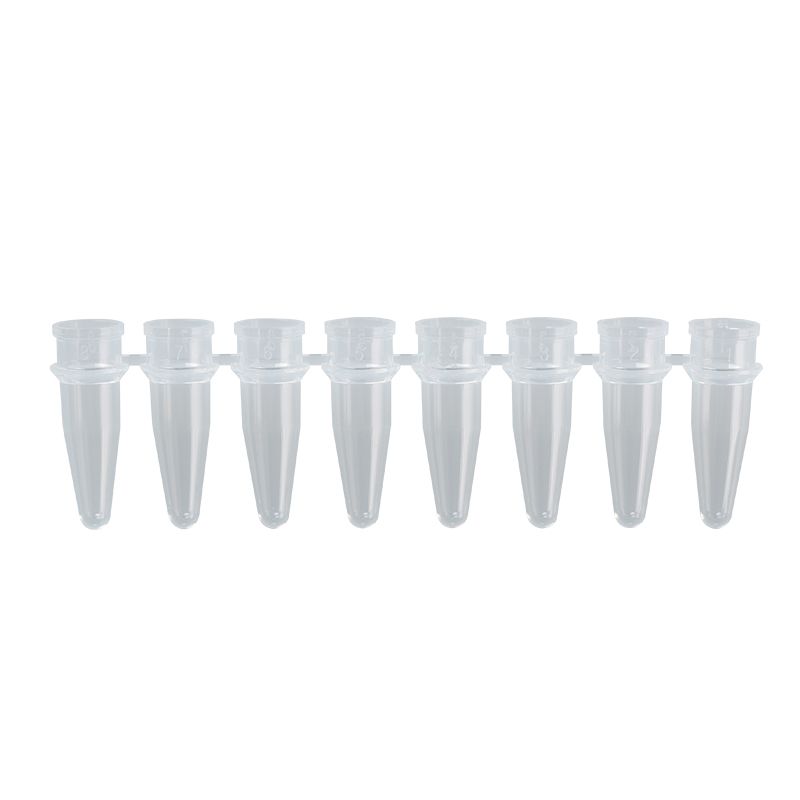
For laboratory procurement teams, testing readiness also depends on access to suitable consumables, including pipette tips, PCR tubes and plates, compatible sample-processing vessels and other products required by established workflows.
This guide examines the role of consumables in veterinary molecular testing, how to evaluate compatibility and documentation, and how laboratories can plan purchasing during changing testing demand.
Outbreak information reviewed: November 10, 2026. Case and herd counts are subject to updates by official authorities.
1. H5N1 in U.S. Dairy Cattle: Surveillance and Laboratory Demand
Highly pathogenic avian influenza H5N1 was first identified in U.S. dairy cattle in 2024.
Since then, federal and state authorities have used surveillance and laboratory testing to investigate infections and support disease-control measures.
The USDA National Milk Testing Strategy (NMTS), launched in December 2024, provides a structured approach to monitoring H5N1 in the U.S. dairy population.
The strategy includes surveillance of milk supplies, investigation of affected herds and continued monitoring to support disease-control objectives.
Washington State Developments in 2026
The October 2026 detections in Washington marked the state's first confirmed H5N1 cases in dairy cattle.
USDA confirmed the genotype of the initial detections as B3.13. Additional affected dairy herds were subsequently identified through state and federal investigations.
WSDA's published records listed 43 affected herds by November 5, 2026.
The official investigation and surveillance information should be consulted for subsequent updates.
Why Surveillance Data Do Not Equal Consumable Demand
The number of affected herds is not the same as the number of laboratory tests performed.
A veterinary laboratory may process samples for routine surveillance, investigation, follow-up testing or other defined purposes.
Its consumable requirements depend on:
● The number of specimens received
● The type of specimens
● The laboratory's approved testing workflow
● Sample pooling arrangements, where applicable
● Instrument and extraction-platform capacity
● Quality controls and repeat testing
● Operating schedules
For this reason, laboratories should base purchasing decisions on actual test activity and approved workflows rather than estimate consumable use directly from outbreak statistics.
2. Understanding Molecular Testing in Dairy Cattle Surveillance
Milk is an important specimen type in dairy cattle H5N1 surveillance.
Depending on the surveillance program, samples may be collected for broader milk monitoring or more specific veterinary investigations.
Molecular detection of influenza A virus RNA commonly involves real-time reverse transcription PCR (real-time RT-PCR).
Because influenza A is an RNA virus, reverse transcription is needed to generate complementary DNA before PCR amplification.
The exact assay, specimen handling requirements and analytical procedures depend on the relevant veterinary laboratory and applicable official requirements.
Main Laboratory Workflow Stages
| Workflow Area | General Purpose | Potential Consumable Requirements |
|---|---|---|
| Specimen collection and transport | Maintain suitable specimens for laboratory analysis | Approved collection containers and transport materials |
| Laboratory sample preparation | Prepare specimens under the established method | Appropriate tubes and liquid-handling consumables |
| Nucleic acid extraction | Prepare viral RNA for analysis | Extraction-system-specific consumables |
| Real-time RT-PCR | Detect selected influenza RNA targets | Compatible PCR reaction vessels and associated consumables |
| Sample storage and traceability | Retain and identify materials where required | Suitable labeled storage containers |
This table is intended for general procurement planning.
It is not a diagnostic protocol or a list of universally required products.
Specimen and Workflow Compatibility
Milk presents different analytical challenges from many routine molecular biology samples because its composition includes proteins, lipids and other matrix components.
A validated laboratory method must account for the relevant specimen characteristics.
From a procurement perspective, this means consumables should be selected according to the actual method rather than a generalized assumption that every molecular test uses identical plasticware.
For example, a laboratory using an automated extraction system may require specific plate formats or platform-specific consumables.
Another laboratory may use a different extraction arrangement and therefore require a different product configuration.
The approved method determines the relevant consumable requirements.
3. PCR Consumables: What Veterinary Laboratories Should Evaluate
Laboratories need consumables that meet their technical requirements and remain available across repeated purchasing cycles.
The most important consideration is not the number of product categories a supplier offers, but whether the specific items are suitable for the intended workflow.
PCR Tubes and Plates
PCR tubes and plates provide reaction vessels for amplification and fluorescence-based detection.
Their suitability depends on factors such as:
● Instrument model and reaction format
● Well geometry and nominal capacity
● Material specifications
● Suitable closure or sealing configuration
● Thermal compatibility
● Optical properties where required
● Product documentation
PCR plates from different suppliers are not automatically interchangeable.
A 96-well format alone does not establish compatibility with a particular real-time PCR instrument.
Where optical sealing materials are needed, buyers should confirm that the product is designed for the relevant thermal cycling and fluorescence detection requirements.
General-purpose laboratory wrapping or paraffin sealing film should not be assumed suitable for PCR thermal cycling.
Pipette Tips and Liquid Handling
Pipette tips are used across many molecular biology and sample-processing workflows.
For laboratories assessing alternative products, relevant factors include:
● Compatibility with the exact pipette model
● Working volume
● Tip geometry and sealing performance
● Required filter configuration
● Product cleanliness specifications
● Packaging
● Product and lot identification
Filtered tips may be selected as part of a contamination-control approach, but they do not independently establish the safety or validity of a diagnostic procedure.
A tip described as universal-fit should not automatically be assumed to have a filter, meet a specific cleanliness requirement or work with an automated liquid handler.
Each claim requires product-specific confirmation.
Deep-Well Plates and Extraction Consumables
Deep-well plates may support automated sample-processing and nucleic acid extraction workflows.
Their selection should consider:
● Well format and working volume
● Plate footprint and geometry
● Instrument carrier compatibility
● Material and relevant chemical compatibility
● Appropriate closure or sealing requirements
● Repeat-use purchasing consistency
Some magnetic-bead extraction platforms also require specialized accessories, such as magnetic rod tip combs.
These are platform-dependent products rather than universal requirements for all nucleic acid extraction workflows.
The exact instrument model and consumable SKU should be established before procurement.
Sample-Processing and Storage Tubes
Centrifuge, microcentrifuge and sample storage tubes may be used in different laboratory activities.
Depending on the intended purpose, buyers should review tube capacity, closure integrity, material specifications, operating conditions and storage compatibility.
A product's nominal capacity or temperature rating does not independently demonstrate suitability for a particular diagnostic specimen or transport application.
4. Laboratory Consumable Supplier Qualification Checklist
When veterinary laboratories or distributors evaluate a new supplier, the process should cover technical suitability as well as commercial terms.
| Qualification Area | Buyer Requirement |
|---|---|
| Product identification | Exact catalog number and reference SKU |
| Intended use | Defined workflow and application |
| Instrument compatibility | Relevant instrument or platform specifications |
| Product material | Documented material and applicable characteristics |
| Cleanliness claims | Supporting information for required claims |
| Packaging | Required pack format and units per carton |
| Traceability | Product and lot identification |
| Available documentation | Specifications, quality records and relevant certificates |
| Supplier capacity | Expected purchasing volume and repeat-supply arrangements |
| Change management | Communication of significant product changes |
| Commercial evaluation | Sample availability and quotation conditions |
Evaluating Alternative Products
When considering a substitute consumable, laboratories should first identify the existing approved product and its critical requirements.
A supplier can then review potential alternatives based on product specifications, drawings or reference SKUs.
However, preliminary product matching is not the same as completed application qualification.
Any necessary acceptance testing should follow the laboratory's established procedures and applicable quality requirements.
Quality Management Certification
Supplier quality management certification can help procurement teams assess manufacturing controls and documentation systems.
However, a supplier's ISO 9001 or ISO 13485 certificate does not establish that every product has been validated or authorized for a particular veterinary diagnostic assay.
Product-level evidence and intended-use assessment remain separate considerations.
5. Planning Consumable Inventory During Changing Testing Demand
Laboratory supply planning should consider both purchasing demand and replenishment risk.
Higher surveillance activity may increase the consumption of certain products, while changes in testing format or workflow can alter the number of consumables required per specimen.
Establish a Consumption Baseline
Procurement teams should review historical product usage by testing activity.
Useful metrics include:
● Consumables used per processing batch
● Total input specimens
● Quality-control requirements
● Repeat testing and discarded consumables
● Average consumption by product SKU
● Available stock and incoming orders
These measures provide a more practical purchasing baseline than outbreak case numbers alone.
Calculate a Reorder Point
A basic inventory planning formula is:
Reorder Point = Average Daily Consumption × Replenishment Lead Time + Safety Stock
Consider a hypothetical example:
| Variable | Example |
|---|---|
| Average consumption | 200 units per day |
| Replenishment lead time | 20 days |
| Safety stock | 1,000 units |
| Reorder point | 5,000 units |
The calculation is 200 × 20 + 1,000 = 5,000 units.
This example illustrates an inventory calculation, not a USDA-recommended stocking level.
The appropriate safety stock depends on demand variability, supplier reliability, purchasing policy and the laboratory's operational requirements.
Account for Full Replenishment Time
For international sourcing, lead time may include production, transportation, customs clearance, receiving inspections and internal release procedures.
Buyers should also review minimum order quantities, packaging formats and alternative qualified products.
A lower unit price is not necessarily the most economical choice if it creates unacceptable compatibility, inventory or supply risks.
6. Yuanzan Laboratory Consumables and OEM/Private-Label Sourcing
Yuanzan Life Sciences supplies selected laboratory plastic consumables for molecular biology, liquid handling, sample processing and laboratory storage.
Its portfolio includes products that may be considered during general laboratory consumable sourcing and supplier evaluation.
Relevant Product Categories
PCR and Molecular Biology Consumables
PCR single tubes, PCR strip tubes, PCR plates and selected related products.
Explore PCR and Molecular Biology Consumables
Liquid Handling
Manual pipettes, pipette tips and selected liquid-handling products.
Explore Liquid Handling Products
Sample Processing and Storage
Centrifuge tubes, microcentrifuge tubes, deep-well plates and selected laboratory storage products.
Explore Laboratory Consumables
OEM and Distributor Procurement
Yuanzan supports selected OEM and private-label laboratory consumable projects.
Depending on the product category and project scope, cooperation may involve:
● Reference SKU matching
● Product and material specification review
● Packaging and labeling requirements
● Commercial sample evaluation
● Quality documentation review
● Expected annual purchasing volumes
● Repeat-order supply arrangements
For distributors and laboratory brands, these services can support product portfolio evaluation and sourcing discussions.
Explore Yuanzan OEM/ODM Manufacturing
Important Product Qualification Boundary
Yuanzan's general laboratory consumables are not represented as specifically validated or authorized for H5N1 veterinary diagnostic testing.
The suitability of any proposed SKU must be assessed against the intended application, the selected laboratory method and applicable regulatory requirements.
Availability of a PCR product or a manufacturing quality certificate does not independently establish diagnostic authorization.
Conclusion
The detection of H5N1 in U.S. dairy cattle demonstrates the ongoing importance of veterinary surveillance and reliable laboratory operations.
Molecular testing laboratories depend on consumables that meet their technical requirements, work with their existing equipment and can be sourced consistently.
For procurement teams, the most useful approach is to define specifications, review available quality documentation, evaluate proposed alternatives and plan replenishment around actual laboratory demand.
For distributors and OEM buyers, product matching, packaging requirements, sample evaluation and repeat-supply capability provide a practical basis for supplier selection.
Reliable procurement begins with application-specific requirements rather than a generic list of laboratory products.
Discuss PCR Consumable Supply Requirements
Are you sourcing PCR plates, pipette tips, sample-processing tubes or other laboratory plasticware for molecular biology or veterinary laboratory purchasing?
Share your product list, reference SKUs, intended application, destination country and estimated purchasing volume.
Yuanzan can review relevant product categories, available specifications, sample options and OEM/private-label requirements.
Primary CTA: Request Consumable Samples for Supplier Evaluation
Secondary CTA: Discuss OEM and Private-Label Manufacturing
Product availability and documentation depend on the individual SKU and project requirements. Sample evaluation does not establish H5N1 diagnostic suitability or regulatory authorization.
References
1. USDA APHIS — National Milk Testing Strategy.
2. USDA APHIS — Genetic Sequencing Results for Washington Dairy Herd H5N1 Detections, November 4, 2026.
3. Washington State Department of Agriculture — HPAI (H5N1) in Cattle Producer Resources.
4. USDA APHIS — H5N1 Detection in an Indiana Dairy Herd, November 2, 2026.
5. Yuanzan Life Sciences — Laboratory Consumables Product Catalog, 2026.
These references provide surveillance and procurement context. They do not constitute independent validation or endorsement of Yuanzan products for H5N1 testing.
FAQ
What is the role of PCR in H5N1 dairy cattle surveillance?
Real-time reverse transcription PCR is used to detect influenza viral RNA in specimens analyzed under approved veterinary surveillance or diagnostic programs. The specific method depends on the laboratory and applicable requirements.
Are all PCR plates suitable for veterinary diagnostic testing?
No. Instrument compatibility, reaction format, material specifications, optical requirements and application qualification should be assessed for the intended workflow.
Do all RNA extraction workflows require deep-well plates or tip combs?
No. These products are used in particular automated extraction configurations. Their suitability depends on the exact system and workflow.
What information should a laboratory provide when requesting alternative consumables?
Useful information includes reference SKUs, required materials and dimensions, instrument models, product specifications, packaging needs, intended application and estimated purchasing volume.
Can Yuanzan provide H5N1 diagnostic products?
Yuanzan provides selected general laboratory instruments and consumables. Its general consumables are not represented as specifically validated or authorized for H5N1 diagnostic testing.
Can distributors request samples or private-label products?
Qualified commercial buyers can discuss selected consumable samples and OEM/private-label projects, subject to product availability and project requirements.