High-throughput liquid handling involves repeated transfers across large numbers of samples, reaction tubes, or microplate wells. In PCR, qPCR, ELISA, molecular biology, and screening workflows, the right combination of pipette and pipette tip can make routine operations more efficient and consistent.
However, increasing throughput does not always require a fully automated liquid-handling workstation.
For laboratories processing 96-well plates or repetitive sample batches, single-channel and multichannel manual pipettes remain practical options. The important question is how to match the volume range, channel configuration, pipette tip, and application requirements.
This guide explains how laboratories, procurement teams, and distributors can select the right pipettes and tips for repetitive and higher-throughput laboratory workflows.
Quick Answer
For repetitive liquid handling, choose a pipette according to the working volume, sample format, plate layout, and contamination-control requirements.
● Single-channel pipettes are suitable for individual samples, flexible transfers, and irregular layouts.
● 8-channel pipettes can process eight wells simultaneously and are commonly used across columns of standard 96-well plates.
● 12-channel pipettes can process twelve wells simultaneously and are commonly used across rows of standard 96-well plates.
● Filter tips may be preferable for contamination-sensitive molecular workflows.
● Low-retention tips may be considered when reducing liquid residue or valuable reagent loss is important.
For laboratories managing larger volumes of repetitive work, manual multichannel pipettes can reduce the number of individual transfers. Fully automated liquid-handling systems may be more appropriate when the workflow requires sustained unattended operation, complex programming, or substantially higher throughput.
The best configuration depends on the actual workflow, not simply the number of channels.
1. Match the Pipette to Your Laboratory Workflow
Before selecting a pipette, laboratories should first identify the most common transfer volumes and sample formats.
Three questions are particularly useful:
1. What liquid volumes are transferred most frequently?
2. Are samples processed individually or in a standardized plate layout?
3. How many samples or wells need to be processed during a typical run?
These questions help determine whether a single-channel, 8-channel, or 12-channel pipette is appropriate.
For mixed workflows, several pipettes with different volume ranges may be more practical than one instrument expected to handle every transfer.
| Workflow | Typical Configuration | Main Consideration |
|---|---|---|
| Individual sample preparation | Single-channel | Flexible volume and tube handling |
| PCR or qPCR reaction setup | Single-channel or multichannel | Reaction volume and sample layout |
| ELISA plate preparation | 8-channel or 12-channel | Repeated transfers across wells |
| Reagent distribution | Multichannel | Consistency across a defined plate format |
| Irregular sample layouts | Single-channel | Flexibility |
| Repetitive 96-well transfers | 8-channel or 12-channel | Plate orientation and transfer pattern |
2. Single-Channel vs. Multichannel Pipettes
When to Choose a Single-Channel Pipette
Single-channel pipettes are suitable when samples are handled individually, reaction volumes vary, or the workflow does not follow a regular plate layout.
They remain useful for:
● Reagent preparation
● Individual tube transfers
● Small-batch PCR setup
● Serial dilution
● Sample aliquoting
● General laboratory liquid handling
A single-channel pipette also provides flexibility when laboratories need to switch between different sample containers.
When to Choose a Multichannel Pipette
Multichannel pipettes are designed to transfer liquid through several channels in one operating cycle.
They are particularly useful for repeated operations involving:
● 96-well microplates
● PCR and qPCR plates
● ELISA assays
● Plate-based sample preparation
● Reagent distribution
Their main advantage is reducing repetitive individual pipetting actions.
However, users should still confirm tip loading consistency, sealing, channel-to-channel dispensing performance, and compatibility with the intended plate format.
8-Channel vs. 12-Channel: Which Is Better?
A standard 96-well plate contains eight rows and twelve columns.
An 8-channel pipette can commonly process one column of eight wells at a time. A 12-channel pipette can commonly process one row of twelve wells at a time.
These figures represent theoretical dispensing cycles for a fully populated 96-well plate. They do not include aspiration, tip replacement, mixing, positioning, or other handling steps and should not be interpreted as validated time savings.
Neither configuration is universally better. The appropriate choice depends on how the laboratory organizes its samples, reagents, and plate transfers.
| Configuration | Wells per Transfer | Idealized Transfers for 96 Wells |
|---|---|---|
| Single-channel | 1 | 96 |
| 8-channel | 8 | 12 |
| 12-channel | 12 | 8 |
3. Choose the Right Working Volume
Pipette volume range matters just as much as channel configuration.
Using a pipette near the extreme end of its range may not be ideal for every application. Laboratories should select instruments according to the volumes transferred most frequently and verify performance at those working volumes.
For example, a workflow involving 10 µL PCR reaction setup may require a different configuration from a workflow transferring 200 µL of buffer into a plate.
Yuanzan's manual pipette portfolio includes single-channel models with the following nominal ranges:
The published G1 multichannel portfolio also includes 8-channel and 12-channel options across selected ranges from 0.5–10 µL to 30–300 µL, depending on the model.
Buyers should confirm the exact model, volume range, calibration specifications, and intended tip system before ordering.
| Single-Channel Volume Range | Volume Increment |
|---|---|
| 0.1–2 µL | 0.002 µL |
| 0.5–10 µL | 0.02 µL |
| 2–20 µL | 0.02 µL |
| 10–100 µL | 0.2 µL |
| 20–200 µL | 0.2 µL |
| 100–1000 µL | 2 µL |
4. How to Choose the Right Pipette Tips
A pipette and its tip should be evaluated as a complete liquid-handling system.
Poor tip fit can affect attachment, sealing, sample transfer, and operator experience.
Universal Pipette Tips
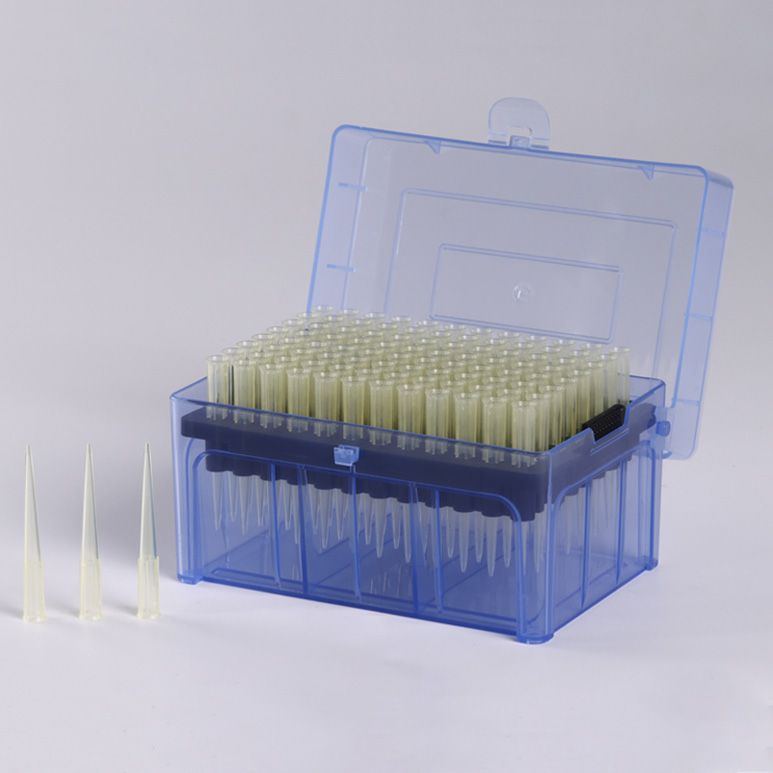
Universal-style pipette tips are commonly used for routine liquid handling.
However, the term "universal" should not be interpreted as guaranteed compatibility with every pipette brand or model.
Buyers should verify:
● Pipette model and tip fit
● Sealing performance
● Transfer consistency
● Volume capacity
● Packaging and tip loading format
Compatibility is best confirmed through sample evaluation.
Filter Pipette Tips
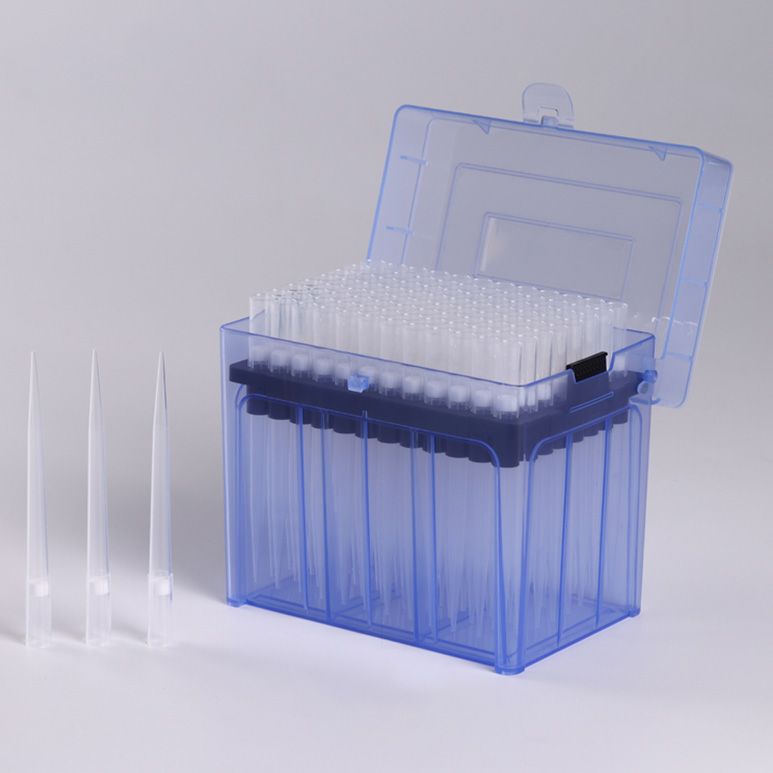
Filter tips contain a barrier intended to reduce the risk of aerosols or droplets entering the pipette.
They may be useful in:
● PCR and qPCR preparation
● Nucleic acid workflows
● Contamination-sensitive sample handling
● Molecular biology applications
Filter tips do not replace good laboratory practice, appropriate cleaning, or contamination-control procedures.
Low-Retention Pipette Tips
Low-retention tips are designed to reduce liquid residue on the inner surface of the tip.
They may be worth evaluating when handling:
● Low-volume samples
● Enzyme solutions
● Protein-containing reagents
● Valuable molecular biology samples
● Liquids prone to retention
Low-retention performance depends on the particular product and liquid. It should be confirmed through product-specific information or comparative sample testing.
For additional guidance, read Why Pipette Tips Leave Liquid Behind: Causes and Low-Retention Tips.
Product Claims and Documentation
Claims such as sterile, RNase-free, DNase-free, PCR inhibitor-free, endotoxin-free, pyrogen-free, or low-retention should not be assumed for every pipette tip.
Buyers should confirm relevant claims with product-specific documentation or batch-level evidence where applicable.
5. Ergonomics, Compatibility, and Repeat Performance
For high-frequency manual pipetting, product selection should consider more than nominal accuracy.
Operator handling and long-term product consistency are also important.
Practical evaluation factors include:
Different force measurements should not be treated as interchangeable.
For example, tip attachment force, plunger force, and tip-ejection force measure different aspects of operation.
Laboratories comparing products should use consistent test conditions and evaluate the actual pipette-tip combinations they intend to purchase.
| Evaluation Area | What Buyers Should Check |
|---|---|
| Pipetting accuracy and precision | Performance at the intended working volumes |
| Tip attachment | Fit, sealing, and ease of loading |
| Operating force | Plunger, tip attachment, and tip-ejection effort |
| Channel consistency | Repeatable liquid transfer across channels |
| Calibration | Available procedures and documentation |
| Tip availability | Compatible specifications and repeat supply |
| Packaging | Racked, bulk, sterile, or other available formats |
6. Yuanzan Y1 and G1 Pipette Solutions
Yuanzan provides manual pipettes and related consumables for routine liquid handling and repetitive multi-well applications.
Its Y1 and G1 product families serve different requirements.
Y1: Cylindrical Tip System and Operating Comfort
The Y1 series uses a cylindrical shaft and matching tip system, with an emphasis on lower attachment force and ergonomic operation.
Yuanzan's September 2026 technical white paper reports approximately 660 g tip attachment force and 120 g plunger operating force for the specified Y1 design under its documented testing conditions.
These measurements describe different operating actions and should not be interpreted as a guarantee of reduced user fatigue or performance for every configuration.
Y1 may be considered for laboratories that prioritize repeated manual pipetting and prefer the matching cylindrical tip system.
G1: Conical Tip System and Workflow Flexibility
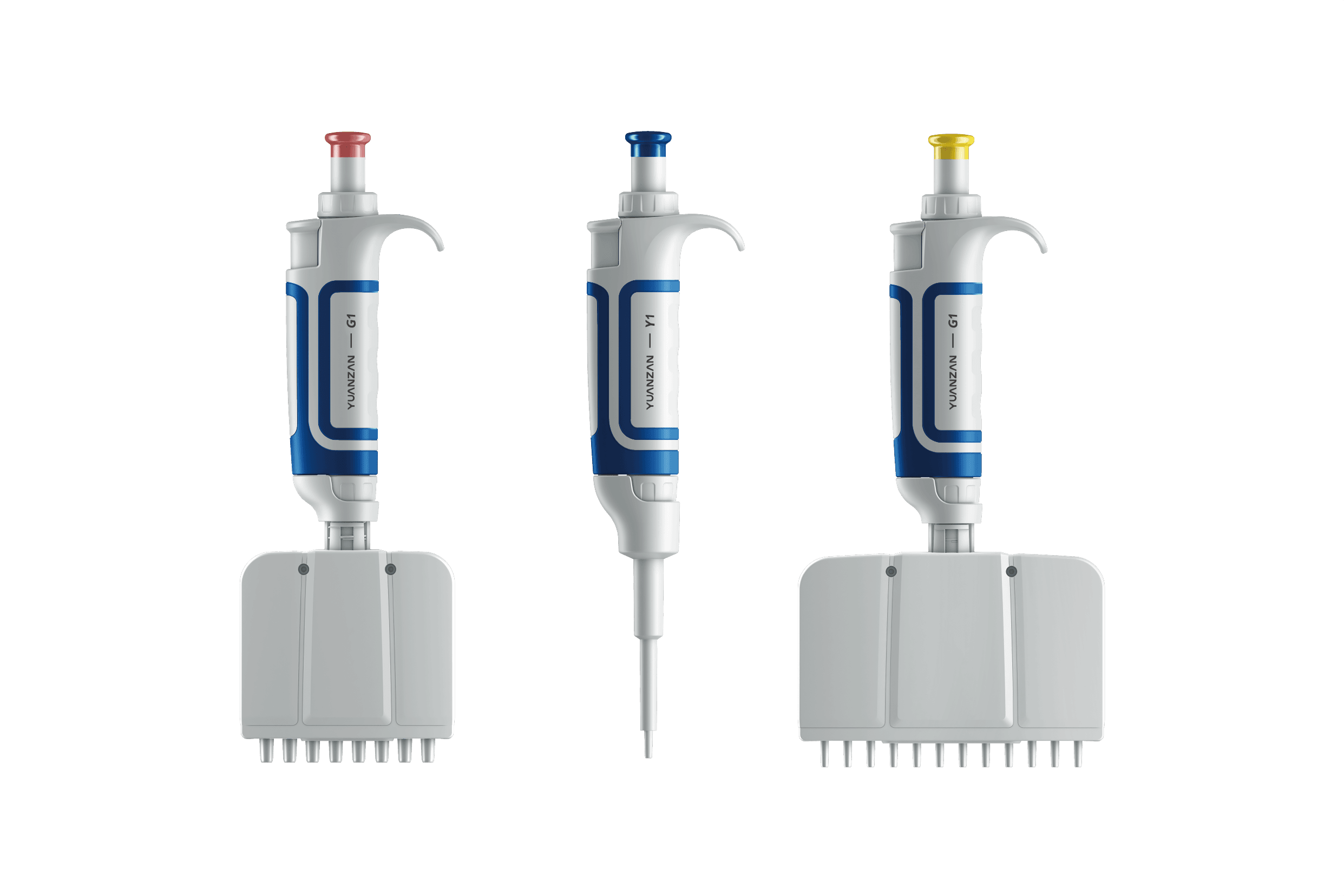
The G1 series uses a conventional conical interface designed to accommodate commonly used tip formats, subject to compatibility testing.
Its product range includes:
● Single-channel manual pipettes
● 8-channel manual pipettes
● 12-channel manual pipettes
This makes the G1 range relevant to laboratories combining routine tube-based transfers with repeated 96-well plate workflows.
For shared laboratory platforms, tip availability and compatibility may be important purchasing considerations.
Evaluate Pipettes and Tips Together
For procurement teams and distributors, selecting a pipette without checking the associated tip system can create avoidable compatibility and inventory issues.
Yuanzan's Liquid Handling Solutions include manual pipettes, universal-style tips, cylindrical-system tips, and other selected liquid-handling consumables.
The suitability of each model and tip should be confirmed based on specifications and the intended workflow.
7. Procurement Checklist for Laboratories and Distributors
Before ordering manual pipettes or pipette tips, buyers should prepare the following information:
For distributors and private-label brands, packaging requirements, target markets, and estimated annual volume should also be discussed before quotation.
A practical selection process is:
Define Workflow → Select Pipette Configuration → Confirm Tip Compatibility → Review Specifications → Evaluate Samples → Plan Repeat Supply
This is generally more reliable than selecting a product based on price or channel count alone.
| Requirement | Information to Provide |
|---|---|
| Application | PCR, qPCR, ELISA, screening, sample processing |
| Working volume | Most frequently used transfer volumes |
| Pipette configuration | Single-channel, 8-channel, or 12-channel |
| Pipette/tip compatibility | Existing model or reference SKU |
| Consumable requirements | Standard, filter, low-retention, sterile where applicable |
| Packaging | Bulk, racked, or other required format |
| Annual demand | Expected instrument and tip quantities |
| Documentation | Calibration, specifications, quality or claim-related documents |
Conclusion
High-throughput liquid handling is not simply about using a pipette with more channels.
For manual laboratory workflows, the best liquid-handling setup depends on working volume, sample layout, pipette-tip compatibility, contamination-control requirements, operating comfort, and repeatability.
Single-channel pipettes remain useful for flexible sample preparation. Multichannel pipettes can reduce repetitive transfers in standardized plate-based workflows.
For laboratories and distributors, choosing the right pipette and tip system together can simplify product selection, workflow management, and long-term consumable sourcing.
Need Help Selecting Pipettes and Tips?
Yuanzan supports product selection and sourcing discussions for manual pipettes, standard tips, filter tips, low-retention tips, and selected OEM/private-label liquid-handling projects.
Share your working volume, intended application, pipette configuration, current reference SKU, expected annual demand, and packaging requirements.
● Request Free Consumables Samples
● Explore Liquid Handling Products
● Discuss OEM / Private-Label Supply
Free samples are available for selected consumables. Manual pipette evaluation or trial arrangements should be confirmed separately based on product and project requirements.
FAQ
What is the best pipette for high-throughput liquid handling?
The best configuration depends on the sample format, working volume, and transfer pattern. Multichannel pipettes are often practical for repetitive 96-well plate operations, while single-channel pipettes remain useful for irregular layouts and individual samples.
Is an 8-channel or 12-channel pipette better for a 96-well plate?
Both can be suitable. An 8-channel pipette commonly processes one column of eight wells, while a 12-channel pipette commonly processes one row of twelve wells. The best choice depends on the direction and pattern of transfers.
Do multichannel pipettes replace automated liquid-handling systems?
Not necessarily. Manual multichannel pipettes can reduce repetitive transfers, but automated systems may be better suited to unattended operation, complex multi-step protocols, or sustained high-volume processing.
What is the difference between Yuanzan Y1 and G1 pipettes?
Y1 uses a cylindrical shaft and matching tip system, emphasizing lower attachment force and operating experience. G1 uses a conical interface with a focus on commonly used tip formats and includes single-channel and multichannel configurations.
Are universal pipette tips compatible with every brand?
No universal compatibility guarantee should be assumed. Tip fit and sealing performance depend on the particular pipette and tip models. Buyers should verify compatibility through specifications and sample testing.
When should I use filter or low-retention pipette tips?
Filter tips may be useful for contamination-sensitive applications such as PCR and qPCR. Low-retention tips may be worth evaluating when liquid residue, low-volume handling, or reagent loss is important. Product suitability and claims should be confirmed for the specific application.
Can I request free samples from Yuanzan?
Free samples are available for selected pipette tips and laboratory consumables. Manual pipette evaluation arrangements can be discussed separately based on the product and project requirements.
Can distributors request OEM or private-label liquid-handling products?
Yes. Yuanzan supports selected OEM and private-label projects involving product selection, reference SKU review, packaging, documentation, and repeat supply planning, subject to project feasibility.
Pipette Tips