Introduction
Serological pipettes are widely used for cell culture, media preparation, reagent transfer, sample preparation, and general laboratory liquid-handling workflows. However, selecting the right product involves more than choosing a volume size.
Sterility, packaging, material quality, compatibility, documentation, and supply reliability can all affect purchasing decisions.
This guide covers the key factors laboratories, distributors, biotechnology companies, and OEM/private-label buyers should consider when sourcing serological pipettes.
1. What Is a Serological Pipette?
A serological pipette is a graduated laboratory consumable designed for accurate measurement and transfer of liquid samples.
Unlike simple transfer pipettes, serological pipettes are typically used together with pipette controllers or pipette aids, allowing users to handle larger liquid volumes with greater control and precision.
Common applications include:
● Cell culture
● Media preparation
● Reagent transfer
● Sample preparation
● General laboratory liquid handling
Because serological pipettes are frequently used in biological and research workflows, product quality, sterility, packaging, and consistency are important considerations during procurement.
2. Choose the Right Volume Size
The first step when purchasing serological pipettes is selecting the appropriate volume range.
Different applications require different capacities. Choosing the correct size helps improve efficiency while reducing unnecessary product usage.
For laboratories with diverse workflows, maintaining several commonly used sizes may provide greater flexibility.
For example:
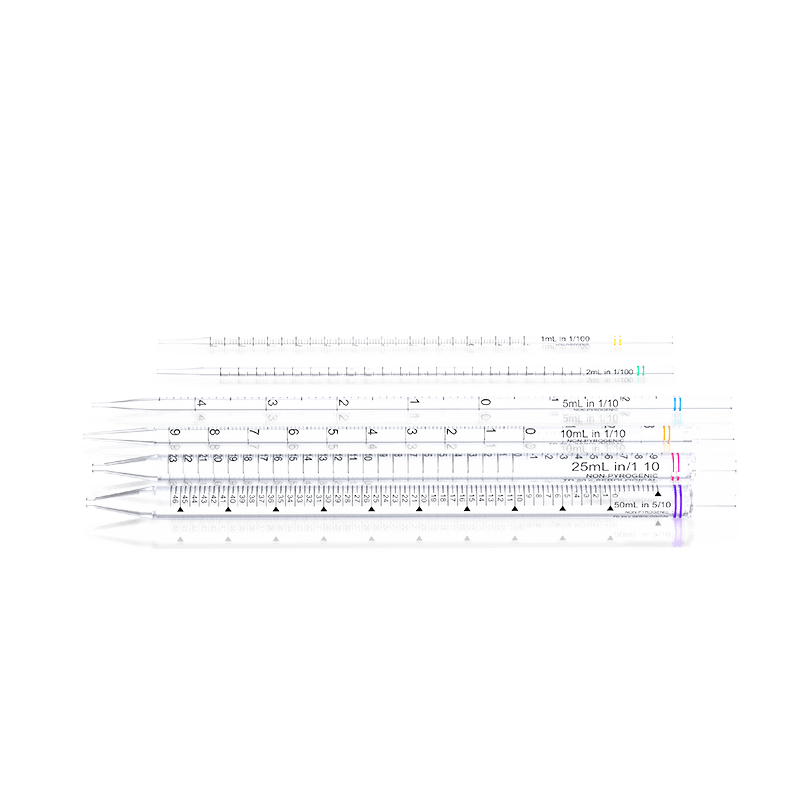
● Cell culture laboratories often require 5 mL, 10 mL, and 25 mL pipettes.
● High-volume applications may require 50 mL serological pipettes.
● Research laboratories handling different experimental protocols may need multiple volume options.
For distributors, the commonly requested volume range may also depend on the target customer segment. Cell culture users, diagnostic laboratories, universities, and biotechnology companies may have different purchasing patterns.
| Volume Size | Common Applications |
|---|---|
| 1 mL | Small-volume liquid transfer and precise handling |
| 2 mL | Routine laboratory liquid handling |
| 5 mL | Cell culture and reagent preparation |
| 10 mL | General laboratory applications and media transfer |
| 25 mL | Larger-volume liquid transfer |
| 50 mL | High-volume media and solution handling |
3. Sterile vs. Non-Sterile Serological Pipettes
Sterility is an important consideration when selecting serological pipettes, particularly for workflows where contamination control is critical.
Sterile Serological Pipettes
Sterile serological pipettes are commonly used for applications such as:
● Cell culture
● Microbiology
● Molecular biology workflows
● Sensitive biological experiments
Depending on the product specification and application, buyers may also look for requirements such as:
● Sterile packaging
● DNase-free
● RNase-free
● Non-pyrogenic
● Low endotoxin level
These specifications should be confirmed according to the product documentation rather than assumed based only on the word “sterile.”
Non-Sterile Serological Pipettes
Non-sterile serological pipettes may be suitable for routine liquid transfer where strict contamination control is not required, including:
● General laboratory preparation
● Educational laboratories
● Non-critical liquid handling
When choosing between sterile and non-sterile options, laboratories should consider the sensitivity of the workflow, packaging requirements, and purchasing volume rather than selecting solely on unit price.
For distributors, offering both sterile and non-sterile options can also help address different customer requirements without unnecessarily expanding the product portfolio.
4. Individual Wrapped or Bulk Packed: Which Packaging Is Better?
Packaging format directly affects laboratory operation and procurement cost.
Individually Wrapped Serological Pipettes
Advantages:
● Reduced contamination risk
● Convenient for sterile workflows
● Easier handling in clean environments
● Better inventory control
Suitable for:
● Cell culture laboratories
● Biotechnology companies
● Research institutions
● Workflows requiring individual sterile handling
Bulk-Packed Serological Pipettes
Advantages:
● Lower packaging cost
● Reduced storage space
● More economical for high-volume applications
Suitable for:
● Routine laboratory workflows
● Large-scale applications where packaging requirements are less strict
● Users with high consumption and controlled working environments
The best choice depends on laboratory workflow, contamination-control requirements, storage conditions, and purchasing volume.
5. Material Quality and Product Consistency
Serological pipettes are commonly manufactured from polystyrene (PS), which provides transparency and suitability for laboratory liquid-handling applications.
When evaluating product quality, laboratories and distributors should consider several factors.
Material Transparency
Clear and consistent material allows users to observe liquid levels more easily during aspiration and dispensing.
Graduation Accuracy
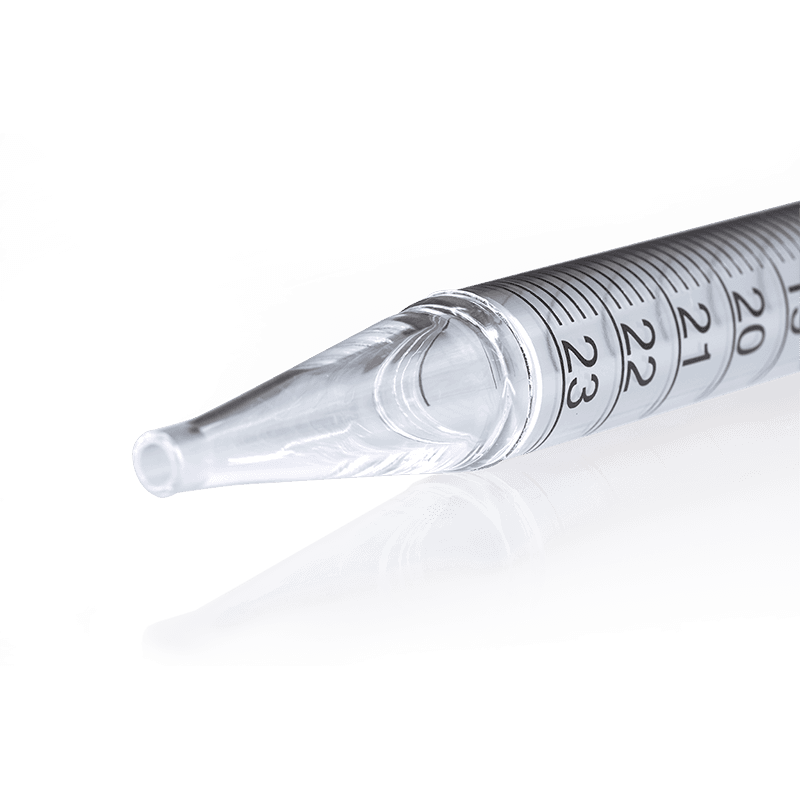
Clear and consistent graduation markings are important for reliable volume measurement and routine liquid transfer.
Surface Characteristics
Depending on the product design, surface characteristics can influence liquid-handling performance and liquid retention.
Quality Control
For biological and other sensitive applications, buyers may evaluate quality-related requirements such as:
● Sterility assurance
● DNase/RNase testing
● Endotoxin testing
● Lot-to-lot consistency
Not every application requires all of these specifications. Buyers should match quality requirements with the intended workflow and confirm relevant claims through product specifications or quality documentation.
For laboratories performing repeated experiments, consistent product quality across lots is particularly important for maintaining stable workflows and reducing avoidable variation.
6. Compatibility with Pipette Controllers
Before purchasing serological pipettes, laboratories should confirm compatibility with their existing pipette controllers or pipette aids.
Important considerations include:
● Proper fitting between pipette and controller
● Stable connection during operation
● Smooth liquid aspiration and dispensing
● Compatibility across different volume sizes
Selecting compatible consumables helps avoid workflow interruptions and improves user experience.
For laboratories managing multiple workflows, standardizing compatible serological pipettes can also simplify inventory management.
For distributors, compatibility information can reduce after-sales questions and make it easier for customers to select suitable products.
7. What Buyers Should Check Before Purchasing Serological Pipettes
When purchasing serological pipettes, price should not be the only consideration. A reliable procurement decision should balance application requirements, product quality, supply stability, documentation, and purchasing efficiency.
For laboratories with recurring demand, it is also useful to evaluate whether the supplier can maintain consistent specifications and support repeat orders over time.
| What Buyers Should Check | Why It Matters |
|---|---|
| Product Quality | Consistent manufacturing quality helps support reliable liquid handling and reduce operational issues. |
| Supply Stability | Reliable supply helps laboratories avoid workflow interruptions caused by product shortages. |
| Packaging Options | Packaging should match contamination-control requirements, workflow preferences, and purchasing volume. |
| Product Range | Multiple volume options can simplify purchasing and reduce the need to manage multiple suppliers. |
| Documentation Support | Product specifications and quality documentation may be required for laboratory and distributor procurement. |
| Supplier Capability | Production capacity, quality control, and customization capability can affect long-term sourcing. |
| OEM / Private-Label Support | Important for distributors and brands developing their own product portfolio |
8. Common Mistakes When Purchasing Serological Pipettes
Even when the product specification looks suitable, several purchasing decisions can create unnecessary costs or operational problems.
Choosing Only Based on Price
A lower unit price does not necessarily mean lower overall procurement cost. Inconsistent product quality, unsuitable packaging, or unreliable supply can create additional operational challenges.
Ignoring Packaging Requirements
Packaging should match the laboratory's workflow and contamination-control requirements. Choosing an unsuitable format may increase handling difficulties or create unnecessary operational issues.
Buying Too Many Different SKUs
Maintaining too many similar volume sizes or product variants can increase inventory complexity and purchasing workload. Standardizing commonly used specifications where possible can simplify inventory management.
Overlooking Supplier Capability
Product quality is only one part of long-term sourcing. Buyers should also consider production capacity, quality control, documentation support, supply stability, and customization capability when evaluating a supplier.
A well-planned procurement strategy should focus not only on the lowest initial price, but also on product consistency, supply reliability, and long-term purchasing efficiency.
9. For Distributors: What to Ask Before Adding Serological Pipettes to Your Portfolio
For distributors, serological pipettes are not only laboratory consumables. They are also part of a broader product portfolio that needs to match customer demand, storage conditions, pricing strategy, and repeat-order potential.
Before adding serological pipettes to a product line, distributors can ask:
● Which volume sizes are most commonly requested by our customers?
● Do our customers prefer individually wrapped or bulk-packed formats?
● Are sterile options required for our target applications?
● Do customers need DNase-free, RNase-free, non-pyrogenic, or low-endotoxin documentation?
● Do we need private-label packaging or OEM support?
● What documentation is required for our market or customer segment?
● Can the supplier support stable repeat orders and consistent specifications?
● Can samples be evaluated before placing a larger order?
These questions help distributors avoid building a portfolio based only on unit price, while improving long-term customer fit and supply reliability.
10. How Yuanzan Supports Serological Pipette Procurement
Selecting the right serological pipette requires balancing application requirements, product quality, and procurement efficiency.
Yuanzan supports laboratories, distributors, biotechnology companies, and life science brands with flexible sourcing options based on workflow and market requirements.
For laboratories and distributors evaluating a new supplier, Yuanzan can discuss product specifications, preferred volumes, packaging requirements, documentation needs, and purchasing plans to identify suitable serological pipette solutions.
For OEM and private-label buyers, Yuanzan can also support selected customization discussions based on project scope, packaging requirements, and target market needs.
| What Buyers Need | How Yuanzan Supports |
|---|---|
| Different Volume Requirements | Multiple serological pipette volume options for different laboratory liquid-handling applications |
| Sterility Requirements | Sterile and non-sterile configurations based on product and application requirements |
| Flexible Packaging | Different packaging formats to support different workflow and procurement needs |
| Quality Documentation | Product and quality documentation support for sourcing and evaluation |
| Distributor Product Portfolios | Multiple specifications to support different customer and application requirements |
| OEM & Private-Label Projects | OEM and private-label solutions for distributors and laboratory brands |
| Sample Evaluation | Product samples can be discussed before larger purchasing decisions |
Conclusion
Choosing the right serological pipette involves more than selecting a volume size.
Laboratories and distributors should evaluate application requirements, sterility, packaging, material quality, compatibility, documentation, and supplier reliability before making a purchasing decision.
A well-planned sourcing strategy can help simplify inventory management, support consistent laboratory workflows, and reduce long-term procurement challenges.
For distributors and OEM/private-label buyers, the right supplier can also support a more complete product portfolio, stable repeat supply, and more efficient customer service.
Looking for the Right Serological Pipette Solution?
Whether you are purchasing for a research laboratory, biotechnology company, distribution business, or private-label project, selecting the right specifications and supply partner is essential.
Share your application requirements, preferred volumes, packaging needs, documentation requirements, and purchasing plans with our team. We can help you evaluate suitable serological pipette solutions for your workflow or market.
Contact Yuanzan for product specifications, samples, or OEM and private-label solutions.
FAQ
What sizes of serological pipettes are commonly used?
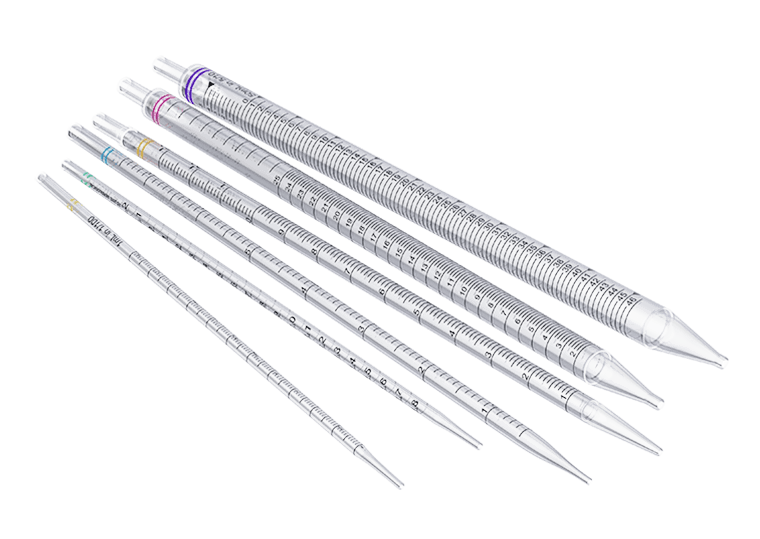
Common serological pipette sizes include 1 mL, 2 mL, 5 mL, 10 mL, 25 mL, and 50 mL. The appropriate size depends on the application and required transfer volume.
Are serological pipettes available in sterile and non-sterile versions?
Yes. Serological pipettes are available in sterile and non-sterile configurations. Sterile options are commonly selected for applications where contamination control is important, while non-sterile options may be suitable for routine liquid handling.
Should I choose individually wrapped or bulk-packed serological pipettes?
Individually wrapped pipettes may be preferred for workflows requiring higher contamination control and convenient individual handling. Bulk-packed pipettes may be more economical for routine, high-volume applications. The appropriate format depends on workflow requirements and purchasing volume.
Are serological pipettes compatible with all pipette controllers?
Compatibility should be confirmed before purchasing. Buyers should check the fitting, connection stability, aspiration and dispensing performance, and compatibility with the pipette controllers or pipette aids already used in the laboratory.
What should I consider when buying serological pipettes in bulk?
Bulk procurement should consider product quality, volume specifications, packaging format, supply stability, documentation, MOQ, and long-term supplier reliability rather than focusing only on unit price.
Does Yuanzan support OEM and private-label serological pipettes?
Yes. Yuanzan provides OEM and private-label solutions for selected serological pipette projects, including customized packaging and branding requirements based on the project scope.
Can Yuanzan provide samples of serological pipettes?
Yes. Product samples can be discussed before placing an order, allowing customers to evaluate specifications, packaging, compatibility, and suitability for their specific application.
pics of lab consumables