
OEM&ODM
How to Choose a Long-Term China Manufacturing Supplier for Life Science Products
Learn how laboratories, distributors, and OEM buyers can evaluate China-based suppliers for life science products, including lab consumables, manual pipettes, PCR workflow products, documentation, samples, and quality control.
Introduction
China has become an important sourcing base for life science products, laboratory consumables, liquid handling tools, PCR workflow products, and OEM/private-label supply.
For overseas laboratories, distributors, importers, and OEM buyers, platforms such as Made-in-China and other B2B marketplaces are useful for finding potential suppliers. But supplier listings often mix different business types:
- Trading companies
- Small workshops
- Product resellers
- Export agents
- OEM/ODM manufacturers
- Integrated manufacturing suppliers
The challenge is not simply finding a low price.
The real question is:
Can this supplier support stable product quality, documentation, samples, private-label packaging, and repeat supply over the long term?
This article explains how buyers can evaluate a China-based life science manufacturing supplier more practically.
1. China’s Life Science Supply Chain Is Moving from Trading to Manufacturing Depth
China’s biotechnology and life science industries have developed over several decades. Public summaries describe China’s biotechnology industry as beginning in the 1980s, with national programs such as the 863 Program and Torch Program supporting high-technology development and commercialization.
More recently, China’s biopharma and life science sectors have become more global. Reuters has reported that Chinese pharmaceutical companies are expanding internationally, while also facing challenges in global regulatory and talent capabilities.
For laboratory product buyers, this means China is no longer only a low-cost sourcing location.
The stronger opportunity is in manufacturing depth:
- Injection molding capability
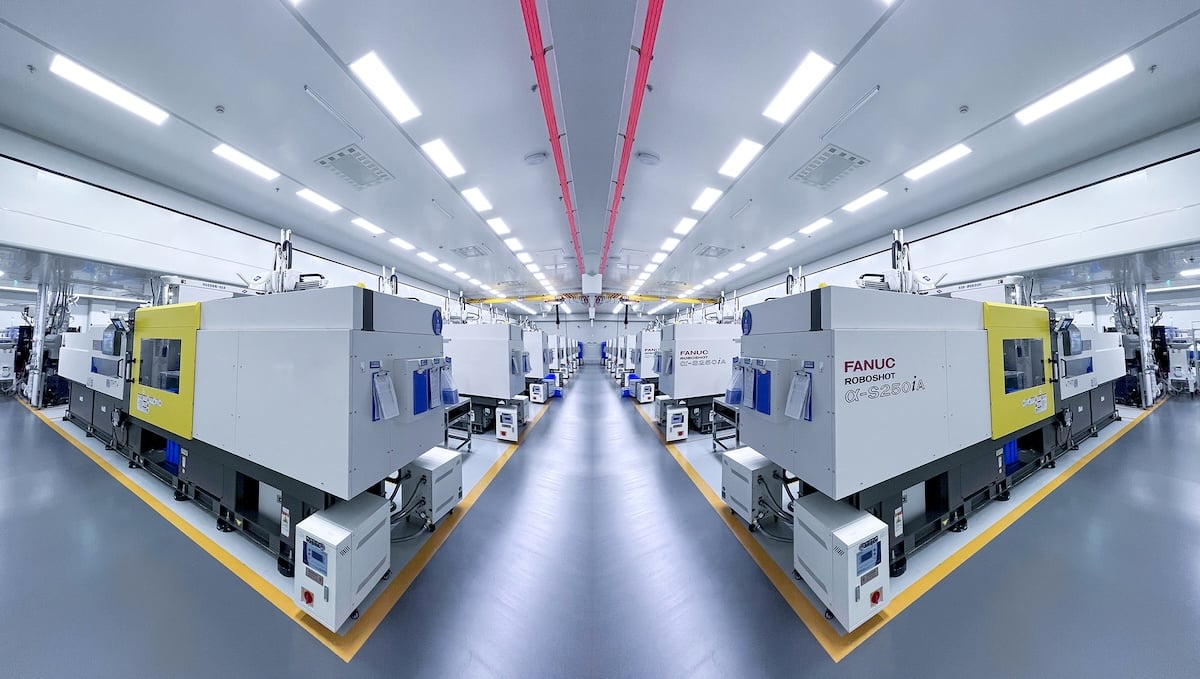
- Cleanroom production
- Product family supply
- Quality management systems
- OEM/private-label packaging
- Documentation support
- Workflow-based product combinations
- Repeat supply planning
In life science sourcing, the best long-term partner is usually not the company with the lowest listed price. It is the supplier that can support quality, documentation, and scale.
2. Why Marketplace Search Alone Is Not Enough
B2B marketplaces are useful starting points. A buyer can quickly search for products such as:
- Manual pipette
- Pipette tips
- PCR tubes
- PCR plates
- Centrifuge tubes
- Cryovials
- Laboratory consumables
- OEM lab consumables
- PCR equipment and reagents
However, marketplace search results can be difficult to interpret.
A listing may show a product image, price range, MOQ, certificate labels, and supplier introduction. But buyers still need to verify:
- Is the supplier a factory or a trading company?
- Does the supplier actually manufacture the product?
- What is the plant area?
- What production equipment is available?
- Are there injection molding machines or only sourcing channels?
- What quality system is certified?
- Are certificates relevant to the product category?
- Can samples be provided?
- Can sterile and non-sterile samples be supported?
- Can the supplier provide product-specific documents?
- Can the supplier support repeat orders after the first purchase?
For life science products, these questions matter because customers often need consistency, documentation, and technical communication, not only shipment.
3. Factory, Trading Company, or Integrated Supplier: What Is the Difference?
Not every supplier type is wrong. Different buyers need different sourcing models.
| Supplier Type | Typical Advantage | Typical Risk | Best For |
|---|---|---|---|
| Trading company | Broad sourcing range, fast quotation | Limited control over production and quality | One-time or mixed-category purchasing |
| Small factory | Lower cost, direct production for limited SKUs | Limited documentation, capacity, or packaging support | Simple products and small orders |
| OEM/ODM manufacturer | Better production control, customization, repeat supply | Requires clearer communication and project planning | Distributors, private-label brands, OEM buyers |
| Integrated manufacturing supplier | Product portfolio + production + QC + documentation + packaging support | May require more structured RFQ process | Long-term catalog and supply chain building |
For laboratories and distributors, the key is not to reject trading companies completely. The key is to understand what role each supplier can realistically play.
If the goal is a long-term product line, private-label catalog, or repeat-order supply, buyers should prioritize manufacturers with verifiable production and quality-control capability.
4. What Buyers Should Check Before Choosing a China Supplier
A practical supplier evaluation should cover six areas.
Product Scope
Can the supplier support one isolated SKU, or a broader product family?
For life science buyers, useful product families may include:
- Manual pipettes
- Pipette tips
- Filter tips
- Low-retention tips
- Serological pipettes
- PCR tubes
- PCR plates
- Deep-well plates
- Sealing films
- Centrifuge tubes
- Cell culture consumables
- PCR-related equipment and reagents
A broader product scope helps distributors build workflow-based catalogs instead of sourcing every SKU separately.
Manufacturing Capability
Buyers should ask for clear production information:
- Injection molding machines
- Mold inventory
- Tonnage range
- Cleanroom production area
- Assembly capability
- Packaging capability
- Production capacity by product family
Quality System
A supplier should provide certificates and explain their scope.
Common documents may include:
- ISO 9001 certificate
- ISO 13485 certificate
- Cleanroom information
- Product specification sheets
- Product-level test reports where applicable
- Sterilization-related documents where applicable
- FDA-related information where applicable
The key is not only whether a certificate exists. Buyers should check whether the certified scope is relevant to the products being sourced.
For documentation planning, see the related guide on compliance and documentation in global lab consumables sourcing.
Sample Support
Samples are essential before bulk purchasing.
Buyers should ask:
- Are free samples available?
- Can sterile and non-sterile samples be provided?
- Can private-label packaging samples be supported?
- Can reference SKUs or catalog pages be uploaded for matching?
- How long does sample preparation take?
Buyers can also start with a lab consumables sample kit request before moving into pilot orders.
Private Label and Packaging
For distributors and regional brands, packaging can determine whether the product is suitable for local catalog sales.
Private-label support may include:
- Customer logo
- Product label
- Carton design
- Barcode
- Packaging language
- Instruction insert
- SKU family packaging
Repeat Supply
A supplier should be able to discuss:
- Trial order quantity
- MOQ
- Lead time
- Forecasting
- Safety stock
- Batch consistency
- Product change control
- Quality feedback process
A low first-order price is not valuable if the supplier cannot support stable reorder supply.
5. Why Quality Control Is the Real Difference
For life science products, quality control is not a marketing phrase.
It affects whether products can be used repeatedly in laboratory workflows, distributor catalogs, OEM projects, and private-label programs.
Buyers should evaluate whether the supplier has a structured quality-control process covering:
- Incoming material control
- In-process inspection
- Mold and production monitoring
- Cleanroom environment monitoring
- Product appearance inspection
- Dimensional inspection
- Packaging inspection
- Outgoing quality control
- Documentation review
- Complaint and feedback handling
For products such as manual pipettes, pipette tips, PCR consumables, centrifuge tubes, and cell culture consumables, small inconsistencies can create downstream problems for laboratories and distributors.
For manual pipette evaluation, buyers can also review the ISO 8655 pipette calibration guide.
This is why a real manufacturing partner should be evaluated by both production capacity and quality-control capability.
6. Example: Yuanzan Manufacturing and Quality Capability
Yuanzan is a China-based life science supplier supporting laboratory consumables, liquid handling products, PCR workflow products, OEM/ODM projects, and private-label cooperation.
The table below shows key capability areas buyers can use as a reference when evaluating a manufacturing supplier.
| Evaluation Area | Yuanzan Capability |
|---|---|
| Supplier positioning | Life science product manufacturer and OEM/ODM partner |
| Product scope | Laboratory plastic consumables, manual pipettes, pipette tips, PCR consumables, centrifuge tubes, deep-well plates, selected cell culture consumables, PCR-related products |
| Manufacturing base | China-based production and supply capability |
| Injection molding | 23 injection molding machines |
| Injection molding range | 50-400T |
| Mold capability | 400+ mold sets |
| Cleanroom environment | 3,062 m² 100,000-class cleanroom environment |
| Quality system | ISO 9001:2015 and ISO 13485:2016 certified quality management systems |
| Pipette testing | Manual pipettes tested and calibrated according to ISO 8655-based accuracy and precision validation |
| Sample support | Free samples available for selected products |
| Sterile / non-sterile samples | Both options can be discussed based on product category and project requirements |
| Private-label support | Logo, label, carton, barcode, packaging language, and SKU family packaging |
| Documentation support | Certificates, product specifications, cleanroom information, sterilization-related documents, FDA-related information where applicable |
| Buyer types supported | Laboratories, distributors, importers, OEM/ODM buyers, private-label brands, PCR workflow buyers |
This kind of table is useful for buyers because it turns supplier claims into verifiable evaluation points.
A strong supplier should be able to answer not only “What products do you sell?” but also:
How do you manufacture, inspect, document, package, and repeatedly supply those products?
7. How Laboratories and Distributors Can Reduce Sourcing Risk
Before choosing a China-based life science supplier, buyers can follow a simple process:
Step 1: Define the Product Category
Start with the product families you need: pipettes, PCR consumables, centrifuge tubes, cell culture consumables, reagents, or workflow-related products.
Step 2: Upload Reference SKUs
If you already use products from catalog brands or local distributors, upload reference SKUs, catalog pages, product photos, or technical datasheets for matching.
Step 3: Request Samples
Use samples to evaluate product appearance, dimensions, packaging, workflow fit, and customer acceptance.
Step 4: Review Documentation
Check ISO certificates, product specifications, cleanroom information, sterilization documents, FDA-related information, and product-specific reports where required.
Step 5: Confirm Packaging
If you need private label, confirm labels, cartons, barcodes, packaging language, and artwork before production.
Step 6: Start with Pilot Orders
Avoid launching a full catalog immediately. Start with selected pilot SKUs and expand after sample feedback and reorder signals.
Step 7: Plan Repeat Supply
Discuss MOQ, lead time, forecast, safety stock, packaging materials, and quality feedback before scaling.
Conclusion
Choosing a China-based life science supplier should not be based only on marketplace search results or price comparison.
For laboratories, distributors, OEM buyers, and private-label brands, the stronger evaluation framework includes production capability, quality control, documentation, sample support, packaging, and repeat supply planning.
China’s life science supply chain is becoming more sophisticated. The best opportunity is not simply buying cheaper products, but building a stable manufacturing partnership for laboratory consumables, liquid handling products, PCR workflow products, and long-term catalog growth.
FAQ
How can I tell whether a China supplier is a factory or trading company?
Check the business type, plant area, production equipment, factory photos, audit reports, certificates, product scope, and whether the supplier can explain its own production and quality-control process.
Is a trading company always a bad choice?
No. Trading companies can be useful for mixed-category sourcing or small one-time purchases. But for long-term product lines, OEM/private-label programs, and repeat supply, buyers should prioritize suppliers with stronger manufacturing and quality-control capability.
What documents should I request from a life science product supplier?
Buyers may request ISO certificates, product specifications, cleanroom information, sterilization-related documents, FDA-related information where applicable, and product-specific reports based on claims.
Can I request samples before placing a bulk order?
Yes. Yuanzan supports free sample requests for selected laboratory consumables and related products. Sterile and non-sterile sample options can be discussed based on product category and evaluation needs.
Can Yuanzan support both consumables and PCR workflow products?
Yes. Yuanzan supports selected laboratory consumables, liquid handling products, manual pipettes, PCR-related products, and OEM/private-label cooperation. Project scope should be confirmed based on product category and market requirements.
What should distributors check before launching private-label lab consumables?
Distributors should check product fit, sample quality, packaging options, documentation, claim support, MOQ, lead time, and repeat supply capability before launching a private-label product line.
Does ISO 13485 mean every product claim is automatically supported?
No. ISO 13485 helps verify quality management system scope, but special claims such as sterile, RNase-free, DNase-free, endotoxin-free, PCR inhibitor-free, or low-retention require product-specific documentation where applicable.
Looking for a Long-Term China Manufacturing Partner for Life Science Products?
Yuanzan supports laboratory consumables, liquid handling products, manual pipettes, PCR workflow products, OEM/ODM projects, and private-label cooperation.
Send your product list, reference SKU, target market, annual volume, and documentation requirements. Our team can help evaluate sample availability, sterile or non-sterile options, packaging needs, and long-term supply feasibility.