Next-generation sequencing (NGS) library preparation involves a series of sample-processing, enzymatic, purification, amplification, and quality-control steps. The exact workflow depends on the sample type, library preparation kit, sequencing application, and level of automation.
While enzymes, adapters, and other reagents are often the primary focus of library preparation, disposable laboratory consumables also contribute to operating costs and workflow performance.
Pipette tips, PCR plates, reaction tubes, sealing materials, and sample-processing vessels must meet the requirements of the intended protocol. An apparently inexpensive substitute can become costly if it introduces compatibility problems, additional handling, or repeat work.
However, higher-priced consumables are not automatically better. A product's value depends on its suitability for the actual laboratory workflow.
For research laboratories, sequencing service providers, procurement teams, and laboratory consumables distributors, a more useful purchasing question is:
How can consumable costs be optimized while maintaining the library quality criteria required by the workflow?
This guide presents a practical framework for consumable selection, library quality assessment, cost calculation, and supplier qualification.
Quick Answer: How Can Laboratories Optimize NGS Library Prep Consumable Costs?
A structured optimization process should address five areas:
1. Map actual consumable usage. Identify the tubes, pipette tips, plates, seals, and other disposable products required by the selected library preparation protocol.
2. Confirm compatibility. Check instrument fit, liquid-handling performance, material suitability, and the requirements of each workflow step.
3. Evaluate library quality. Compare relevant QC outcomes before approving alternative consumables.
4. Calculate cost per QC-passed library. Account for actual consumable expenditure and the number of libraries that meet predefined acceptance criteria.
5. Qualify the supplier. Review product specifications, available quality documentation, packaging, traceability, and repeat-supply arrangements.
The objective is not necessarily to purchase the lowest-cost consumable.
It is to identify an economically practical product that satisfies the laboratory's defined technical and quality requirements.
1. Mapping Consumables Across the NGS Library Preparation Workflow
NGS library preparation is not a single standardized process.
Some workflows include enzymatic fragmentation, end repair, adapter ligation, amplification, and magnetic bead cleanup. Others use different processing sequences or PCR-free approaches.
Consequently, not every library preparation protocol requires the same consumables.
Before evaluating suppliers, procurement teams should build a consumable inventory based on the actual kit instructions and laboratory equipment.
Typical Consumables by Workflow Stage
| Workflow Stage | Potential Consumables | Main Evaluation Requirements |
|---|---|---|
| Sample and reagent handling | Microcentrifuge tubes, pipette tips, reaction vessels | Volume, material, compatibility, contamination control |
| Library construction | PCR tubes or plates, pipette tips | Reaction format, low-volume handling, protocol compatibility |
| Magnetic bead cleanup | Reaction plates or tubes, pipette tips, suitable magnetic separation accessories | Plate and magnet compatibility, sample recovery, handling requirements |
| Library amplification, where applicable | PCR plates or tubes, compatible caps or sealing films | Thermal cycler compatibility, sealing, evaporation control |
| Library QC | Analysis-specific tubes, plates, tips, and QC consumables | Compatibility with the library quantification or fragment-analysis method |
| Library transfer and storage | Appropriate low-volume tubes and storage containers | Material, identification, closure and storage conditions |
This matrix is a planning tool, not a universal list of mandatory NGS consumables.
For example, a manually operated, tube-based library preparation workflow may not require deep-well plates or automated extraction accessories.
Similarly, a PCR-free library preparation protocol may not include a library amplification step, although PCR-based quantification may still be used for quality assessment.
Procurement decisions should follow the validated workflow rather than a generic list of NGS laboratory products.
2. Pipette Tips and Low-Volume Liquid Handling
Liquid transfer is a recurring activity throughout NGS library preparation.
Depending on the protocol, laboratories may handle small volumes of enzymes, adapters, DNA or RNA samples, magnetic bead suspensions, and other reagents.
At low transfer volumes, product compatibility and handling technique become especially important.
Low-Retention Pipette Tips
Low-retention tips are designed to reduce the amount of liquid remaining on the inner tip surface under specified conditions.
They may be useful when handling small quantities of expensive reagents or liquids that tend to adhere to conventional plastic surfaces.
However, low-retention performance depends on multiple factors:
● Tip surface properties
● Liquid composition
● Pipetted volume
● Pipette model
● Aspiration and dispensing technique
● Experimental conditions
A low-retention designation does not guarantee improved recovery for every reagent or sample type.
Before switching products, laboratories should determine whether the candidate tip offers a measurable benefit in the intended workflow.
Filter Tips and Contamination Control
Filter tips serve a different purpose.
Depending on their design, filter tips can provide a barrier that helps reduce the risk of aerosols or liquid entering the pipette shaft.
They may be selected as part of a laboratory's contamination-control strategy.
Low-retention and filter features should not be treated as interchangeable.
Where the workflow requires both characteristics, the supplier should confirm that the specific SKU supports both.
Pipette Tip Evaluation Checklist
| Evaluation Area | What Buyers Should Verify |
|---|---|
| Working volume | Suitability for the intended transfer volume |
| Pipette compatibility | Fit with the exact manual pipette or automated liquid handler |
| Liquid retention | Performance with relevant reagents or representative test liquids |
| Transfer performance | Accuracy and precision under defined test conditions |
| Contamination requirements | Relevant filter or product-cleanliness specifications |
| Tip geometry | Compatibility with tubes, wells and liquid-handling equipment |
| Packaging | Rack, bulk or automation-compatible packaging |
| Documentation | Product specifications and supporting claims where available |
For automated liquid handling, compatibility may depend on the precise tip dimensions, rack configuration, pickup characteristics, and instrument settings.
A universal-fit claim for a manual pipette does not establish compatibility with automated NGS library preparation equipment.
What Matters Most?
For procurement purposes, performance should be compared using the actual liquid transfer requirements.
If an alternative tip costs less but fails the laboratory's acceptance criteria, the purchase price difference alone is not a sufficient reason to approve it.
Conversely, a standard tip that consistently meets the required performance may be more economical than a specialized product when the workflow does not require additional features.
3. Magnetic Bead Cleanup: Plates, Tips and Magnetic Separation
Magnetic bead-based purification is used in many NGS library preparation workflows.
Depending on the protocol, magnetic beads may support purification, removal of unwanted reaction components, or size selection.
The exact procedure and required consumables depend on the library preparation method.
A key procurement distinction is that magnetic bead cleanup does not automatically require magnetic rod tip combs.
Conventional Magnetic Bead Cleanup
Many NGS library preparation protocols use reaction tubes or plates together with an appropriate magnetic stand.
Typical consumable requirements may include:
● Compatible reaction tubes or plates
● Pipette tips
● Protocol-specified sealing materials
● Magnetic beads and associated reagents
● Suitable magnetic separation equipment
The magnetic stand is equipment rather than a disposable consumable.
The plate or tube must be compatible with the separation configuration.
A product that fits the pipette or thermal cycler may still be unsuitable for the magnetic separation arrangement used by the laboratory.
Deep-Well Plates
Deep-well plates may be relevant to automated or higher-volume sample-processing workflows.
Their suitability depends on:
● Well format and geometry
● Maximum and practical working volume
● Plate footprint and dimensions
● Instrument carrier compatibility
● Material and chemical resistance
● Sealing requirements
● Compatibility with the specified magnetic separation system
Deep-well plates should not be assumed necessary for every NGS library preparation procedure.
Where the protocol specifies a PCR plate or another vessel type, changing to a deep-well plate may require workflow requalification.
When Are Tip Combs Relevant?
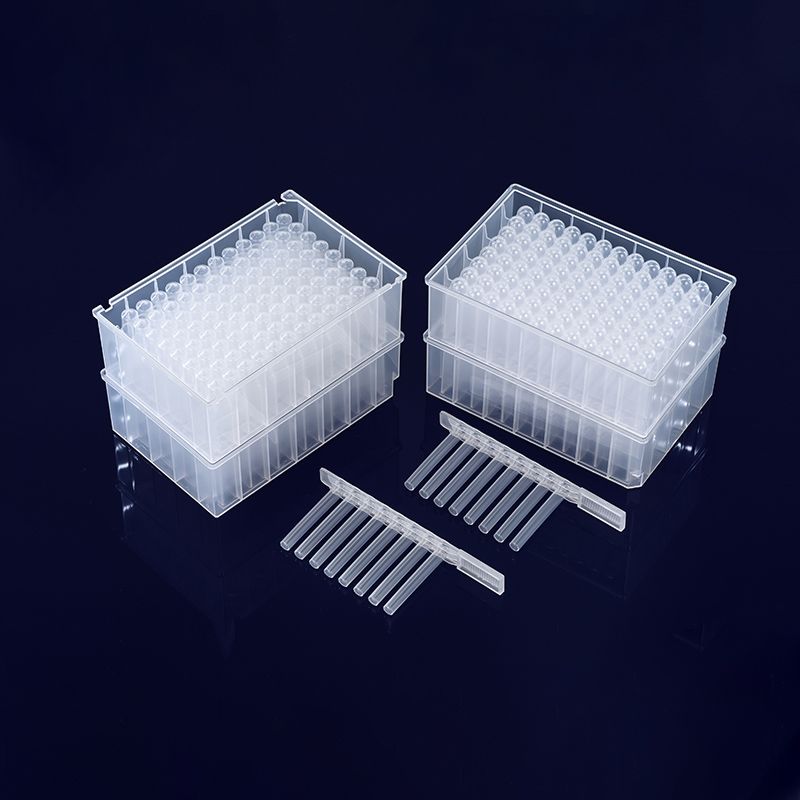
Magnetic rod tip combs are used with certain automated magnetic-bead processing systems.
They protect or interface with the magnetic rods as part of the equipment's bead-handling mechanism.
These products are distinct from the consumables ordinarily used with a conventional magnetic stand.
A laboratory should purchase tip combs only where the relevant equipment requires them.
Before ordering, confirm the instrument model, tip comb geometry, compatible plate format, and supplier specifications.
Magnetic Bead Cleanup Procurement Matrix
| Workflow Configuration | Primary Compatibility Requirement |
|---|---|
| Manual tube-based cleanup | Tube geometry, pipette tip performance, magnetic stand compatibility |
| Plate-based cleanup | Plate dimensions, working volume, magnetic stand fit |
| Automated plate-based cleanup | Plate format, liquid handler compatibility, magnetic separation arrangement |
| Magnetic rod-based automation | Approved tip combs, compatible plates, magnetic head geometry |
Changing consumables in a bead cleanup procedure may affect handling or recovery. The actual effect should be evaluated through the laboratory's quality-control process.
For reference, Illumina's published library preparation workflows include examples of magnetic bead purification performed with PCR plates and magnetic stands.
These examples illustrate why consumable requirements must be interpreted from the actual protocol.
4. PCR Plates, Reaction Tubes and Sealing Materials
PCR consumables are relevant to library preparation workflows that include amplification, thermal cycling, or certain analytical steps.
Selecting suitable products requires more than matching a nominal 96-well format.
PCR Plate Compatibility
Before adopting a new PCR plate, check:
● Well volume and geometry
● Skirt configuration
● Plate dimensions
● Compatibility with the intended thermal cycler
● Material suitability
● Heated-lid requirements
● Supported sealing methods
● Compatibility with automation where applicable
Different PCR plate formats should not be treated as universally interchangeable.
A plate may fit one thermal cycler but not another instrument's carrier, heated lid, or automation platform.
Optical characteristics should be considered when the workflow includes fluorescence-based analysis requiring a suitable optical vessel.
They are not automatically the primary requirement for a conventional library amplification step.
Choosing Appropriate Sealing Materials
Sealing requirements depend on the application.
Products used for thermal cycling may require particular heat resistance, adhesion, and compatibility with the selected plate.
Optical sealing properties matter when fluorescence measurement takes place through the seal.
In other steps, a suitable foil or other specified seal may be appropriate.
| Sealing Consideration | Buyer Question |
|---|---|
| Thermal compatibility | Is the seal suitable for the specified temperature program? |
| Plate compatibility | Does the seal work with the selected plate material and format? |
| Evaporation control | Does it provide adequate containment under the intended conditions? |
| Optical suitability | Is optical performance necessary for this workflow? |
| Automation | Can the seal be applied, removed or pierced as required? |
| Product documentation | Is the intended application supported by available specifications? |
A general laboratory sealing film should not automatically be considered suitable for PCR thermal cycling.
In particular, paraffin-based laboratory wrapping film and PCR-qualified adhesive or heat-sealing film are different product categories.
Buyers should request the exact sealing product specification before substituting one for another.
Evaluate the Complete Combination
PCR plates and sealing materials should be considered together.
A suitable plate with an incompatible seal can still create problems.
Where a new combination is proposed, the laboratory should evaluate it under the operating conditions defined by its protocol.
5. Why Library QC Must Be Part of Consumable Cost Optimization
Lower-priced consumables are only useful when they support the required laboratory outcome.
For NGS library preparation, this means evaluating not just individual plastic products but also the quality of the resulting libraries.
The applicable QC criteria depend on the library preparation kit, sample type, sequencing application, and laboratory procedure.
Relevant Library QC Measures
| QC Measure | Why It Matters |
|---|---|
| Library yield or concentration | Determines whether sufficient library material is available |
| Fragment size distribution | Helps confirm the expected library size profile |
| Adapter-dimer or unwanted fragment content | Identifies contamination or unwanted short library products |
| Library quantification | Supports preparation of libraries for the intended sequencing workflow |
| QC pass rate | Measures the proportion of libraries meeting predefined criteria |
| Repeat preparation rate | Identifies additional work associated with unsuccessful preparations |
Not every project will use every metric or the same acceptance thresholds.
For example, certain assays may require additional library complexity, fragment integrity, or application-specific QC measures.
Laboratories should follow the relevant kit and sequencing platform documentation.
Why Fragment Analysis Matters
Library quality is not adequately described by DNA concentration alone.
A library may have measurable nucleic acid concentration but contain unwanted fragment populations, including adapter dimers or incomplete constructs.
Appropriate fragment analysis helps laboratories assess whether the library meets the expected size and purity characteristics.
Illumina's library quality guidance discusses the importance of library integrity, average insert size, and unwanted library preparation products.
How to Evaluate a New Consumable
When considering a new pipette tip, PCR plate, or other consumable, establish a comparison against the current approved product.
A practical evaluation process is:
1. Define the current approved workflow as the reference.
2. Identify the consumable being changed.
3. Keep other relevant conditions comparable where feasible.
4. Define library QC acceptance criteria before testing.
5. Record library yield, size distribution, quantification and other required results.
6. Compare the proportion of libraries meeting the criteria.
7. Document any deviations and determine whether further evaluation is necessary.
The sample size and study design should reflect the application's risk and the laboratory's quality requirements.
A single successful library preparation does not establish that every future lot will perform identically.
At the same time, a difference in library QC results does not necessarily prove that the changed consumable caused it. Sample quality, reagent variation, operating conditions, and other factors may also contribute.
The evaluation should be designed to distinguish these possibilities as far as practical.
6. Calculating Consumable Cost per QC-Passed Library
Unit price is an incomplete measure of consumable value.
A lower-priced pipette tip may reduce purchasing expenditure, but the laboratory also needs to consider how many consumables are used and whether the workflow continues to meet its defined QC requirements.
For this reason, two cost metrics are useful.
Metric 1: Consumable Cost per Input Sample
Consumable Cost per Input Sample = Total Consumable Expenditure ÷ Number of Input Samples
This metric is useful for budgeting and comparing direct consumable usage.
It does not account for differences in library QC success.
Metric 2: Consumable Cost per QC-Passed Library
Consumable Cost per QC-Passed Library = Total Consumable Expenditure, Including Repeat Preparations ÷ Number of QC-Passed Libraries
This metric provides a more useful comparison when laboratory workflows have different QC outcomes.
A QC-passed library is one that meets the laboratory's predefined acceptance criteria.
Where one sample produces more than one library, the laboratory should define its reporting unit accordingly.
Illustrative Cost Comparison
Consider a hypothetical evaluation of two consumable purchasing options using 48 input samples per condition.
| Measure | Option A | Option B |
|---|---|---|
| Input samples | 48 | 48 |
| Consumable expenditure | $144 | $120 |
| Libraries passing predefined QC | 45 | 36 |
| Consumable cost per input sample | $3.00 | $2.50 |
| Consumable cost per QC-passed library | $3.20 | $3.33 |
In this example, Option B has a lower initial consumable expenditure.
However, its lower QC pass rate produces a higher consumable cost per QC-passed library.
The figures are hypothetical and do not represent Yuanzan product performance, actual NGS library preparation results, or any competing supplier.
They also exclude reagent, labor, sequencing, instrument, and other costs.
The example shows why consumable purchasing price and cost per successful library should be treated as different metrics.
A real evaluation should consider whether any difference in QC pass rate is attributable to the consumable rather than to other experimental variables.
What Should Be Included in the Cost Model?
For a consumables-only analysis, relevant expenses may include:
● Pipette tips
● PCR tubes and plates
● Appropriate sealing products
● Sample-processing tubes
● Deep-well plates where required
● Other protocol-specific disposable products
● Consumables used for repeat library preparations
● Consumables discarded because of packaging or workflow limitations
If the analysis also includes enzymes, adapters, magnetic beads, QC reagents, labor, instrument depreciation, or sequencing expenses, the metric should be described as a broader library preparation or total workflow cost.
The scope must remain consistent across the options being compared.
Account for Actual Plate Utilization
Plate utilization may affect consumable cost per sample.
For example, using only a small number of wells in a 96-well plate may result in a higher allocated plate cost per library than a well-utilized batch.
However, not every unused well can necessarily be carried forward to another run.
The correct treatment depends on whether the product remains usable after partial use, whether it can be stored appropriately, and whether the laboratory's procedures allow future use.
Unusable or discarded material should be included in actual consumable expenditure.
Bulk Purchasing Is Not Automatically Cheaper
Large-volume purchasing may reduce quoted unit prices but can introduce other costs.
These include:
● Inventory holding
● Warehouse space
● Packaging requirements
● Obsolete or unused stock
● Storage and shelf-life limitations where applicable
● Supplier qualification and change-management costs
The best purchasing arrangement balances unit price, actual demand, product suitability and inventory risk.
7. Supplier Qualification for NGS Library Prep Consumables
Once a candidate consumable meets the workflow's technical requirements, procurement teams should evaluate whether the supplier can support repeat orders.
This is particularly relevant for sequencing service providers, distributors, and companies sourcing multiple consumable categories.
Supplier Evaluation Matrix
| Evaluation Area | What to Confirm | Decision |
|---|---|---|
| Product specification | Material, dimensions, volume, format | Accept / Review |
| Instrument compatibility | Intended pipette, thermal cycler or automated platform | Pass / Pending |
| Functional evaluation | Performance under defined laboratory conditions | Pass / Pending |
| Library QC | Predefined library acceptance criteria | Pass / Pending |
| Product claims | Supporting evidence for relevant cleanliness or performance claims | Reviewed / Pending |
| Lot identification | Product and batch traceability | Adequate / Review |
| Packaging | Rack, bulk, carton or private-label specifications | Accept / Review |
| Supply continuity | Availability, expected lead time and reorder planning | Accept / Review |
| Documentation | Available specification, COC, COA or other applicable records | Adequate / Pending |
| Commercial terms | Unit price, MOQ, shipping and evaluation conditions | Accept / Review |
This matrix should be adapted to the actual sourcing project.
A Certificate of Analysis is not necessarily available or required for every laboratory plastic consumable.
Similarly, sterile, DNase-free, RNase-free, and other product claims require appropriate product-specific evidence and should not be inferred from the supplier's general quality management certification.
Evaluating an Alternative Supplier
When replacing an existing product, provide the supplier with:
● Current reference SKU
● Product specification or drawing
● Intended laboratory workflow
● Required compatibility
● Annual purchasing volume
● Packaging preference
● Required quality documentation
● Target market
This information can help identify relevant candidate products and determine whether sample evaluation or additional technical discussion is needed.
8. How Yuanzan Supports NGS-Related Consumable Sourcing
Yuanzan supplies selected laboratory consumables used in liquid handling, molecular biology, PCR workflows, and sample processing.
For laboratories, sequencing service providers, distributors, and private-label buyers, relevant product categories may include:
● Pipette tips, including selected filter and low-retention options
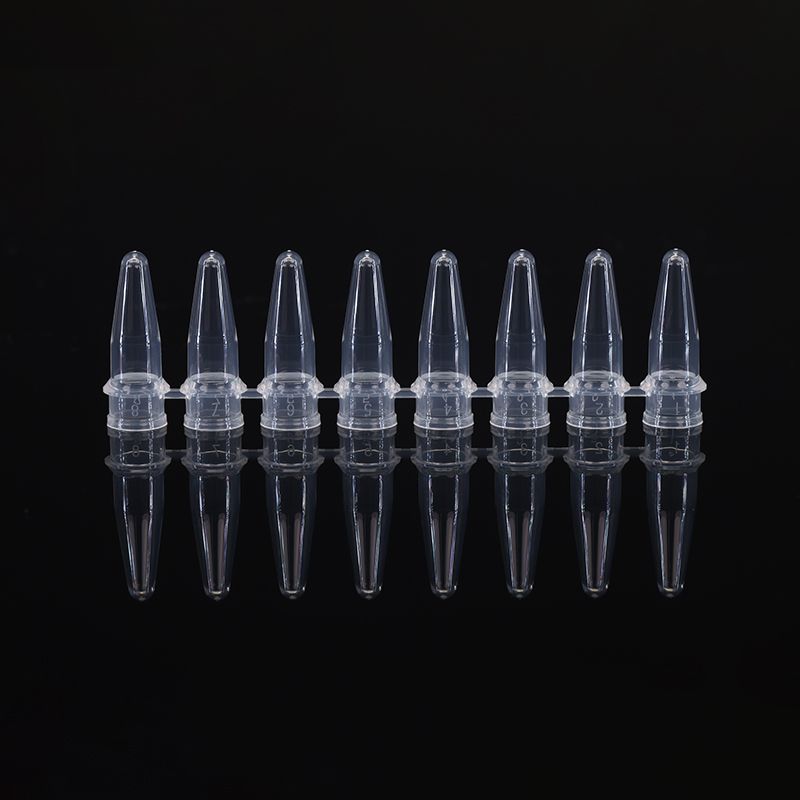
● PCR single tubes and strip tubes
● PCR plates
● Deep-well plates for suitable sample-processing workflows
● Microcentrifuge and centrifuge tubes
● Related laboratory plastic consumables
The suitability of each product for a particular NGS library preparation protocol must be confirmed through the applicable technical assessment.
Yuanzan does not represent its complete consumable portfolio as universally validated for every library preparation kit or sequencing platform.
Product and Supplier Evaluation
Buyers can review:
● Yuanzan Liquid Handling Solutions
● Yuanzan Molecular Biology Consumables
● Yuanzan Classic Pipette Tips
Product-specific materials, cleanliness claims, instrument compatibility, and performance documentation should be checked before qualification.
OEM and Private-Label Sourcing
For eligible consumables, Yuanzan supports discussions regarding product matching, packaging, labeling, reference SKUs, and OEM/private-label requirements.
Manufacturing or customization options depend on the product category and project scope.
For companies sourcing several product lines, a consolidated product evaluation can help identify suitable categories while preserving the need to qualify individual SKUs.
Explore Yuanzan OEM/ODM Manufacturing
Commercial Sample Evaluation
Selected laboratory plastic consumable samples are available for commercial evaluation, subject to product availability and project requirements.
Laboratories and buyers can submit a reference product, target application, estimated order volume, and relevant technical requirements for review.
The purpose of sample evaluation is to establish suitability before larger purchasing decisions—not to imply that any particular NGS workflow has already been validated.
Conclusion: Optimize Cost Around Library Quality
NGS library preparation consumable costs should be evaluated alongside compatibility, workflow requirements, and library quality.
A lower quoted price can improve purchasing efficiency, but it does not necessarily result in a lower cost per successful library.
The most reliable approach is to:
● Identify consumables from the actual library preparation protocol.
● Confirm compatibility with the intended equipment.
● Evaluate candidate products under defined conditions.
● Compare library QC results against established acceptance criteria.
● Calculate cost per QC-passed library using consistent cost boundaries.
● Qualify suppliers for repeat purchasing and documentation support.
This approach allows laboratories to make purchasing decisions based on measurable outcomes rather than unit price alone.
For distributors and OEM buyers, the same principles provide a practical basis for product matching, sample evaluation, and long-term consumable supply planning.
Discuss NGS Library Prep Consumable Requirements
Looking for laboratory consumables for NGS library preparation, molecular biology workflows, or bulk distribution?
Share your current product list, reference SKUs, intended workflow, automation platform where applicable, target market, and estimated purchasing volume.
Yuanzan can review relevant product categories, available specifications, sample options, and OEM/private-label requirements.
Primary CTA: Request Consumable Samples for Supplier Evaluation
Secondary CTA: Discuss OEM and Private-Label Supply
Samples are intended for qualified commercial evaluation and are subject to product and project availability. NGS library preparation compatibility requires application-specific assessment.
References
1. Illumina — Library Quality and Cluster Optimization. Guidance on library integrity, fragment size, and unwanted library products.
2. Illumina — Library Cleanup Using Magnetic Beads. Example of a protocol-specific cleanup workflow using reaction plates and a magnetic stand.
3. Illumina — Consumables Used in the DNA PCR-Free Workflow. Examples of the importance of plate, magnetic stand, and sealing-material compatibility.
4. Yuanzan Life Sciences — Laboratory Consumables Product Catalog, 2026.
Manufacturer protocols and product documentation are provided as technical references. They do not independently establish the performance or compatibility of Yuanzan products within the referenced workflows.
FAQ
What consumables are commonly used in NGS library preparation?
Depending on the protocol, common consumables include pipette tips, reaction tubes, PCR plates, sealing materials, and other sample-processing vessels. Some automated workflows may also require deep-well plates or platform-specific consumables.
Do all NGS magnetic bead cleanup workflows require tip combs?
No. Many library preparation protocols use magnetic stands with compatible tubes or plates. Magnetic rod tip combs are associated with specific automated magnetic-bead processing systems and are not a universal NGS requirement.
Are low-retention tips necessary for NGS library preparation?
Not always. Low-retention tips may be useful when liquid recovery is important, but their benefit should be evaluated for the specific liquid, volume, pipette, and workflow.
What library QC results should be checked when changing consumables?
Relevant measures may include library yield, fragment size distribution, adapter-dimer content, library quantification, and the proportion of libraries meeting predefined acceptance criteria.
Why use cost per QC-passed library instead of cost per input sample?
Cost per input sample measures direct spending against samples processed. Cost per QC-passed library accounts for the number of libraries meeting the laboratory's quality requirements and is more informative when comparing options with different success rates.
Can ordinary laboratory sealing film replace PCR plate sealing film?
Not automatically. PCR sealing materials must be suitable for the plate and the intended operating conditions. A general paraffin-based laboratory wrapping film should not be assumed appropriate for thermal cycling.
Can Yuanzan consumables be used with any NGS library preparation kit?
Compatibility cannot be assumed across all kits or automation systems. Buyers should evaluate the relevant product SKU against the selected protocol and equipment.
Can Yuanzan provide samples for distributor or OEM evaluation?
Yuanzan supports commercial sample evaluation for selected laboratory plastic consumables. Buyers can submit reference SKUs, product specifications, and estimated demand to discuss available options.
pics of lab consumables