Laboratory automation is transforming how research and testing facilities manage liquid transfer, sample preparation, molecular biology workflows, and high-throughput experiments.
Robotic liquid-handling systems can reduce manual intervention and support more consistent execution of defined laboratory procedures. However, successful automation depends on more than the instrument itself.
Pipette tips, tip racks, microplates, deep-well plates, reagent reservoirs, and other laboratory consumables must be suitable for the equipment and application.
A product that performs adequately in a manual workflow may not be compatible with an automated pipetting head.
Likewise, a microplate that meets common dimensional standards may still require additional qualification for a particular robotic deck, carrier, gripper, or integrated instrument.
For laboratories, automation developers, procurement teams, and distributors, the central question is:
How can consumables be evaluated for mechanical compatibility, liquid-handling performance, repeatability, and reliable long-term supply?
This guide presents a structured approach to automated liquid-handling consumable selection, with reference to relevant microplate standards, volumetric performance evaluation methods, and supplier qualification practices.
Quick Answer: What Makes a Consumable Suitable for Robotic Liquid Handling?
Before approving consumables for an automated liquid-handling system, evaluate five areas:
1. Platform compatibility: Confirm the exact instrument model, pipetting head, carriers, adapters and required consumable configuration.
2. Dimensional compatibility: Evaluate critical dimensions, rack geometry, well positions and handling clearances.
3. Liquid-handling performance: Assess aspiration, dispensing, tip attachment, removal and volumetric performance where applicable.
4. Workflow reliability: Verify that loading, positioning and repeated operation meet predefined requirements.
5. Supplier consistency: Review specifications, traceability, relevant documentation, product changes and repeat supply.
Compatibility must be established for the actual consumable and equipment combination.
A product that meets a general dimensional standard is not automatically validated for a specific robotic platform.
Likewise, a pipette tip described as universal-fit should not automatically be considered compatible with automated liquid handlers.
1. Laboratory Automation Is Becoming More Connected
Modern laboratory automation increasingly connects liquid-handling equipment with plate handling, sample tracking, digital monitoring, and other laboratory systems.
This creates additional requirements for labware identification, positioning, and workflow coordination.
Research Example: OT2Eye
In 2026, researchers Koki Tachibana and Haruka Ozaki published a study in SLAS Technology introducing OT2Eye, a tool designed to identify laboratory labware and monitor its position and state within an Opentrons OT-2 liquid-handling robot.
The researchers demonstrated labware recognition, including the identification of microplates and tip racks, and detection of whether tips were present in rack positions.
This study illustrates the importance of labware state recognition and digital monitoring for laboratory automation.
However, its findings are specific to the evaluated system and recognition task.
The study does not establish third-party tip compatibility, pipetting accuracy, or approval of alternative consumables for robotic platforms.
Industry Example: ABB Robotics and Roche
In July 2026, ABB Robotics announced a collaboration with Roche Diagnostics to develop robotic solutions for clinical laboratories.
The initial applications described in the announcement included pathology slide handling and laboratory material movement.
The collaboration illustrates interest in connecting different laboratory operations through robotics.
It should not be interpreted as evidence of compatibility or performance for any particular pipette tip, PCR plate, or other disposable product.
What This Means for Consumable Procurement
As laboratories automate more stages of their workflows, procurement decisions increasingly need to account for:
● Physical compatibility with automated equipment
● Product positioning and handling
● Labware identification
● Workflow-specific performance
● Consistency during repeated operation
● Long-term product availability
The practical challenge is ensuring that the consumable behaves as required within the complete system.
2. Robotic Pipette Tips: More Than Nominal Volume
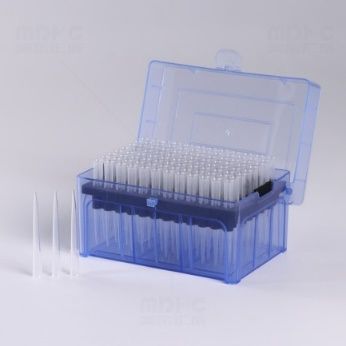
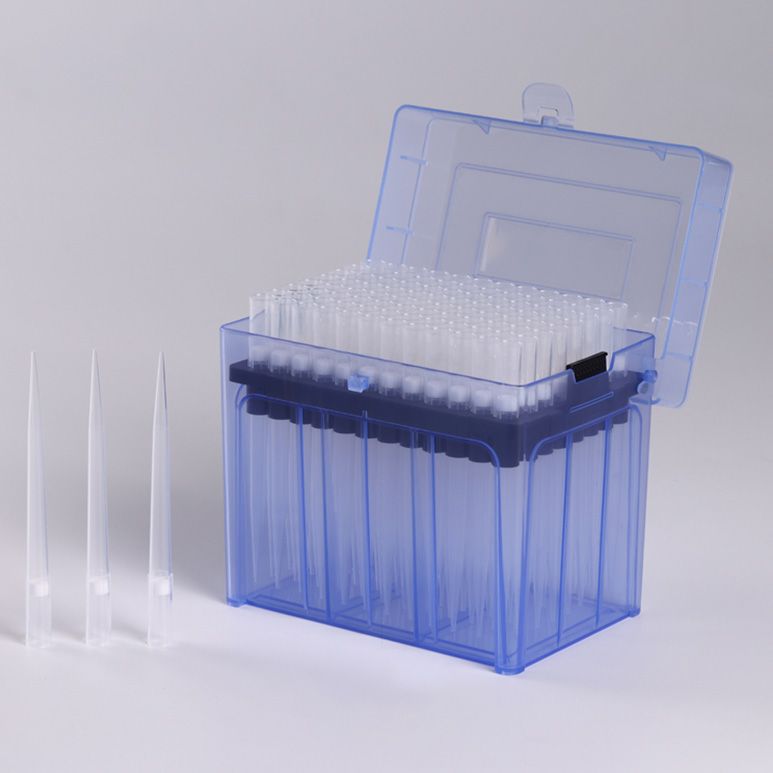
Robotic pipette tips are central to many automated liquid-handling workflows.
Their suitability depends on the pipetting head, attachment mechanism, tip rack, liquid-transfer requirements, and operating conditions.
A tip designed for a manual pipette may have a similar nominal capacity to a robotic tip but differ in critical dimensions and handling characteristics.
Tip Interface and Attachment
For automated systems, tip geometry can affect:
● Pickup by the pipetting head
● Sealing and attachment
● Tip positioning
● Ejection or removal
● Interaction with the tip rack
● Liquid aspiration and dispensing
These characteristics should be evaluated using the intended robotic equipment.
A tip that can be physically attached does not necessarily meet the platform's performance requirements.
Tip Rack Compatibility
The rack is part of the consumable system.
Relevant factors include:
● Rack footprint and height
● Tip spacing and position
● Rack stability
● Pickup accessibility
● Compatibility with any required adapter
● Tip presentation and orientation
● Packaging format
In some robotic systems, compatible tips must be supplied in a specific rack configuration.
A loose or bulk-packed alternative may not be suitable without an approved rack-loading process.
Example: Platform-Specific Tip Requirements
Opentrons publishes separate pipette and tip compatibility requirements for its OT-2 and Flex platforms.
The manufacturer states that Flex tips and OT-2 tips are not interchangeable and recommends Flex-specific tips for Flex pipettes.
This illustrates an important procurement principle: even instruments from the same manufacturer may have different consumable requirements.
An alternative product should not be described as manufacturer-approved unless that approval is documented.
Robotic Pipette Tip Evaluation Checklist
| Evaluation Area | Required Verification |
|---|---|
| Instrument model | Exact robotic system and configuration |
| Pipetting head | Model, channel count and intended tip capacity |
| Tip geometry | Relevant dimensions and interface characteristics |
| Tip rack | Pickup positions, footprint, height and adapter requirements |
| Pickup performance | Correct attachment under representative conditions |
| Ejection performance | Reliable removal or disposal |
| Liquid transfer | Suitable aspiration and dispensing behavior |
| Volumetric performance | Meets predefined requirements at relevant volumes |
| Product consistency | Appropriate specifications and repeat supply |
| Documentation | Available technical specifications and applicable evidence |
Buyers should not substitute a tip solely on the basis of nominal volume or visual similarity.
3. Microplates and Deep-Well Plates: Understanding Dimensional Standards
Microplates are widely used in robotic sample handling, molecular biology, screening, and laboratory automation.
Their compatibility depends on both external geometry and the requirements of the instruments handling them.
ANSI/SLAS Microplate Standards
The ANSI/SLAS Microplate Standards address defined aspects of microplate geometry.
Relevant standards include:
| Standard | Main Subject |
|---|---|
| ANSI/SLAS 1-2004 | Microplate footprint dimensions |
| ANSI/SLAS 2-2004 | Microplate height dimensions |
| ANSI/SLAS 3-2004 | Bottom outside flange dimensions |
| ANSI/SLAS 4-2004 | Well positions |
| ANSI/SLAS 6-2012 | Well bottom elevation |
These standards provide a common framework for microplate dimensions.
For laboratories and equipment developers, dimensional standardization can support preliminary compatibility evaluation.
However, conformity to relevant ANSI/SLAS dimensions is not the same as verification that a specific plate works with every automated system.
Why Additional Compatibility Checks Are Needed
A microplate may have suitable external dimensions but still require assessment of:
● Plate height and clearance
● Well geometry
● Working volume
● Plate rigidity
● Carrier or adapter fit
● Gripper access
● Lid or sealing configuration
● Thermal or chemical operating requirements
Depending on the workflow, a specific plate bottom design or well shape may also be important.
Deep-Well Plates
Deep-well plates may be used in automated sample preparation, extraction-related workflows, or liquid handling applications.
A higher nominal capacity does not establish suitability for a particular robotic platform.
Buyers should confirm the intended working volume, the equipment's available clearances, plate positioning requirements, and the relevant processing conditions.
PCR Plates in Automated Workflows
PCR plates may be used with robotic pipetting platforms and downstream thermal cyclers.
Their compatibility should therefore be assessed against each relevant stage.
For example, a plate may fit a liquid-handling robot but still require evaluation for:
● Thermal cycler compatibility
● Heated lid requirements
● Optical detection requirements
● Sealing method
● Plate handling and transfer between instruments
The appropriate product should be selected according to the complete workflow rather than one instrument alone.
4. Measuring Automated Liquid-Handling Performance
Mechanical compatibility is necessary, but it does not establish volumetric performance.
A robotic system may successfully pick up a tip and execute a programmed transfer while still requiring evaluation of the delivered volume.
This distinction matters when laboratories use automated liquid handling for low-volume reactions, assay preparation, or other applications where volume performance is important.
ISO 23783: Automated Liquid-Handling Systems
The ISO 23783 series addresses automated liquid-handling systems.
Two relevant parts are:
ISO 23783-2:2022
Automated liquid handling systems — Measurement procedures for the determination of volumetric performance.
This standard specifies procedures for determining the volumetric performance of automated liquid-handling systems, including measurement traceability and uncertainty considerations.
ISO 23783-3:2022
Automated liquid handling systems — Determination, specification and reporting of volumetric performance.
This standard addresses collection, evaluation, specification and reporting of volumetric performance data.
These standards concern the automated liquid-handling system and its relevant operating configuration.
They do not automatically certify an individual third-party pipette tip or establish compatibility with a particular robotic platform.
What Should Laboratories Measure?
Depending on the system and application, the laboratory may evaluate:
| Performance Area | What It Helps Establish |
|---|---|
| Systematic volume error | Difference between the mean delivered volume and the target |
| Random volume error | Variation among repeated transfers |
| Performance across volumes | Suitability at the intended working volumes |
| Channel consistency | Relevant performance across multichannel systems |
| Liquid-specific behavior | Performance with representative liquids |
| Repeated operation | Consistency under defined operating conditions |
The appropriate evaluation method depends on the instrument, liquid, volume, laboratory quality requirements, and relevant standards.
Why the Complete System Matters
Automated pipetting performance is affected by more than the disposable tip.
Relevant factors may include:
● Pipetting-head design
● Tip fit and sealing
● Instrument calibration
● Liquid properties
● Operating parameters
● Environmental conditions
● Measurement method
A supplier should not claim that a particular tip guarantees a specified liquid-transfer accuracy without appropriate supporting evidence.
Similarly, meeting a general pipette tip specification does not independently establish system-level volumetric performance.
5. A Three-Stage Consumable Qualification Framework
Before introducing a new consumable to an automated workflow, laboratories should establish a qualification plan appropriate to the product and application.
The following framework can support technical and procurement evaluation.
Stage 1: Specification Review
Begin with the product and equipment documentation.
Confirm:
● Equipment model and configuration
● Current approved consumable or reference SKU
● Proposed product SKU
● Critical dimensions and format
● Rack, carrier or adapter requirements
● Intended working volume
● Relevant materials and product claims
● Required documentation
The objective is to identify obvious incompatibilities before laboratory testing.
Stage 2: Platform-Level Evaluation
Evaluate the consumable on the intended equipment under representative conditions.
Where applicable, assess:
● Loading and positioning
● Tip pickup and ejection
● Plate handling
● Liquid aspiration and dispensing
● Mechanical clearances
● Sealing or related operations
● Relevant volumetric performance
The tests should be performed according to the equipment manufacturer's instructions and the laboratory's established procedures.
Acceptance criteria should be defined before testing.
Stage 3: Repeatability and Supplier Consistency
One successful demonstration does not establish long-term suitability.
Depending on the application risk and purchasing volume, the laboratory may review:
● Repeated operation
● Performance across relevant working volumes
● Additional production lots where feasible
● Product specifications and inspection controls
● Lot identification
● Supplier change communication
● Availability for repeat orders
Where multiple lots are not available, buyers may review other available manufacturing and quality information.
Consumable Qualification Record
| Test Area | Acceptance Criteria | Recorded Result | Decision |
|---|---|---|---|
| Equipment and SKU identification | Correct model and product reference | To be recorded | Pass / Fail |
| Dimensional compatibility | Meets the approved specification | To be recorded | Pass / Fail |
| Loading and positioning | Meets defined operating requirements | To be recorded | Pass / Fail |
| Tip pickup and ejection | Meets defined operating requirements | To be recorded | Pass / Fail / N/A |
| Liquid transfer performance | Meets application-specific criteria | To be recorded | Pass / Fail / N/A |
| Plate or tube handling | Meets platform requirements | To be recorded | Pass / Fail / N/A |
| Repeated operation | Meets the agreed evaluation criteria | To be recorded | Pass / Fail |
| Documentation | Required records reviewed | To be recorded | Pass / Pending |
| Supplier qualification | Purchasing requirements reviewed | To be recorded | Approved / Conditional / Rejected |
This template is a practical starting point, not a universal validation protocol.
The laboratory remains responsible for defining the acceptance criteria and qualification requirements relevant to its intended application.
6. Consumable Cost and Automated Workflow Economics
Automation can improve workflow efficiency, but consumable purchasing decisions should consider more than unit price.
A lower-priced product may require additional qualification or create operational costs if it is not suitable for the intended platform.
Conversely, a more expensive product may be justified where it satisfies requirements that a cheaper alternative cannot meet.
Cost Factors for Automated Consumables
| Cost Area | Purchasing Consideration |
|---|---|
| Unit price | Price of each usable tip, plate or other consumable |
| Packaging | Rack, refill, bulk or automation-specific format |
| Qualification | Time and materials required to evaluate a new product |
| Actual consumption | Number of consumables used per workflow |
| Utilization | Consumables discarded or unused due to workflow constraints |
| Repeat testing | Additional consumables associated with unsuccessful operations |
| Inventory | Stockholding, storage and replenishment |
| Supply reliability | Potential disruption if an approved product becomes unavailable |
Cost per Successful Automated Sample
Where applicable, a laboratory can calculate:
Consumable Cost per Successful Automated Sample = Total Consumable Expenditure, Including Relevant Repeats ÷ Number of Samples Meeting Defined Workflow Acceptance Criteria
The denominator should be clearly defined.
For example, successful liquid transfer, completed sample preparation, and a reportable analytical result may represent different outcomes.
A cost model should use the measure relevant to the laboratory's decision.
Illustrative Example
Consider two hypothetical consumable options evaluated under comparable conditions.
| Measure | Option A | Option B |
|---|---|---|
| Input samples | 96 | 96 |
| Consumable expenditure | $96 | $84 |
| Samples meeting defined workflow criteria | 94 | 80 |
| Consumable cost per input sample | $1.00 | $0.88 |
| Consumable cost per successful sample | $1.02 | $1.05 |
These figures are illustrative only.
They are not Yuanzan test results or evidence that one commercial product has a particular performance advantage.
The example demonstrates how a lower initial consumable price may fail to produce a lower cost per successful outcome when the measured success rate differs.
A real comparison should also investigate whether any difference is attributable to the consumable rather than equipment, protocol or sample variation.
7. Supplier Qualification for Automated Laboratory Consumables
Automation increases the importance of maintaining the approved consumable configuration.
A product change may affect a robotic workflow even when the replacement appears visually similar.
For this reason, procurement and technical teams should establish clear supplier qualification criteria.
Supplier Evaluation Matrix
| Evaluation Area | Questions to Ask |
|---|---|
| Product specifications | Are dimensions, materials, formats and critical features documented? |
| Equipment compatibility | Is compatibility evidence available for the intended model and configuration? |
| Product claims | Are relevant cleanliness or performance claims supported? |
| Quality documentation | Are applicable specifications, test records or certificates available? |
| Lot traceability | Can products and relevant lots be identified? |
| Manufacturing consistency | How are critical product characteristics controlled? |
| Change management | How are significant specification changes communicated? |
| Packaging | Are compatible racks, bulk packs or other formats available? |
| Supply continuity | Can the supplier support expected purchasing volumes and lead times? |
| OEM options | Are customization or private-label arrangements feasible for the specific product? |
A general quality management system certificate does not prove that every SKU is compatible with a particular robotic liquid-handling platform.
Similarly, product dimensions should be checked against the applicable equipment requirements rather than inferred from a broad compatibility claim.
Reference SKU Matching
For distributors and OEM buyers, sharing an existing product reference can help initiate a technical review.
Useful information includes:
● Reference brand and SKU
● Required equipment model
● Product drawings or dimensions
● Working volume
● Tip rack or plate configuration
● Relevant product claims
● Packaging requirements
● Expected annual order quantity
The supplier can use this information for preliminary product matching.
However, preliminary matching is not the same as platform validation or approval by the original equipment manufacturer.
8. Yuanzan Consumables for Automated Workflow Evaluation
Yuanzan supplies selected laboratory plastic consumables used in liquid handling, molecular biology, sample processing, and storage.
Relevant categories may include:
● Pipette tips
● PCR tubes and plates
● Deep-well plates
● Centrifuge and microcentrifuge tubes
● Selected sample storage products
These products may be considered during sourcing discussions for suitable laboratory workflows.
Their availability does not establish validated compatibility with every automated platform.
Product Evaluation
For laboratories and distributors, evaluation should begin with the exact consumable SKU and intended equipment.
For example, a proposed pipette tip should be assessed against the robotic pipetting head, rack and working volume.
A deep-well plate should be assessed against the intended platform carrier, plate-handling arrangement and processing requirements.
Specific compatibility evidence should be requested where necessary.
Manufacturing and OEM/ODM Support
Yuanzan's manufacturing operations support selected injection-molded laboratory plastic consumables.
For eligible projects, buyers can discuss product specifications, dimensional requirements, packaging, labeling and OEM/private-label feasibility.
Actual customization options, product availability, minimum order quantities, and documentation support depend on the project.
Relevant information is available through:
● Yuanzan Liquid Handling Solutions
● Yuanzan Molecular Biology Consumables
● Yuanzan Manufacturing Capabilities
Sample Evaluation
Yuanzan supports commercial sample evaluation for selected laboratory plastic consumables.
Buyers can submit a current product reference, intended equipment, target application, technical requirements, and estimated purchasing volume.
Available samples and supporting documents can then be discussed according to the specific product and project.
Yuanzan does not claim universal compatibility with Opentrons, Hamilton, Tecan, or other robotic liquid-handling systems without appropriate model- and SKU-specific supporting evidence.
Conclusion: Treat Automation Consumables as Part of the System
Reliable robotic liquid handling depends on the interaction between the instrument, consumables, operating parameters, and laboratory procedures.
A product may meet general dimensional requirements yet still require qualification for a particular robotic platform.
Pipette tips need appropriate mechanical and liquid-transfer performance.
Microplates and deep-well plates need suitable geometry, handling characteristics, and workflow compatibility.
Supplier consistency is also important for maintaining established operations across repeated purchasing cycles.
For laboratories and procurement teams, the most useful approach is to define requirements before purchasing, evaluate candidate products under representative conditions, and document the qualification decision.
For distributors and OEM buyers, this framework helps distinguish preliminary product matching from genuine platform compatibility evidence.
The objective is not simply to find a lower-priced consumable.
It is to establish a technically suitable and commercially sustainable supply arrangement for the intended automated workflow.
Discuss Robotic Liquid Handling Consumable Requirements
Evaluating pipette tips, microplates, deep-well plates, or other laboratory plastics for an automated workflow?
Share your equipment model, current reference SKU, critical specifications, expected order quantity, and packaging requirements.
Yuanzan can review available product categories, preliminary matching options, sample availability, and OEM/private-label feasibility.
Request Selected Consumable Samples
Discuss OEM and Private-Label Manufacturing
Sample evaluation and product matching are subject to product and project availability. Platform-specific compatibility and performance must be confirmed separately.
References
2. ABB Robotics. ABB Robotics Collaborates with Roche to Bring Physical AI to Laboratories. July 2026.
3. Society for Laboratory Automation and Screening. ANSI/SLAS Microplate Standards.
6. Opentrons. Flex Labware Types and Tip Compatibility.
7. Yuanzan Life. Laboratory Consumables Sample Evaluation: A Checklist Before Bulk Ordering.
External references provide technical and industry context. They do not constitute independent testing, approval or endorsement of Yuanzan products.
FAQ
Are all standard pipette tips compatible with robotic liquid handlers?
No. Compatibility depends on the instrument, pipetting head, tip geometry, rack configuration, operating conditions and performance requirements.
Can manual pipette tips be used in robotic systems?
Not automatically. A manual pipette tip may differ in dimensions, rack arrangement, pickup behavior and other characteristics required by the robotic platform.
What do ANSI/SLAS microplate standards cover?
They address defined dimensional characteristics of microplates, including footprint, height, flange dimensions, well positions and well bottom elevation. They do not establish universal compatibility with every automation system.
What is ISO 23783?
ISO 23783 is a series of standards addressing automated liquid-handling systems, including terminology, measurement procedures and volumetric performance reporting.
Does ISO 23783 certification establish that a third-party tip is compatible?
No. The standard provides a framework for evaluating automated liquid-handling systems. Tip compatibility must still be established for the relevant instrument and configuration.
How should a laboratory evaluate new robotic consumables?
Begin with specifications, perform an appropriate platform-level evaluation, establish acceptance criteria, and document relevant repeatability and supplier qualification information.
Can one consumable work across different robotic platforms?
Possibly, but this cannot be assumed. Compatibility should be confirmed separately for the intended equipment configurations.
Does Yuanzan manufacture consumables approved for all robotic platforms?
No. Yuanzan supplies selected laboratory consumables, but compatibility with specific robotic systems requires product- and equipment-specific evaluation.
Can distributors request evaluation samples?
Qualified commercial buyers may request selected laboratory plastic consumables for evaluation, subject to product availability and project requirements.
pics of lab consumables